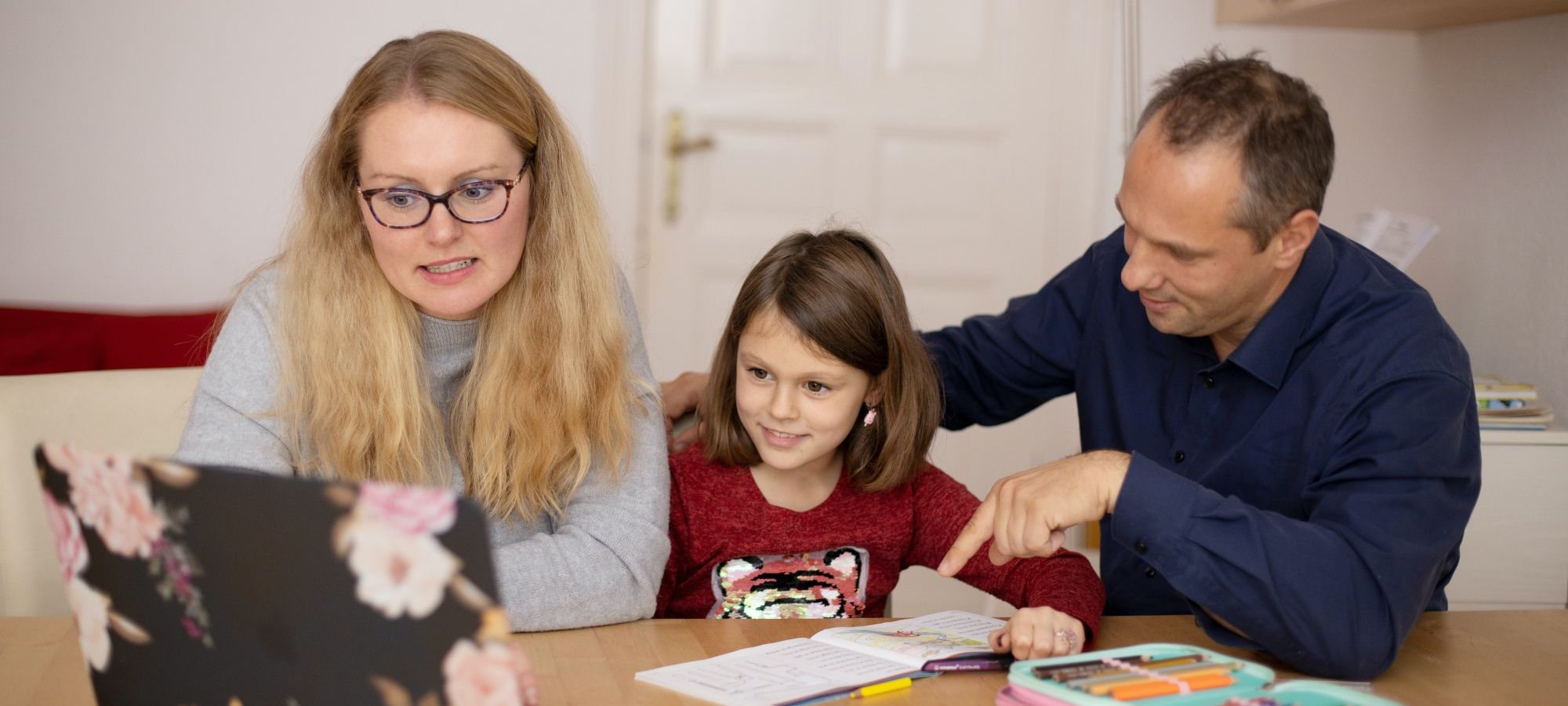
First ridiculed, then taken to court, finally mainstream: this is how homeschooling won over America.
Homeschooling in the USA: from fringe to mainstream
Part of the guide Freedom in the USA: what it means in law and in everyday life
Covid gave fresh fuel to a homeschooling trend that was already visible in the USA before the pandemic. The US Census Bureau reports that the number of homeschooling families doubled between spring 2020 and the start of the new school year in fall 2020 alone, reaching 11.1% of all US households. Among Black families, the share grew fivefold according to the Census Bureau, from 3.3% in spring to 16.1% in the fall.
Note that these are not children who were taught at home out of necessity and in cooperation with their school during a lockdown (while staying enrolled). These are families who withdrew their children from school and now want to teach them on their own.
As with many pandemic-driven changes in American society, it remains to be seen whether homeschooling is just a passing phenomenon or becomes a permanent part of the education landscape. There are good reasons to think it could be the latter.
Chalkbeat, working with the Associated Press, reported how public school districts across the country, worried about a lasting drop in enrollment, are looking for creative ways to secure new sign-ups. Some, for example, are equipping bus drivers with what they need to call parents.
An analysis by the New York Times and Stanford University compared fall enrollment in 2019 with 2020 and found that kindergarten numbers fell by at least 20% at 10,000 public schools in 33 states. The reports also show that some of these schools fear the numbers will not recover in fall 2021.
In a new era of homeschooling, research into its challenges, cultural differences and actual outcomes is more in demand than ever. But while interest is especially high right now, homeschooling in the USA has been on a steady rise since the 1960s.
1Five phases of development
The road from the margins to legal and cultural acceptance was not without conflict and resistance. Education scholars J. Gary Knowles, Stacey E. Marlow and James A. Muchmore trace this dramatic development in the American Journal of Education and divide the early history of homeschooling in the USA into five phases.
The scholars point out that for centuries, most children around the world were taught at home by their parents or tutors. In the mid-19th century, when compulsory schooling was introduced in the USA, education shifted clearly away from the home. Between 1850 and 1970, only a few families still taught their children at home. But in the mid-1960s and early 1970s, as dissatisfaction with the public school system grew, homeschooling began to spread again.
This marked the first of the five phases the researchers describe: "contention". During this phase, education reformers increasingly criticized traditional schooling. Yet homeschooling found little support among the general public. Homeschooling families were seen as a fringe of society:
"In the early 1970s," the authors write, "home education was fragmented and was seen by the public and the media primarily as a subversive form of education practiced by idealists, often secretly or underground." On top of that, it was illegal in most states.
The second phase, "confrontation", began in the early 1970s and peaked at the end of the decade, bringing with it several high-profile legal battles.
In 1972, the Supreme Court decided Wisconsin v. Yoder, a landmark case for the homeschooling movement that gave Amish parents the right to teach their children at home after eighth grade.
The decision stated that "the parental interest must be religious in nature, not philosophical or personal." This set off a series of state-level court cases dealing with various questions about home education.
Knowles, Marlow and Muchmore note that although most of the cases were brought by school authorities, in most states during the 1970s the majority were decided in the parents' favor. Even so, it took until 1993 for homeschooling to become legal in all 50 states.
The third phase, "cooperation", grew out of eased legal restrictions and new policies that let homeschooled students use public school facilities. By 1985, an estimated 200,000 US families were teaching their children at home.
In the early 1990s, homeschooling networks and lobbying ushered in the fourth phase, "consolidation".
The final phase, "insularity", emerged as homeschooling gained more and more acceptance and the former "strange bedfellows", as journalist Kathleen Cushman put it, no longer had to form a united front against other educators.
These "strange bedfellows" were families driven by religious beliefs, educational ideals, family reasons and a wide range of other, overlapping motives.
Another motive, especially for Black families, was to protect their children from the pervasive racism in schools.
Visa, bank account, taxes and where to live: your move with Mount Bonnell Advisors.
2Why parents choose it
Researchers Oz Guterman and Ari Neuman gave questionnaires to 62 homeschooling parents in Israel. Based on the answers, they divided the parents into two groups:
One group's motives were purely educational: mainly control over the curriculum and concern about low academic standards in schools.
The second group's motives were both educational and family-related. These parents wanted to build strong relationships within the family, sometimes also in connection with their children's health needs.
The findings are set out in their article in the International Review of Education, "Different Reasons for One Significant Choice: Factors Influencing Homeschool Choice in Israel".
It turned out that families who chose homeschooling for both educational and family reasons rated its effects on their children more positively than families who chose it for educational reasons alone.
It is reasonable to assume that families who choose it for family reasons spend more time on other activities, such as family outings or cooking together. The two groups may also have different views on what learning means.
The researchers also found that parents with strictly educational motives spend more hours per week on their children's schoolwork.
Parents' approach may also be linked to their own experience of burnout, says researcher Jennifer Lois. In her article in Symbolic Interaction, she examined how homeschooling mothers adapt to their role.
She found that juggling the teacher role with all the other parenting and household duties quickly becomes overwhelming. In her ethnographic study of a homeschooling support group and in interviews with more than 24 mothers in the Pacific Northwest, she found that specific kinds of "emotion work" can help homeschooling mothers reduce and even overcome burnout.
She concludes that the mothers who overcame or avoided burnout did so through what she calls "role harmony".
Role harmony means that mothers can combine and prioritize different roles. For one thing, the mother role took priority over the homemaker role, so housework was scaled back in favor of the children.
For another, mothers also tended to loosen their curriculum and give their children more room for independent learning, taking on the role of facilitator. Importantly, the homemakers who overcame burnout almost always had a partner who helped with housework, childcare and teaching.
3How does homeschooling affect children?
How does homeschooling affect children? Many researchers have looked for an answer to this question too.
In an article in the International Social Science Review, education scholars Cynthia K. Drenovsky and Isaiah Cohen had 185 college students fill out a questionnaire: 35 had been schooled traditionally, while 150 had been homeschooled for at least a year.

The questionnaire measured their engagement on campus (for example, taking part in internships and student-faculty research), as well as their self-esteem and self-reported symptoms of depression.
The researchers found no significant difference in self-esteem, but the homeschooled students showed lower depression scores and greater academic success. They also tended to rate their overall educational experience more positively.
In "Differences in Competence, Autonomy, and Relatedness between Home Educated and Traditionally Educated Young Adults", school psychologist Gina Riley looks at homeschooling outcomes from a slightly different angle.
Riley focuses mainly on the "social and environmental factors that facilitate, rather than undermine, intrinsic motivation" and points to three psychological needs that help foster self-motivation:
- Competence: the need to solve a problem successfully or figure something out;
- Autonomy: the need for freedom of choice and self-determination; and
- Relatedness: the need to feel connected to others in the learning environment.
Riley wanted to find out whether young adults who had been homeschooled had their needs for competence, autonomy and relatedness met better than peers who attended a traditional school.
To do this, she applied the Basic Psychological Needs Scale to 58 homeschooled and 41 traditionally schooled students. Her results suggest that homeschooled students are, on average, more satisfied with their autonomy and competence, while there was no difference in relatedness.
With homeschooling growing in popularity, these findings are encouraging. Still, it is worth noting that homeschooled children are, in some respects, a privileged group.
Many researchers have found that homeschooling parents tend to have above-average education and income levels, and bring a strong commitment to their children's education.
There is more on this topic in our Life in the USA section: our overview of homeschooling in the USA, the rules in 12 states at a glance and the 30 US celebrities who were homeschooled. How schooling fits into your move to the US is covered in Moving and schools. And how a German family took seven children through their school years with the One Day Academy is told in Sebastian Sauerborn's memoir of his years on a ranch in Texas.
In writing: which visa fits you and your family, prepared with the immigration attorney on the firm's team.
- According to the US Census Bureau, the share of homeschooling households doubled between spring and fall 2020, to 11.1% of all households.
- Researchers divide the path from fringe to acceptance into five phases; since 1993, homeschooling has been legal in all 50 states.
- Parents choose it for educational or family reasons, and role harmony helps mothers avoid burnout.
- Studies find lower depression scores among homeschoolers and greater satisfaction with autonomy and competence.
How we help you
- Moving to the USAVisa, bank account, taxes and where to live: your move with Mount Bonnell Advisors.
- Visa RoadmapIn writing: which visa fits you and your family, prepared with the immigration attorney on the firm's team.
- Visa and Green Card ConsultationWhich route to the USA fits you, settled in one conversation.