
The Oak I Once Wanted to Be Buried Under
My years on a ranch in Texas
Cicadas
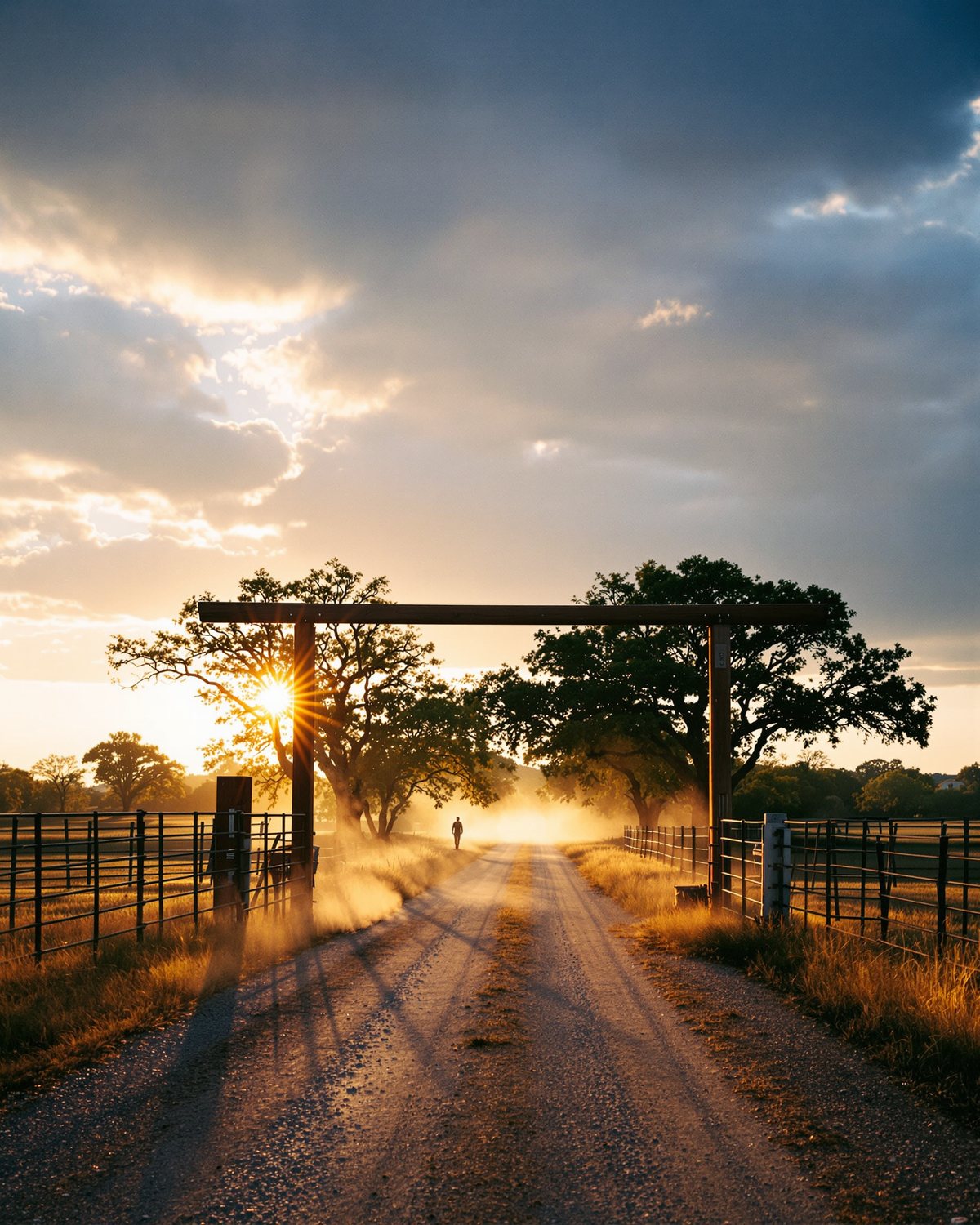
Two miles of gravel road, and at the end of it, a gate.
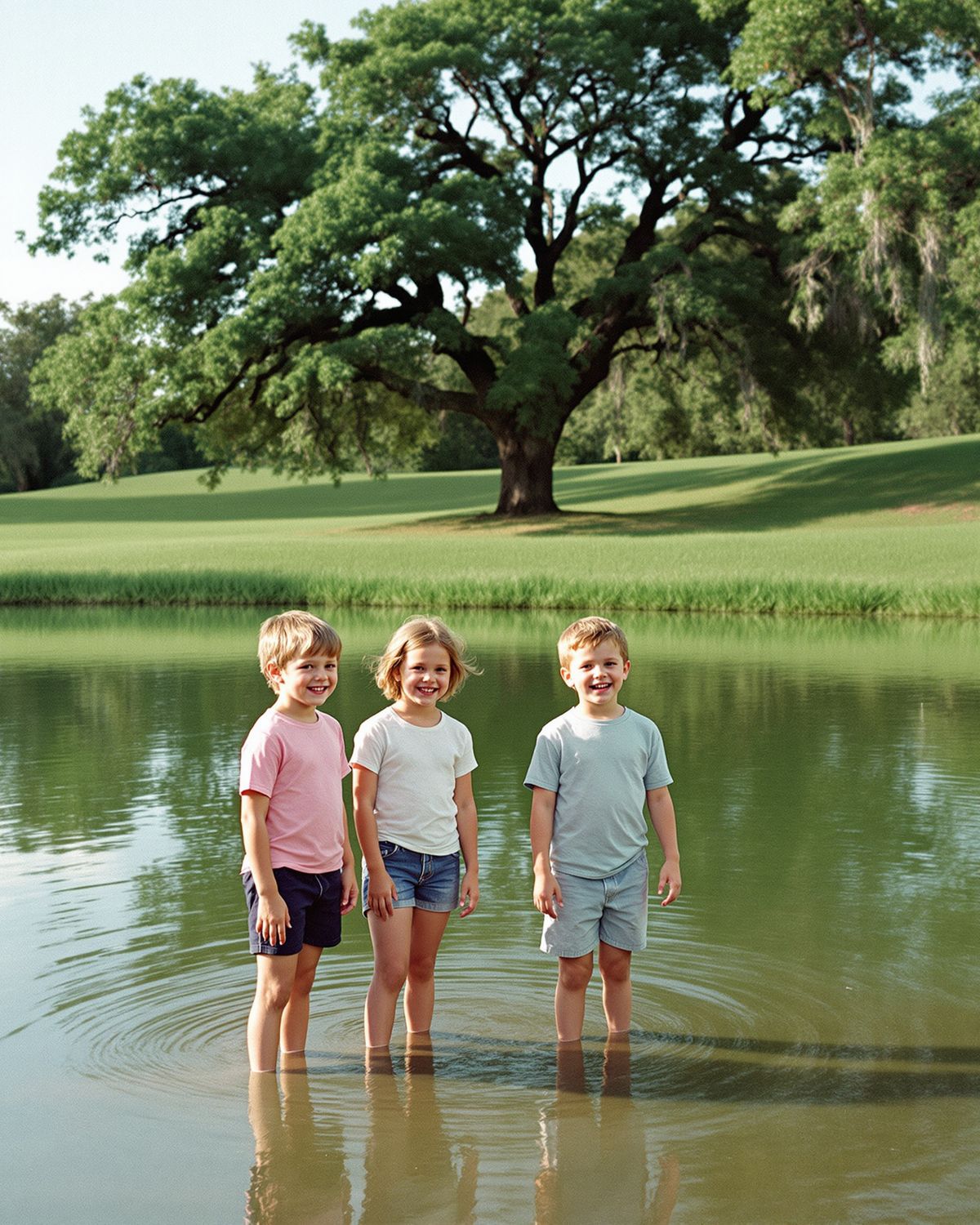
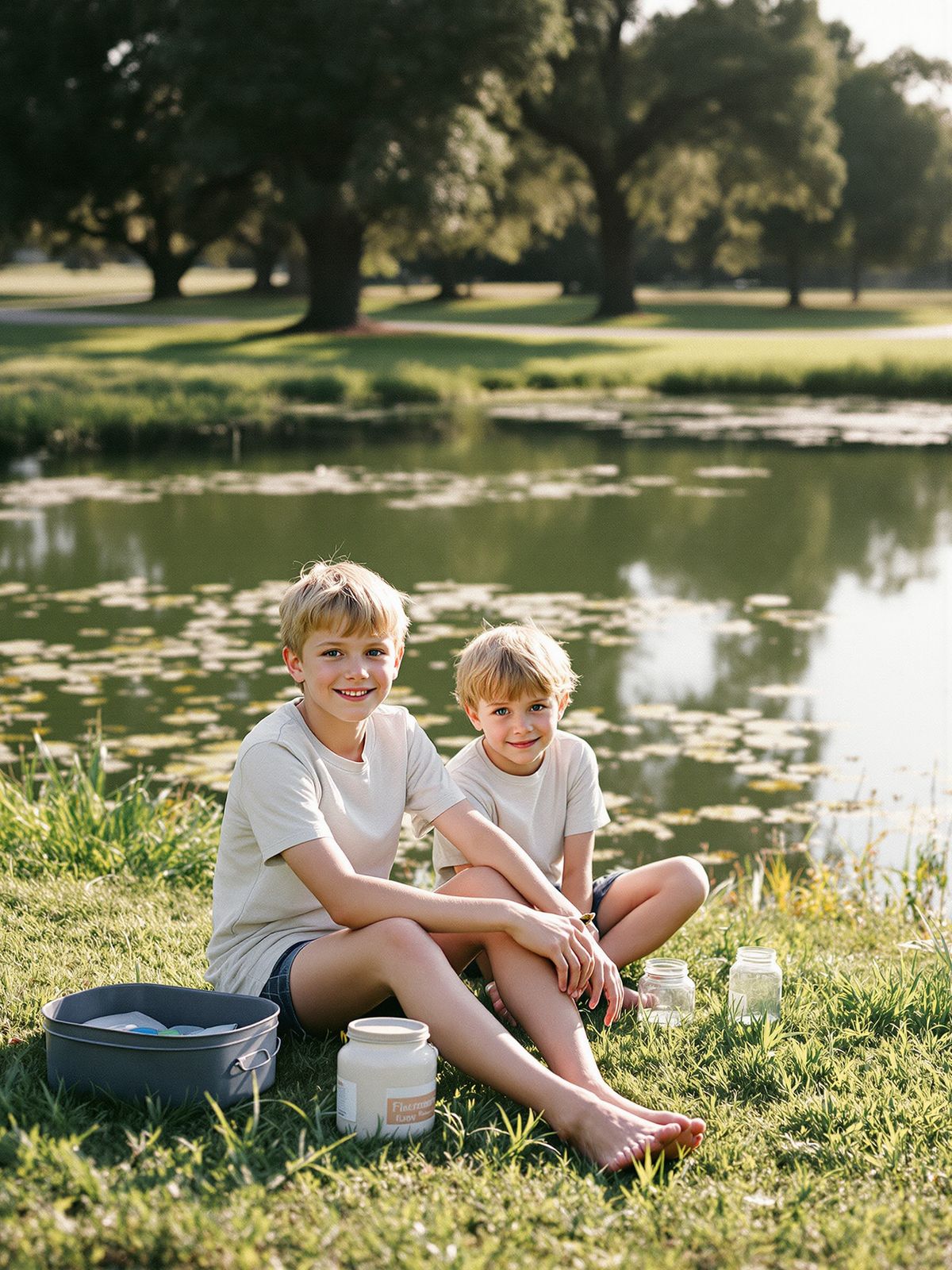
The realtor wasn't there yet. I switched off the engine, and into the silence came that sawing of the cicadas, the sound you never get out of your ears after your first Texas summer. The kids had flung the doors open before the pickup had even stopped and were racing down the slope to the pond. Pond is an understatement: more than two acres of water, shaped like a fat fish with its mouth wide open. In Texas they call it a stock tank, which doesn't do it justice. You can swim in it. Our children did, all summer long, and at some point they even had a little boat.
My wife and I stayed by the pickup and said nothing for minutes.
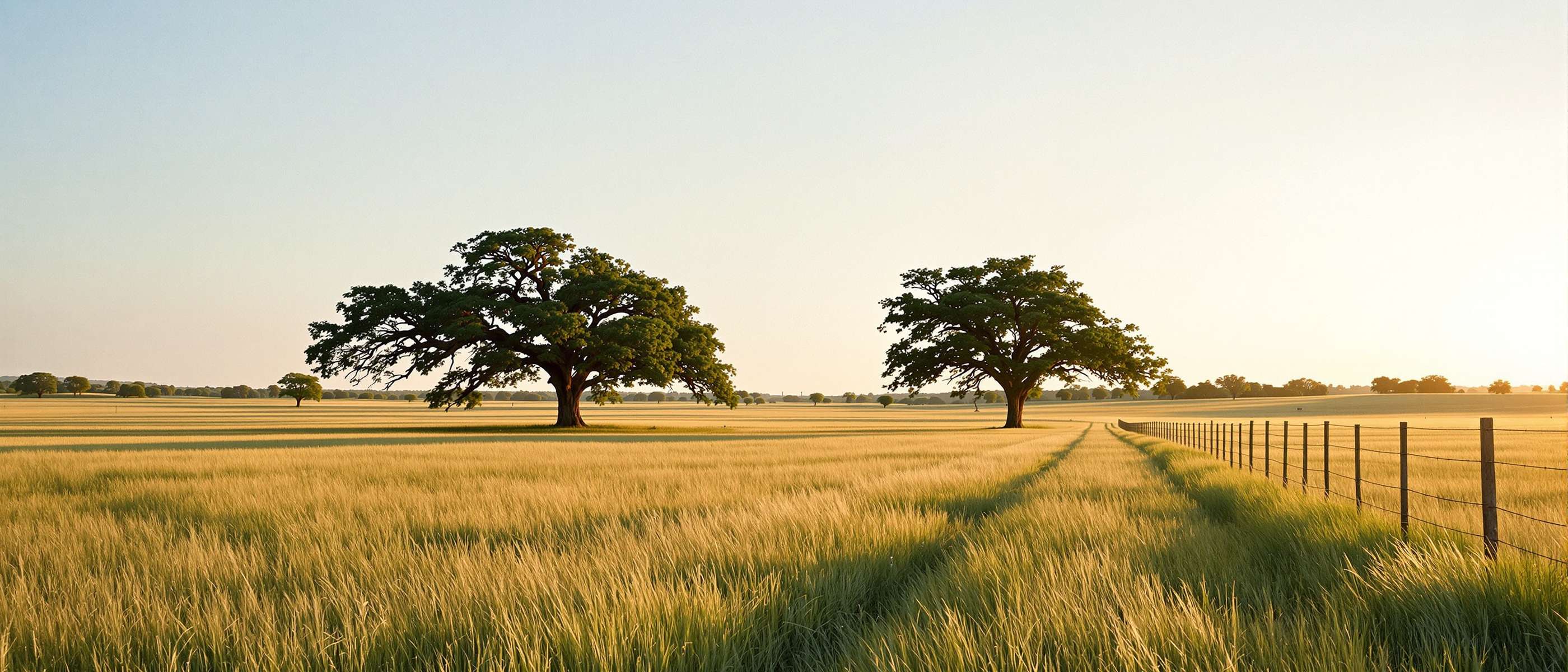
It was the hour before sunset, high summer, thirty miles southeast of Austin. Over the pastures lay that light for which German has no word and English only a worn-out one. It doesn't rest on things, it stands inside them. The grass glows from within, the bark of the oaks turns copper, and the dust the children kick up hangs in the air and smolders.
That evening I understood for the first time that light can be a reason to stay somewhere.
It has been sacred to me ever since.
The property had stood empty for six months and lay there as if asleep. Not a soul in sight. None of what usually makes a farm, no cattle, no engines, no voices. Just this vastness opening up before us, quiet and solemn, and already in my mind the picture of what it would look like once we brought it back to life.
For weeks we had driven all over Central Texas. Once we had even signed, and then the deal fell through at the last minute. That's life. You search and search for a place, and one day the searching stops because a place has found you.
I had no defenses against this one. None whatsoever. The seller's agent was going to have an easy time with me, and I knew it the moment I stepped out of the truck.
My wife turned around and smiled, and we didn't need a word.
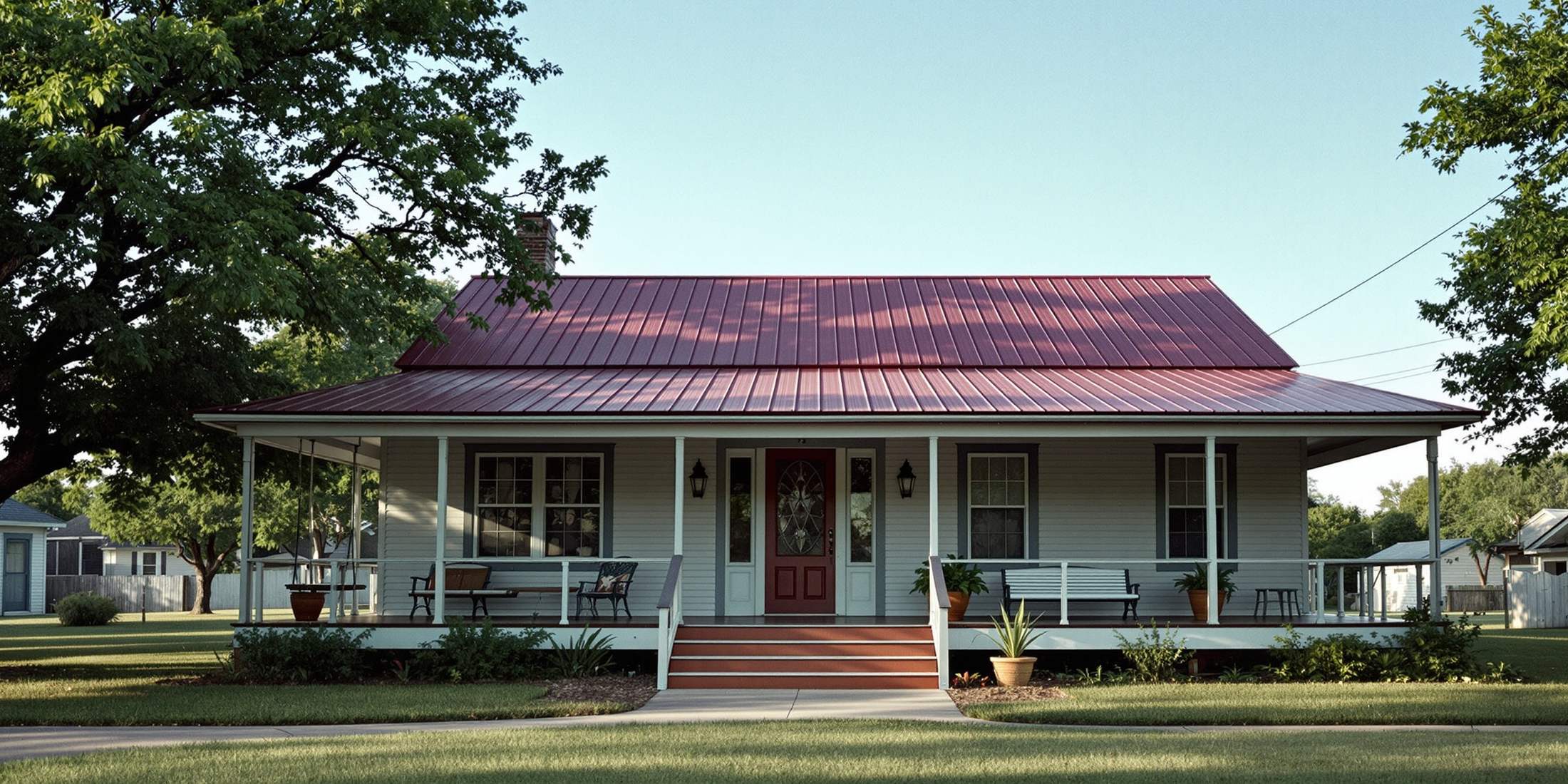
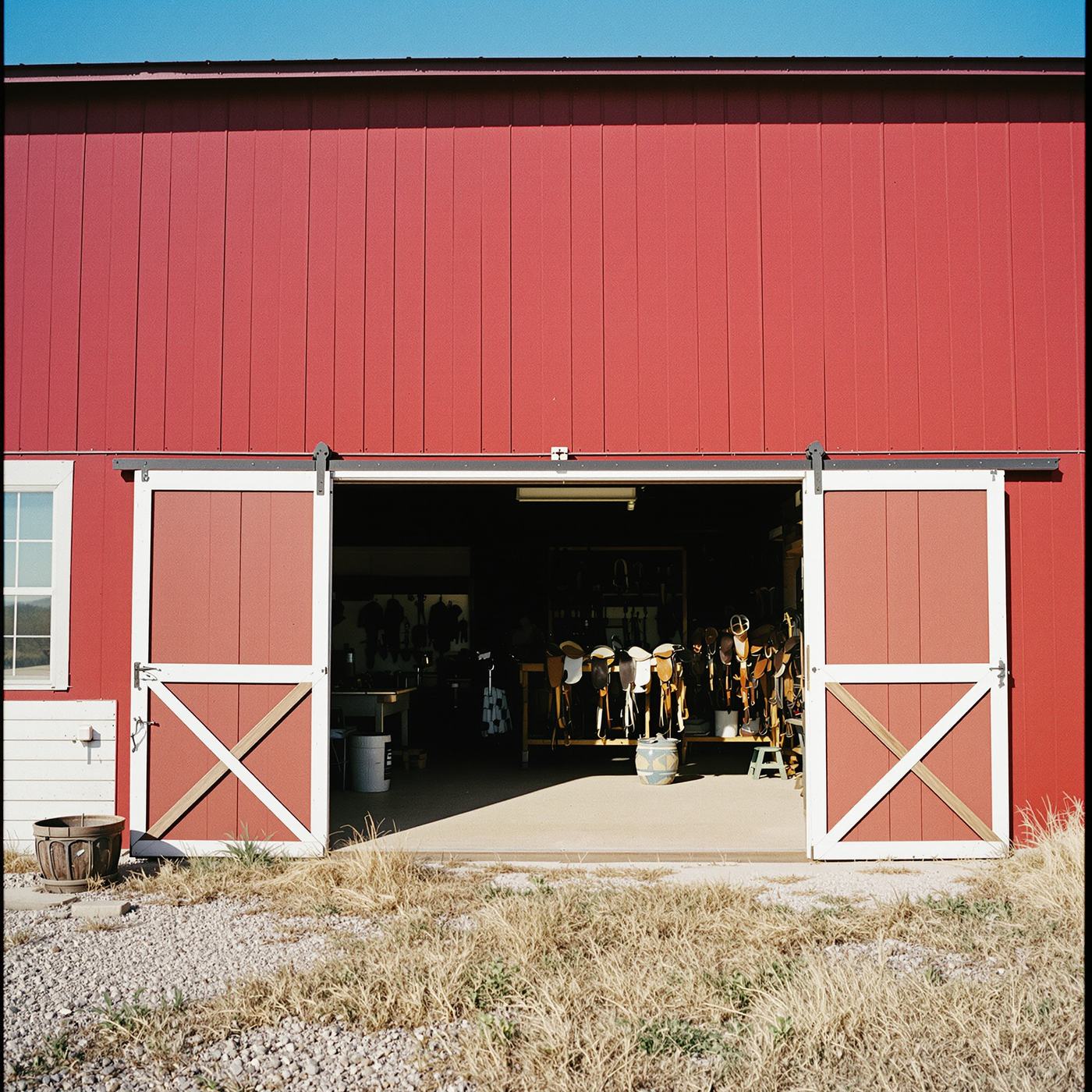
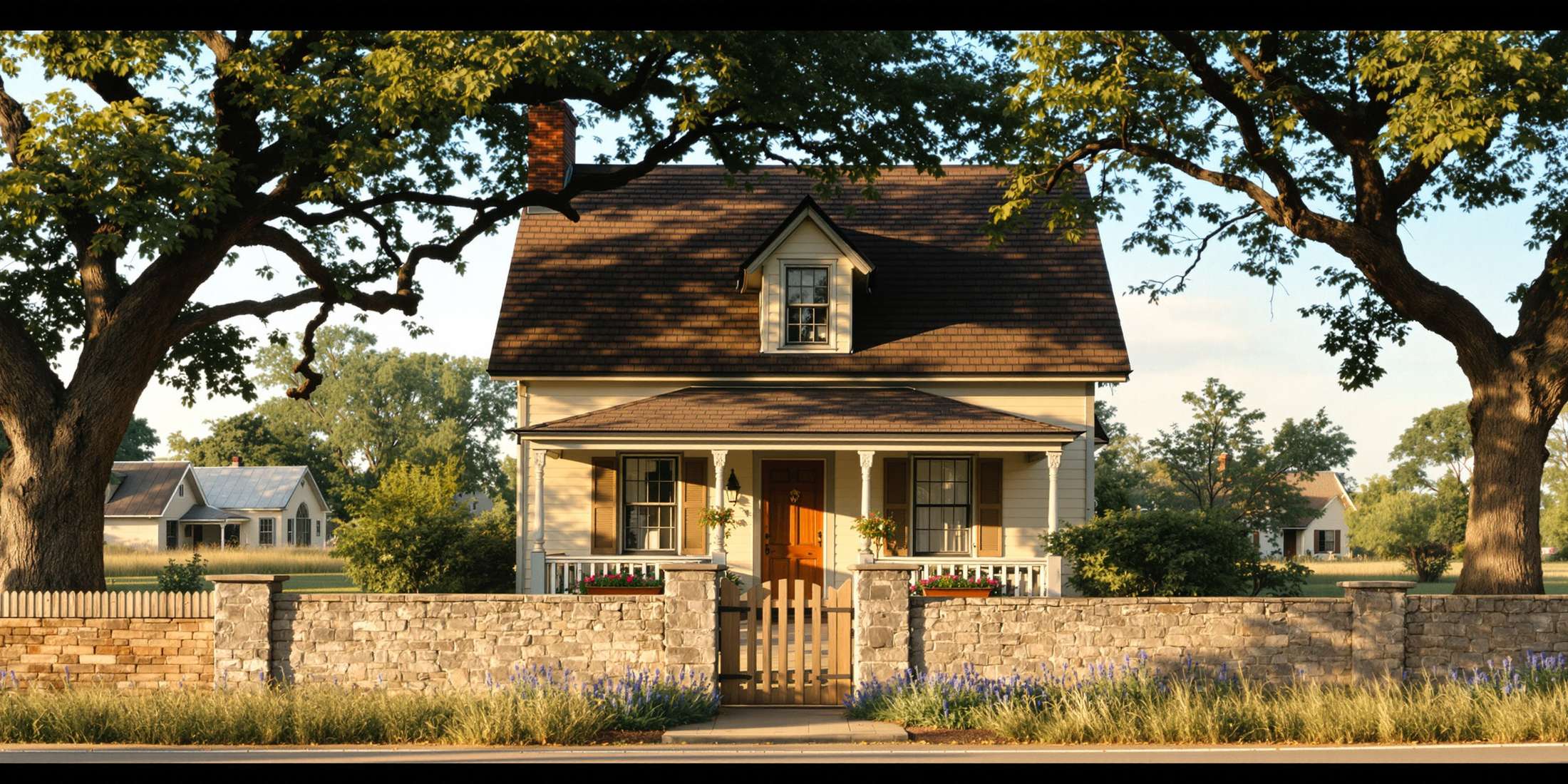
Farther back stood the main house, a wooden Texas ranch house under a red metal roof, with a covered porch front and back and a porch swing on the back one. Around it a red barn, a small cabin for ranch hands, a utility building and a pump house. The land sloped down almost imperceptibly, and at the very bottom lay the pond.
Half the land was open pasture with old, wide-spreading oaks where cattle find shade. Nobody had mowed in months. The grass stood tall and rolled in long waves in the evening breeze, a golden sea, and ever since I've understood why every poll for the most beautiful landscape ends up won by the pasture, never the mountain peak.
The other half was woodland, overgrown and wild, hardwoods with those cursed mesquites in between, which every Texas rancher hates and nobody ever gets rid of.
To the kids this wasn't a property, it was a promise. Woods full of snakes and wild hogs, a lake for swimming and fishing, and nobody telling them where the boundary was.
All of it was in a condition the realtor later summed up with the finest phrase in real estate: lots of potential.
It was the most beautiful piece of land I had ever seen. That hasn't changed to this day.
We went for it.
How a European ends up in Bastrop County
The rest was paperwork, and in America that gets done remarkably fast.
The purchase was surprisingly simple and surprisingly affordable. The American real estate market was still reeling from the financial crisis, and farmland was hard to sell back then. We had sold our house in London a year earlier and could make a solid down payment; the rest went on a mortgage. A week later we were Texas ranchers.
We named the place Vaquera Ranch, after the Spanish word for cowgirl, because that's what my wife was.
Summer 2011, Bastrop County, forty-five minutes' drive from Austin. That's where my count begins.
If you want to know how a European family ends up at a gate like that, you have to go back three years, and then a bit further still, all the way to a child's bedroom.
I emigrated to the United States in September 2008, from London. The reason was business. Two years earlier I had built up a firm in London that was doing well, and I wanted to open our first office outside Europe. But if you're honest, behind every business reason there's a second one. America was never a market to me. It was a childhood dream with a tax ID.
By 2011 I'd had enough of Miami. A great city, truly, but everything about it is transit. People come, people go, and after a few years you realize nothing puts down roots: not friendships, not neighborhoods, not you.
We had spent the previous summer around Austin, and the whole family had fallen in love. Not with the boom everyone knows today. Austin wasn't booming back then, and frankly we wouldn't have cared. What we loved was the land around it, what it cost, the friendliness of the people and that unshakable Texas quirkiness.
We wanted a life all of one piece. Not a home here, a job there and the kids somewhere in between, but one undertaking that everyone is part of, where each carries what they can. We weren't looking for a house. We were looking for a place where a family stays for generations.
My wife was on fire for the idea. Horses had been her life since childhood. In Miami we had lived on an equestrian property and kept three horses, but there wasn't room for everything she really had in mind. In Texas, for the first time, she could build something of her own: young Quarter Horses, training, a name in a scene that genuinely exists there.
And me? Karl May and Bonanza. You can smile at that, and you should, but it's still true. In every European man of my generation there's a layer that is twelve years old and wants a horse.
Professionally, nothing stood in the way. My brother ran London, and I had built the Miami office from day one so it didn't need me there every day. Email and Skype would do, plus a flight every few weeks. I was moving to Texas, not to Mars.
That left the kids. Seven of them, aged three to fifteen.
They were thrilled. You don't have to talk children who get to grow up outdoors into something like this.
School wasn't an issue anyway, because we homeschooled. That wasn't a stopgap, it was a conviction. We didn't want the state involved in our children's education. What passes for school across Western Europe rests at its core on Victorian ideas and has one honest purpose: producing reliable worker bees who have learned that questions come from above and answers go back up.
For families like ours, Texas is the promised land. The freedoms are wide, the homeschooling community is strong, and newcomers find more connection within two weeks than they would back home in two years. How this works legally and practically today is something we've written up in our Life in the USA section, along with the everyday stuff that actually makes or breaks a move: schools, insurance, driver's license, bank account, cost of living.
So we gave up the apartment in Miami, put our stuff in storage and hit the road. My wife at the wheel of the Dodge Ram with the horse trailer, me ahead in the SUV with seven kids. Four days later we were in San Antonio.
Forty-five acres
The purchase contract said forty-five acres. For a European that number means little, and it took me a while before it meant anything to me.
An acre is roughly a football pitch, and two and a half of them make a hectare. So we had about eighteen hectares. By Texas standards that's nothing at all. They even have a slightly mocking word for it: ranchette. The kind of thing city folks buy.
Measured against my grand visions, reality was modest. The house was comfortable but simple, and reminded me more of the cabins from my scouting days than of the five-thousand-square-foot place with a pool and home theater we had just left behind in Florida.
Then there was the drought. Central Texas was drying up in those years. Where native grasses should have stood, large stretches showed only brown, cracked earth, the result of overgrazing and years of neglect.
It was exactly that contrast we loved. A house that pretends nothing. A land that demands something.
Five buildings, all wood except the barn. The main house dated from the eighties and, as was common then, stood on pier and beam, with a crawl space of a foot and a half underneath for pipes and wiring. Inside, two bedrooms, two bathrooms, a loft upstairs that we turned into another kids' room, and downstairs an open kitchen and living area, wooden floors throughout. Everything worked, above all the air conditioning, and in Texas that's not a detail, it's the precondition for everything else.
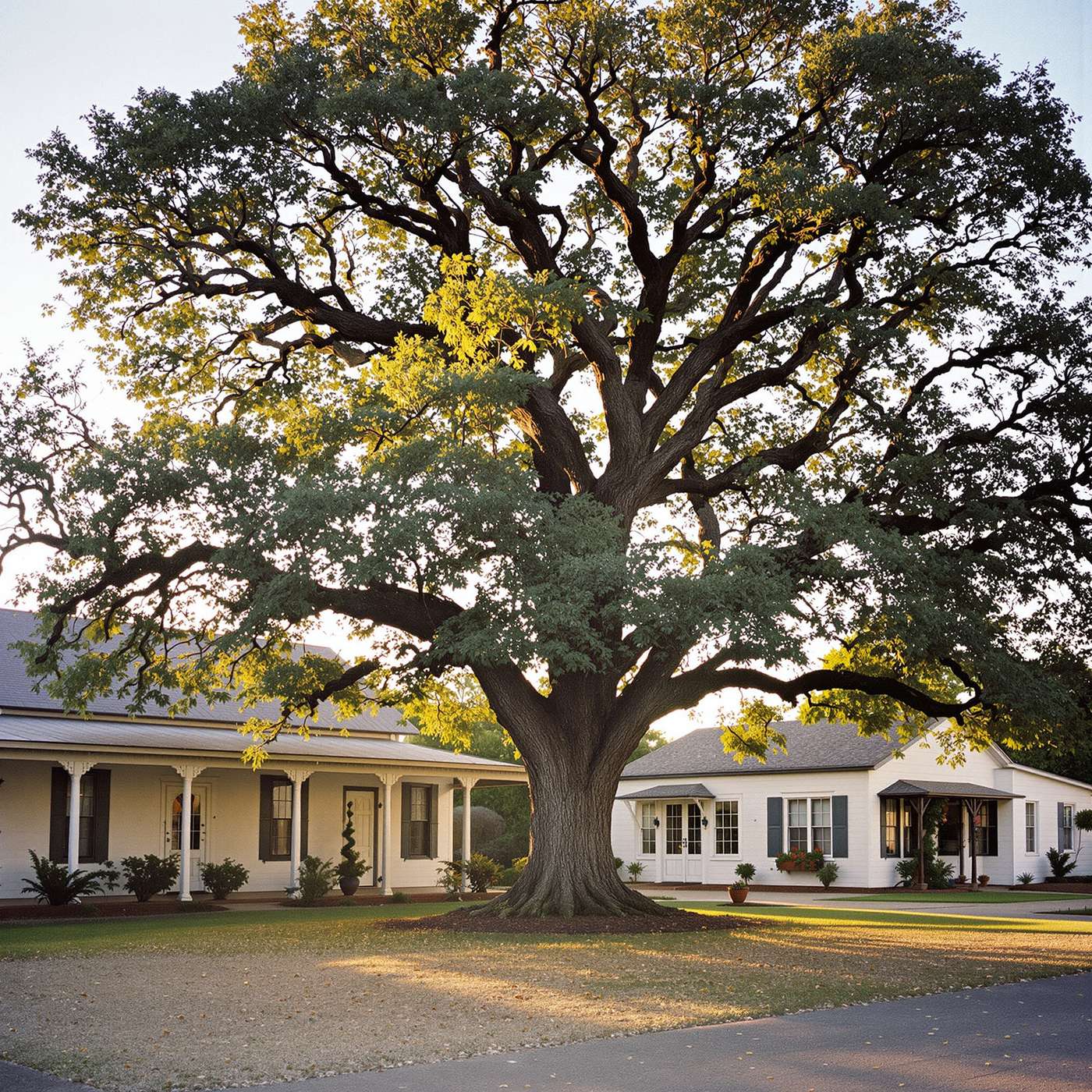
Next to the house was the pump house, because we had our own well. A slightly raised limestone path led across to the utility building with a tack room and workshop, and my office above. Between the two stood an oak that must be several hundred years old, its crown spreading a roof over the whole yard.
Fifty yards farther on, a one-room cottage for guests or staff. And the red barn, without which no Texas ranch is a Texas ranch.
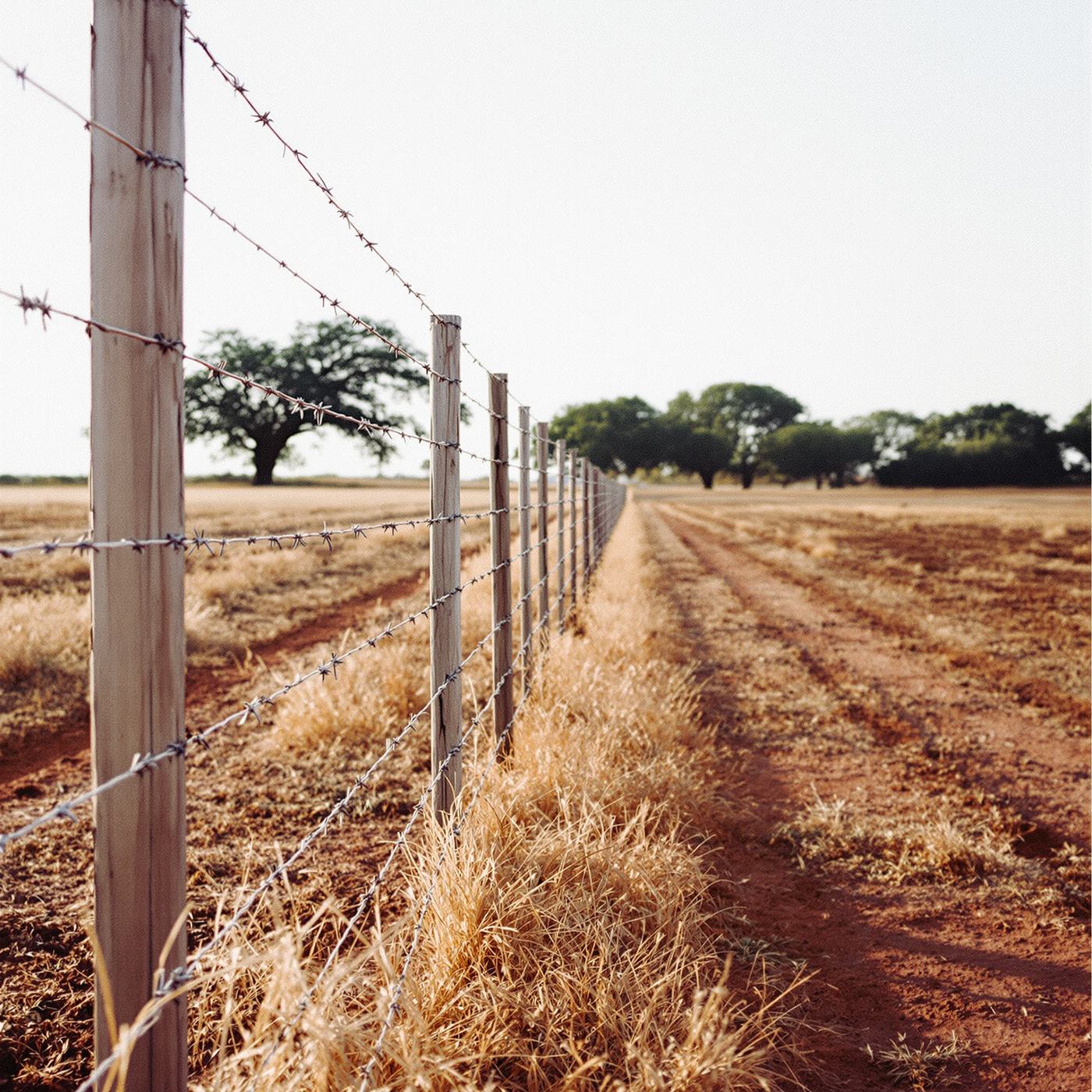
Everything was fenced, most of it cross-fenced, and every single fence needed work.
All around us were other ranches. Out back, of all things, our land bordered that of the wrestler The Undertaker. I never met him, but our cows did, since they wandered over to his place now and then. Every so often he had visitors people in Rockne talked about for weeks afterward, Brad Pitt, for example, or Tom Cruise.
Our neighbor was Peggy, an elderly lady who had lived there for decades and whose husband had died shortly before we arrived. Her place was a ten-minute walk away.
Four or five other properties lay along the gravel road. We shared the upkeep and not much else. That wasn't a falling-out, that's just country life. You leave each other alone until someone needs help.
We were remote, but not lonely. Twenty-five minutes to Bastrop, fifty to Austin. And ten minutes away was Rockne, a hamlet of three hundred souls founded in the 1860s by German immigrants. Their first cabins are a museum today, and I drove out there often, long before I understood why it moved me so much.
We went to Mass at Sacred Heart Church in Rockne. At the gas station with its little store we bought eggs, bread and milk, and the owners had a story ready every visit about the celebrities who dropped in for cigarettes and beer while staying with The Undertaker.
What owning land does to a man
That is how life looked from the outside. From the inside it looked completely different, and there are hardly words for it.
The years on the ranch were the best of my life. I don't say that lightly.
And today I know it as clearly as I did then: this is how I want to live. It isn't a memory, it's unfinished business. Ever since that summer I have worked stubbornly toward making it that way again. I rarely talk about it, because I know how hard the thought is for the people closest to me. I trust that one day it will all fall into place.
You can talk about acreage. The rest is much harder to put into words.
An American rancher once described what it's like to walk your own land and look up at the sky, at the clouds and the grass, and feel the line between yourself and all of it go soft. She called it the deepest sense of belonging she had ever known. Back then I thought she was romanticizing. After a few weeks I knew she was simply describing it.
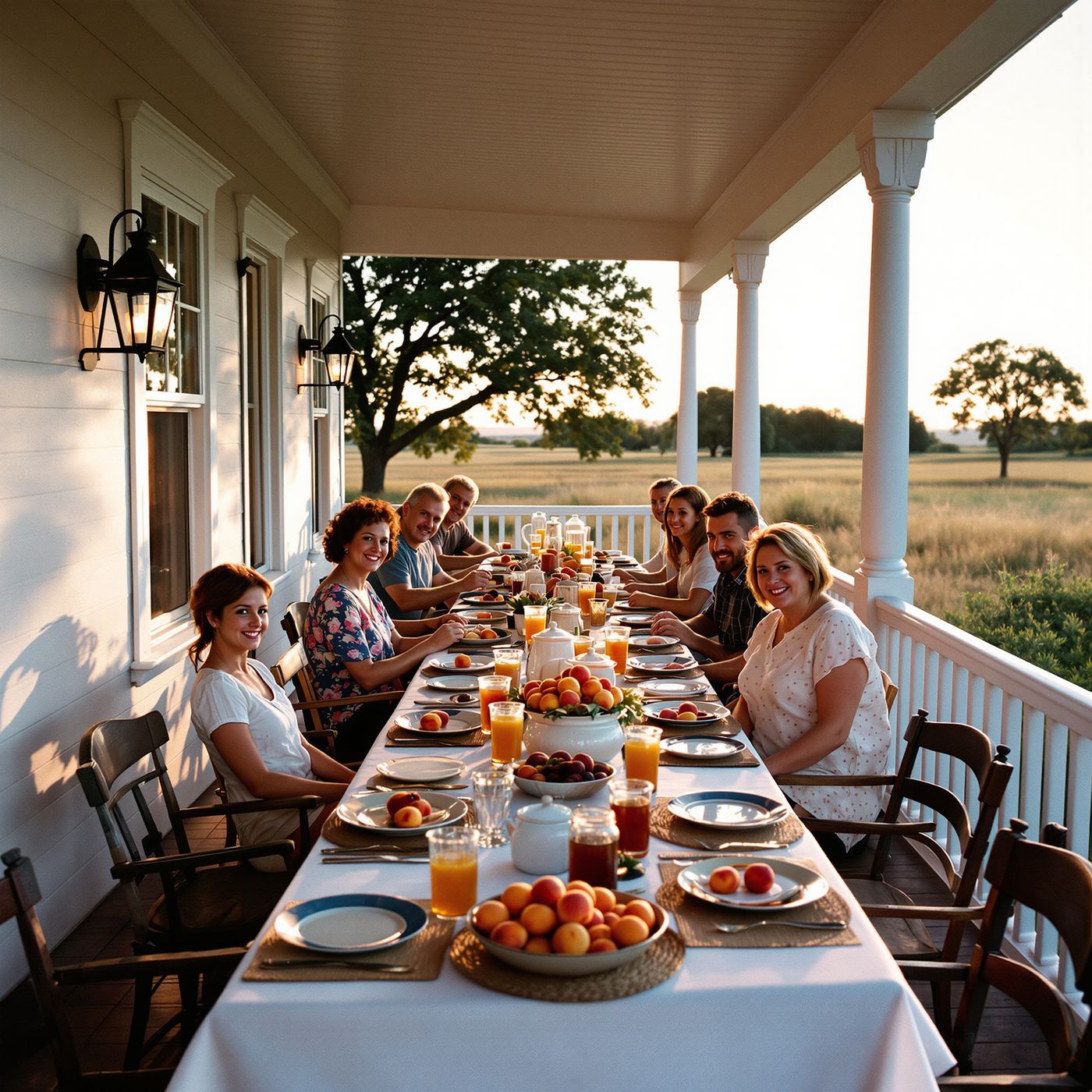
This was where my children would grow up. This was where I saw us growing old, at Christmas and Thanksgiving with a table that needed extending. It was to be the Sauerborn family seat in Texas, and one day I wanted to be laid to rest under one of those oaks, beneath the biggest sky I know.
For the first time in my life, it felt as if we had arrived.
The gentleman rancher
And now I have to be honest, or all of this turns into a postcard.
I wasn't a rancher. I was a gentleman rancher.
It's an old phrase, half honorable and half mocking, and it fits me exactly. The gentleman rancher owns the land, pays for the land, loves the land. And he chooses when to get his hands dirty.
That was the whole point. Not the work. The choice.
I had no interest in mucking out stalls. I had no interest in hauling hay to the pasture at four in the morning in February drizzle because it has to be done whether you feel like it or not. I never claimed otherwise, not then and not now. Anyone who dresses himself up in the romance of hard labor without actually doing it makes a fool of himself in front of the people who do, and they see through you on day one anyway.
When I wanted to ride, my horse stood saddled and ready. One of the hands had tacked it up. I mounted, rode across my land, and when I got back, someone took the reins from me.
That's the truth, and I'm not embarrassed by it.
Because what moved me about that life was never the pitchfork. It was the relationship with the land. The mist in the hollows. The fence line I walked. Knowing that this earth under my boots belonged to us, that the oaks stood on it long before any Sauerborn crossed the Atlantic, and that they will still be standing when nothing is left of me.
The gentleman rancher is a deeply American creature. He has built something, usually far away, usually in a city, and he turns what he has earned into land, because land is the one thing that feels like it will last. If you know that urge and want to follow it in the USA today, you'll find the tax side of it under US real estate, because owning property in America as a European is anything but simple.
In the mornings I was on the phone with clients in London, in the afternoons I was ordering fence posts. I reviewed contracts and then made sandwiches and put drinks on ice so the horse buyers had something after their test ride in the heat. I was both. It would only be a lie if I left one of them out.
Seven children and no classroom
Above all, I had to be honest with the children, because for them the ranch was no retreat. It was the entire curriculum.
We didn't just live this life, we built it. Nothing was supposed to happen on the side, least of all raising the kids.
For schooling there's a popular model in the United States, the One Day Academy. Children attend school one day a week and do the other four at home. For us, that one day took place at a large nondenominational church in the area, and the friendships made there carried over outside it. It helps to know that the materials at these academies are designed for self-study. In practice, parents hardly teach math at all. They make sure someone sits down.
On Sundays there was catechism at Sacred Heart as well.
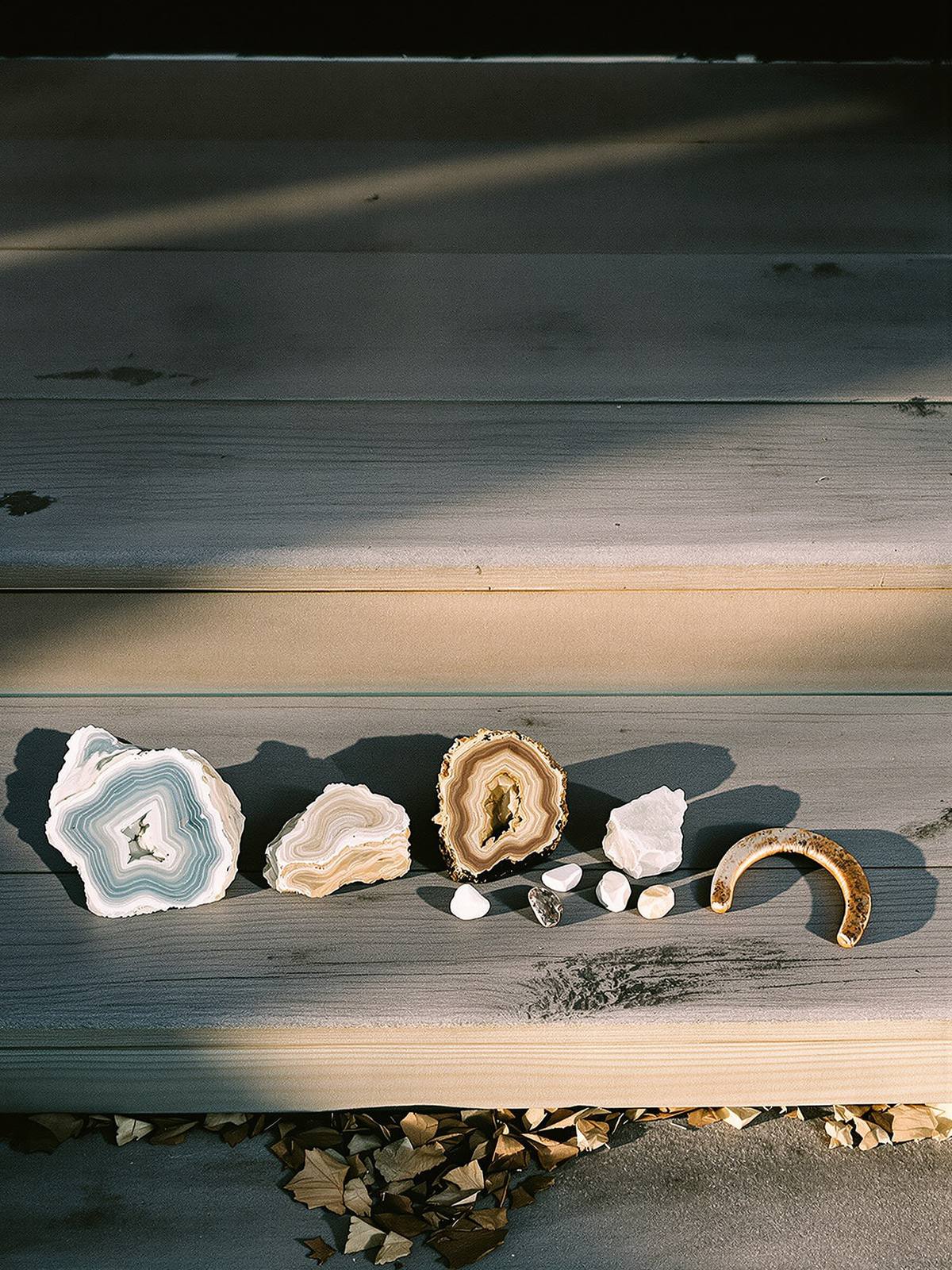
Once the schoolwork was done, the kids were gone. The rest of the day belonged to the pond, the horses, the trees and the hunt for petrified wood, of which there's a surprising amount lying around in that part of Texas.
They had chores too. Feeding the animals, tidying up, pitching in, and the list grew longer with every new animal. That was the point. A family that works on something together is a different thing from a family that eats dinner together.
When you school at home, what learning even means starts to shift. It stops being a subject and becomes a way of facing the day. What's that hawk up there called, and what does it live on? Why do the leaves on this tree look sick? How do cicadas make that sound, and why do they all stop at once? On a ranch a child stumbles over half a dozen questions like these every day. Our real job as parents was to keep their senses open. Children take care of the rest on their own, because they're born explorers and hate nothing more than an unanswered question.
In the evenings we often drove into Austin, where my wife and the kids trained in capoeira. They had started in Florida, and we already knew members of the Austin group from meetups there.
I have never seen my children that tired again. Bedtime wasn't a battle, it was a relief. They keeled over and slept until morning.
Twenty horses
What the children experienced as an adventure was a business for their mother from day one.
The ranch was meant to be a business, not an expensive hobby.
My wife had spent fifteen years raising children while I was on the road. That it was now her turn to build something of her own seemed obvious to both of us. Whether that was wise is another question, and the answer doesn't belong in this chapter.
The plan was a training operation for young Quarter Horses using natural horsemanship, the school that doesn't break a horse's will but settles the pecking order in a language the animal understands. Over the years my wife had pieced it together from books, clinics and videos and turned it into her own program: three months per horse.
I like horses. I'm neither a good rider nor an expert in any sense. My role matched that: kids, household, a bit of marketing. And paying.
There was a lot to pay for.
First the whole property had to be fenced and cross-fenced. Then water lines out to the pastures. Then mobile shelters, trailers, an arena. Saddles, bridles, blankets, again and again. It never stopped, and anyone who thinks he knows what something will cost hasn't started it yet.
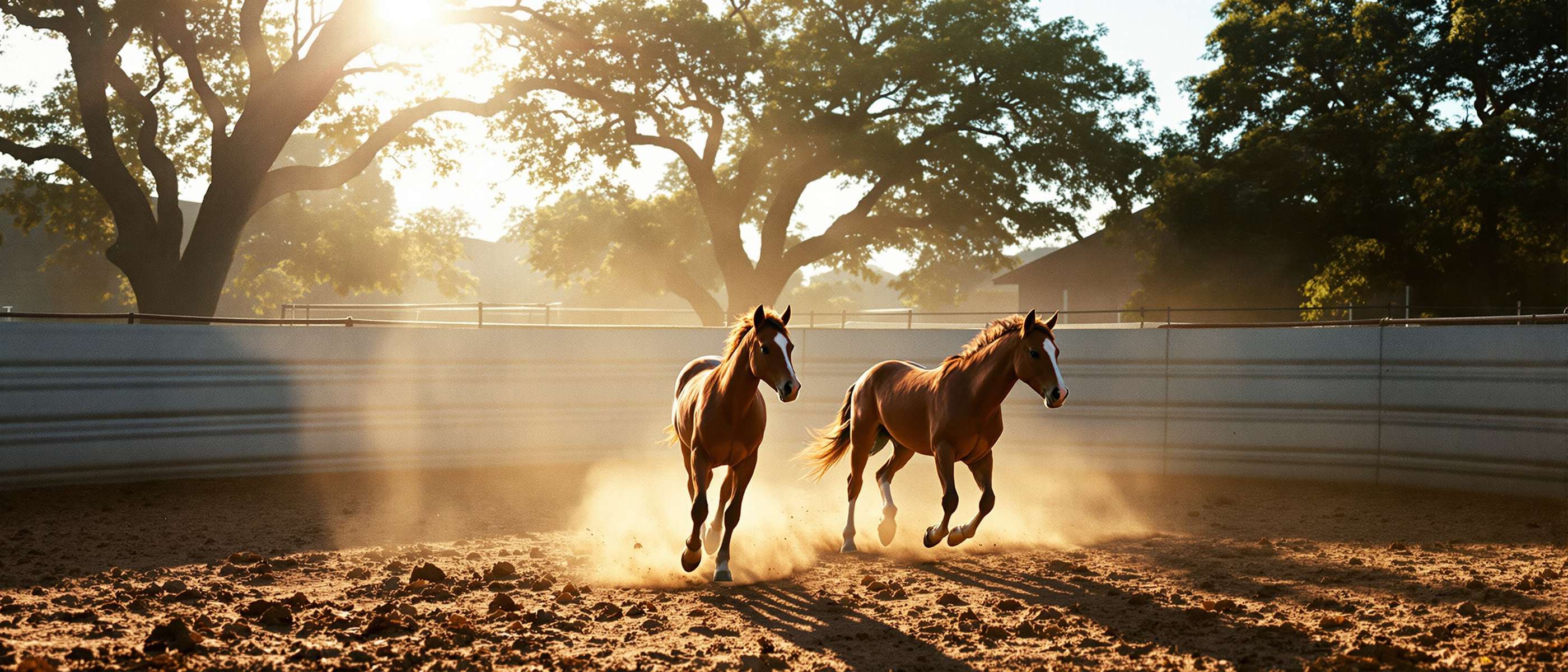
Then the horses. Because of the drought, people were letting even good animals go cheap, and we thought that was the moment to buy. We bought horse after horse until there were more than twenty on the place.
And because the pastures were scorched, every one of them had to be fed. Hay came by the truckload, feed by the ton. Build a herd in a drought year and you're not buying animals, you're buying feed bills.
It didn't bother me. We were both learning a trade we didn't know, and learning burns money. Some of what we did was plain dumb. But hindsight is the cheapest commodity in the world.
The horses were sold as young, reliable prospects to reining, barrel and western pleasure riders. There's a real market for that in Texas, because there it's an amateur sport, not a luxury. People want a horse that doesn't spook, that you can handle and that a daughter can sit on. Around five thousand dollars.
After a while we were selling two horses a month on average. That was an excellent number for an operation that hadn't existed a year earlier. We advertised on the usual sites, and one of my few useful contributions was a proper website with pictures by a real photographer. A few of them still hang on my wall today.
The business still lost money. But I could see where it was heading. Along the way I learned what I now explain every month: an American business is quick to set up and slow to understand. How to set one up properly today is covered under US company formation, and if the business is to be based in Texas, the Texas C Corporation is the usual way in.
At first we had no employees. My eldest son helped his mother, and together they rode and worked an average of ten horses a day. He was sixteen, out there twelve hours a day, seven days a week, and he was happy. I was immensely proud of him and worried at the same time, because he has an exceptional mind and I could see the books falling behind the horses.
Half past five, mist, London
The horses didn't pay for any of this. Europe did, and before sunrise.
Before the ranch, I had flown to London for three weeks every eight weeks. In the first year on the ranch I didn't leave the United States once. I had committed to this, and I meant it.
I set up my office in the little guest cabin. I got up around five. Five in Texas is midday in London, so half a European working day fit into my early hours.
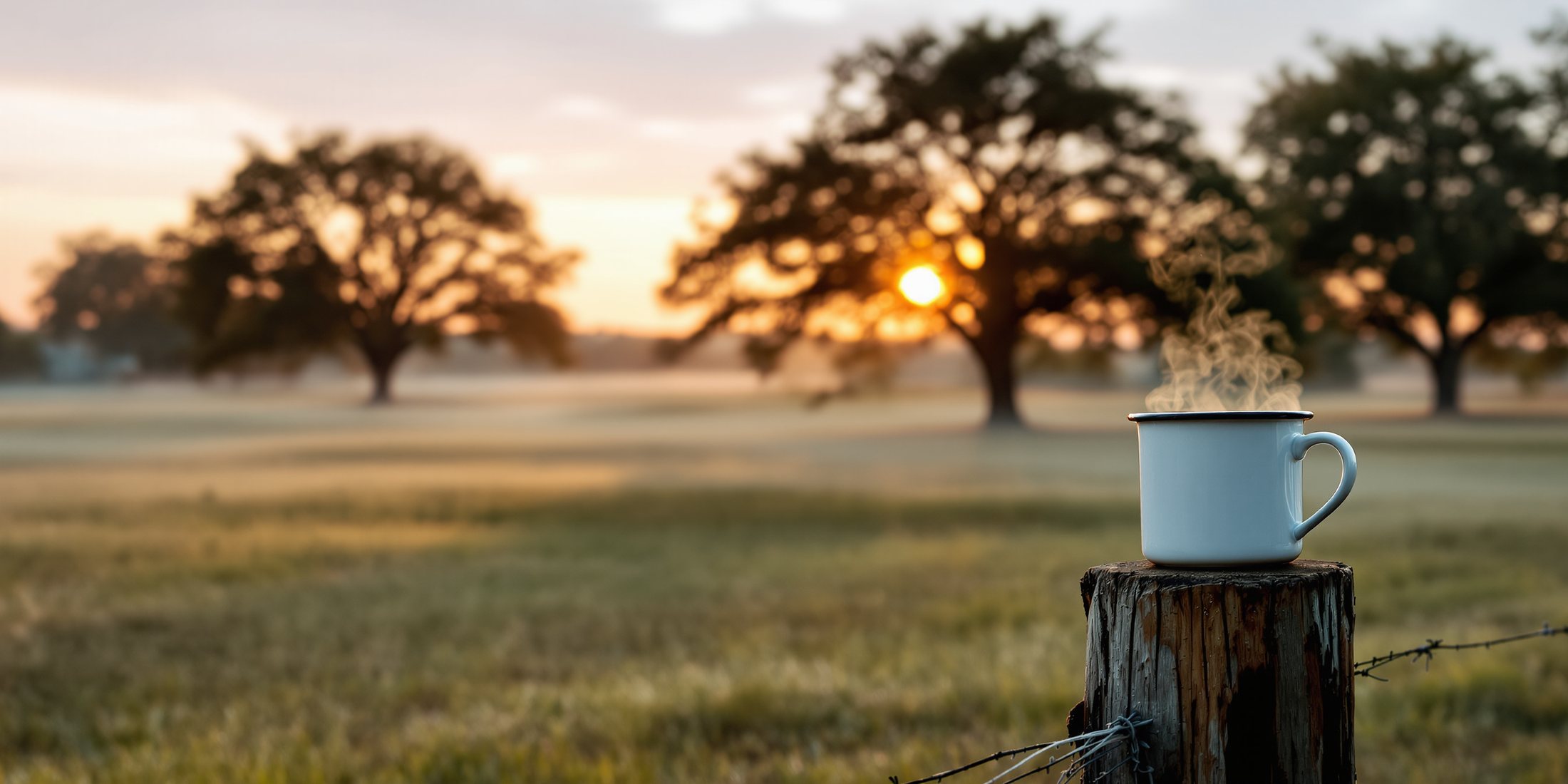
But first I walked the fences. Coffee in one hand, cigarette in the other. The grass was wet, the air still cool, and over the hollows hung the mist that the sun would burn off an hour later as if it had never been there.
I don't know how to explain this without getting sentimental. After twenty years in offices, after balance sheets, structures, contracts and companies that exist only on paper, here for the first time was something you could touch. A fence is either intact or it isn't. A horse is either in the pasture or at the neighbor's. There's no discretion and no interpretation.
And it was entrusted to me. The land, the animals, the water. It felt as if all of it was part of the family, and I have never felt that about any of my businesses, before or since.
I believe there's something in working with your hands that nothing can replace for a man. Patching a hole in a fence or catching a runaway horse gives you a certainty no business deal ever does.
Most days, of course, there was no hole to patch. Then, once the coffee was gone, I made my calls, and I made as many as I could outside, as long as it wasn't raining and the wind wasn't blowing.
By around noon Texas time, Europe was done for the day. It's hard to describe what that feels like: half the day still ahead of you and knowing nobody is going to call anymore. A few emails, and the rest belonged to the ranch.
It only worked because I had people in London and Miami who could work without supervision and wanted to. I had worried that my absence would cause problems. It didn't. My brother ran London brilliantly, and that is a lesson I have passed on to every entrepreneur planning to emigrate ever since: If your business needs you there, you don't have a business, you have a job. If you are planning this step today, you'll find the tax and immigration side with us under US Taxes and US Visas and Green Cards.
In the afternoons I drove into Bastrop for tools, feed, equipment. Or we went to look at horses. And when my wife was out with the kids and I had the place to myself, I'd sit on the porch with a six-pack and watch my own life being exactly right.
A gate left open
Live like this and you might easily start thinking you don't need anyone anymore. For me it was exactly the opposite.
Moving to the country was never about retreating.
That needs saying, because homeschoolers and people who move out to a farm instantly conjure up the image of the loner who digs in and waits for the collapse. That was never my idea. I didn't want to be self-sufficient, I wanted to belong, and on several levels at once.
Our first friendships came through capoeira in Austin, because as newcomers we tagged along wherever people let us.
The parish took us in. After Sunday Mass people stayed for coffee, and the interest in this German family with seven children was considerable. We were treated like a small sensation; people wanted to hear the whole story and invited us over. That is how I met my friend David Jones, who has since passed away, and his family.
Through the academy the kids made friends, through the kids we met their parents, and they were almost always families like ours: a small ranch, lots of children, people of faith.
The ranch itself opened doors too. We made a point of hiring local tradesmen and small businesses, and some of those jobs turned into barbecues.
Word got around that a new family with plenty of work had moved in, and soon tradesmen were coming up the gravel road unannounced to introduce themselves. In London I wouldn't even have opened the door. Here I loved those visits. I enjoyed talking about the projects and wanted to hear how a professional saw things. It even flattered me, because it meant people took us seriously.
Once the first horses were ready to sell, buyers came almost every day. Every young business has that moment when the idea becomes a business, and it always has the same face: a stranger with money in his pocket who wants to know if this is any good.
It was. I can still see my wife standing there with the first check in her hand, in disbelief, as the buyer rolled off the property with his trailer.
Then came riding lessons and horsemanship courses for local homeschoolers, advertised as far as Austin, and from then on groups of kids were in the arena several times a week. Not big money, but steady, and above all: even more people.
Later we offered guided trail rides. Our first customer was the Bastrop police chief, who gave his wife the ride as a birthday present.
Customers, suppliers, tradesmen, neighbors, friends, kids. A constant coming and going. That was exactly what I wanted. A ranch with an open gate is something different from a fortress with a view.
What goes on the table
An open gate comes with a table, and a table comes with the question of what goes on it.
On a piece of land you can't dodge it. It's waiting at the door every morning.
The grass grows or it doesn't. The well gives water or it doesn't. The rain comes, or it just doesn't, and in our first year it didn't.
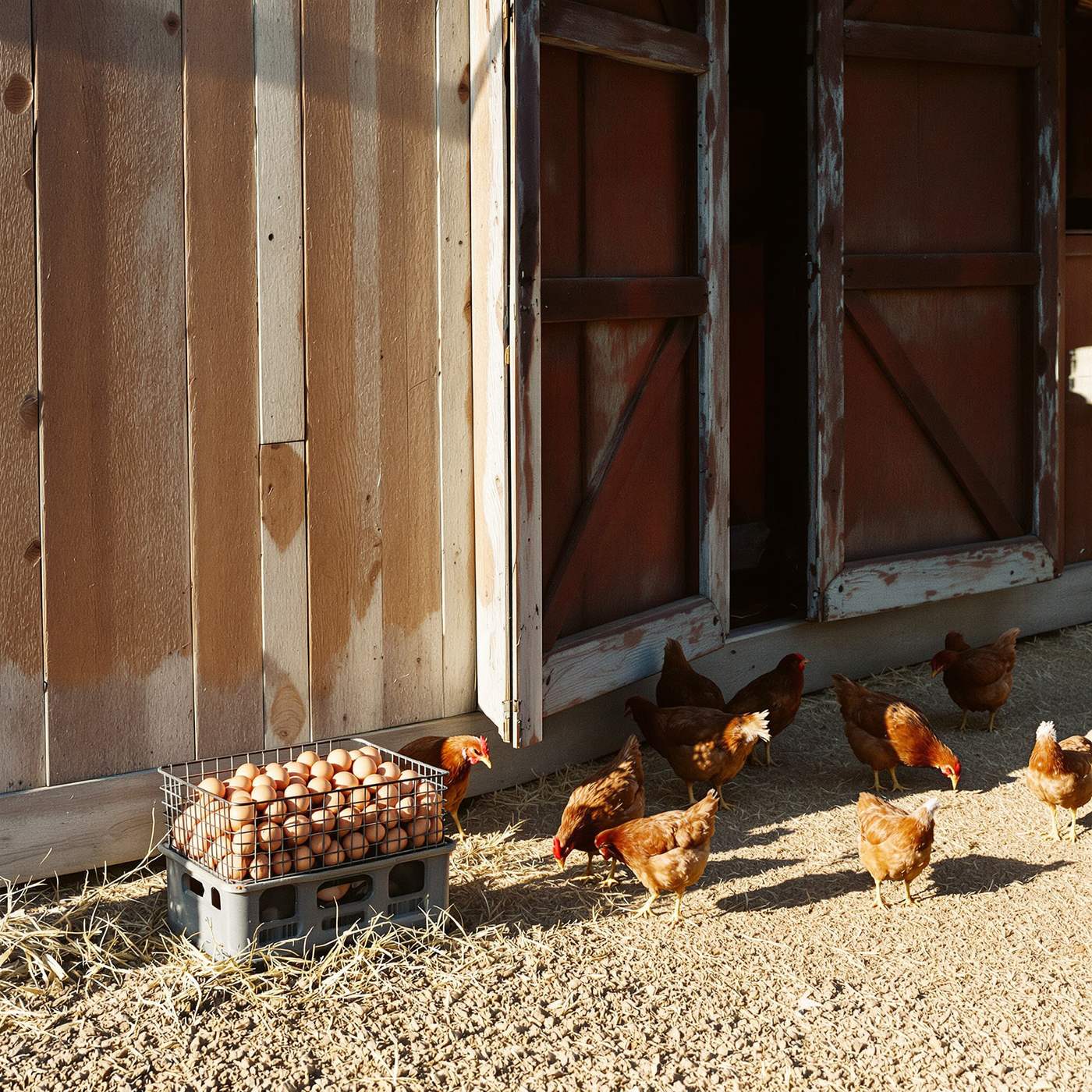
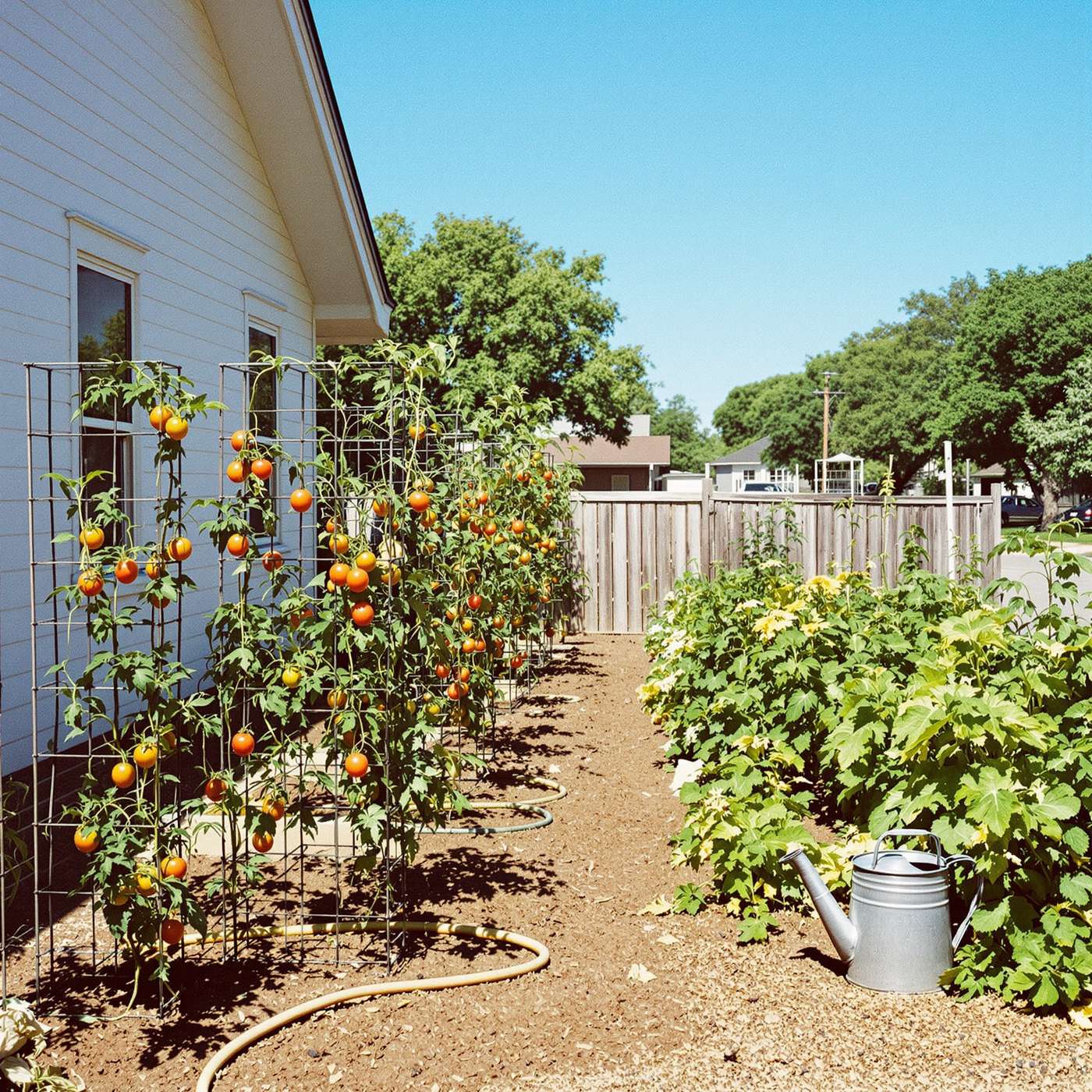
We never wanted to be self-sufficient as an ideology. But we did want to shorten the distance between the soil and our table. Eggs from our own hens. A garden that demanded more work than we had imagined and taught us that humility is an agricultural category. Meat from neighbors whose pastures we had seen and whose names we knew. Honey from a beekeeper a few miles down the road.
This isn't about nutrition theory or morality. It's about being part of a chain again instead of standing at the end of a supermarket shelf. A tomato grown two hundred meters from the kitchen doesn't taste better because it's more virtuous. It tastes better because it was picked ripe, and because you know how much water it cost in a drought summer.
We were far too inexperienced and far too impatient for it, and we didn't do it well. But we understood what it was about. In Central Texas, where not a drop falls for weeks and the ground cracks like old leather, you learn that faster than elsewhere.
The German trail
Ask where your food comes from, and sooner or later you ask where the place you eat it comes from. That's where it got strange.
As a German, I had moved to a place founded by Germans. Without meaning to. Without the slightest idea.
Rockne, our little town of three hundred souls, was laid out in the 1860s by German emigrants. The church has pictures with German inscriptions. The families carry the same German names as a hundred and fifty years ago. The parish keeps a red book where you can look up your own ancestry, which isn't folklore but a practical necessity in a place where the same families have intermarried for generations. And until the Second World War, the everyday language in Rockne was German.
Our land had once been part of the Walnut Creek Ranch, established by one of those German founders a hundred and fifty years before we bought a sliver of it.
Without knowing it, I had landed in the middle of one of the greatest German emigration stories there is.
It began with letters. In the 1830s a German farmer named Johann Friedrich Ernst settled in a place called Industry, then the edge of the known world, in a young republic that had just broken away from Mexico and was not yet part of the United States. Ernst wrote home. He described endless space, fertile soil, no princes, no censors, no recruiting officers. A land where any hardworking man could acquire land and live free.
German newspapers printed those letters. What broke out next is still called Texas fever by historians today.
You have to remember what words like that meant back then. Germany was not free. It was a patchwork of principalities with censorship, bureaucracy and long military service. The population grew, farms got narrower with every inheritance until they could no longer feed a family, and early industrialization pulled the ground out from under the old trades. Millions of people looked at their future and saw a wall.
And then, in the newspaper, a sentence from the other side of the ocean:
Here every free man can own land.
Over the course of the 19th century, five and a half million Germans emigrated to the United States, at times the country's largest immigrant group. Hundreds of thousands went to Texas and settled the triangle between San Antonio, Austin and the Hill Country that is still called German Texas today.
This shouldn't be romanticized. The price was horrific. In 1842 German noblemen founded the Adelsverein, the Society for the Protection of German Immigrants in Texas, and its execution turned into a disaster. Families sold everything, house, farm, tools, their whole livelihood, to pay for the crossing and the promise of prepared settlements. They said goodbye to parents they would never see again. Many landed at a Gulf port called Indianola, and there, for a large share of them, the real nightmare began: too few wagons, too little food, no organization, thousands stranded on the coast while disease and chaos swept the camps.
These people had no plan B. No safety net. No state to catch them.
And they came anyway.
Into this disaster stepped one of the most remarkable men in Texas history. Otfried Hans Freiherr von Meusebach, born in Dillenburg in 1812, lawyer, judge, mayor, a man from the liberal circles that dreamed of a different Germany. On arrival he declared he would never go back, dropped his noble title and from then on called himself John O. Meusebach. No longer a baron. A citizen.
He led the settlers into the Hill Country and did something there with hardly a parallel on the American frontier. He rode out and made peace with the Comanche. To this day it is one of the very few treaties between European settlers and a Native American nation that both sides kept for good.
Under the protection of that peace a town grew up. It's called Fredericksburg.
The grandson of a German hotelier on its main street was Chester W. Nimitz, who commanded the US Pacific Fleet in the Second World War. His story now fills the National Museum of the Pacific War in the heart of Fredericksburg. From emigrant to the admiral who helped save the free world, in three generations.
I've written up the whole story in detail on my English blog: They Sold Everything for America.
Why it belongs here is quickly told.
I left in 2008, not 1848. I came with a laptop, not on a sailing ship. Behind me I had a firm and the proceeds of selling a house in London, not the proceeds of a farm that was gone for good afterward. Compared with theirs, my risk was a stroll in the park, and I make no claim to any comparison.
But the drive is still the same. Space instead of confinement. Opportunity instead of administration. And that one, really outrageous idea that a free person with land under their feet and no master above them can build whatever they are capable of building.
A call in July
And then Germany called.
Another perfect day, July, just after noon. A German number I didn't recognize on the screen. I assumed it was a client.
It was my aunt Maria, my father's sister. We rarely spoke, and I was glad to hear her voice.
She didn't even let me finish. My father was dead, she said, calm and matter-of-fact. Fifty-nine years old. An abdominal aortic aneurysm. He had gone to the hospital with excruciating back pain, the doctors had operated immediately, and he had not survived the surgery.
She wished me and my siblings all the best. Then we hung up.
I stood on a porch in Texas with the phone in my hand and understood nothing. Just a few days earlier I had talked to him on the phone.
No tears came.
The last ten years of his life had been hard, for him and for everyone who loved him. The details belong to him, not to this page.
We hadn't always had an easy time of it; for a few years we didn't speak at all. But when he died, everything between us was fine. He had just made a fresh start as a consultant and was full of plans. A month earlier he had visited me in London. We went out to dinner and talked and talked, and for the first time in a long while it looked as if things were turning around for him.
And then this.
I knew that very second that I would fly to Germany for the funeral. One of my brothers had planned his wedding for the same week. Celebrating a wedding three days after a burial: none of us could imagine it. We did it anyway.
The funeral in Freiburg was anything but gloomy. The requiem was celebrated jointly by an Opus Dei priest and an Augustinian father, both close friends of my father. The church was full: friends, former business partners, colleagues. My brothers and I carried him to his grave, and afterward everyone gathered at a nearby inn, with plenty of food and even more wine.
My father would have loved it.
Nobody had agreed on it, but everyone understood this wasn't the moment to talk about the hard years. Instead we shared the best stories about him, the touching ones and the funny ones, and there were plenty of both.
A few days later came the wedding. During the toast to Dad, a few of us cried. But underneath was a joy that's hard to explain. It comes from knowing that all of this is deeply human and simply part of life, and that since it is out of our hands anyway, all we can do is trust.
Omnia ad bonum.
From Germany I called home every day. Meanwhile, the new ranch hand and his girlfriend had arrived at the ranch. Soon after, I flew back to Texas.
I had no idea that the best time of my life was beginning to end in exactly those weeks.
What remains
I lost the ranch.
How that happened is a story for another time. It's a story of its own, and it needs more distance than I have today. But it belongs here, so nobody mistakes this for a postcard.
What remains weighs more than what is gone.
I know now what it feels like. I know what it's like to walk your own land at half past five with a coffee while the mist still sits in the hollows. I know how children sleep after a whole day outdoors. I know how the light falls across an unmown Texas pasture an hour before sunset, and I don't need a photo for that.
And I know what it means to choose a life instead of drifting into one. In the end, that's why I do this work. I don't sell tax savings. I help people prepare a decision like that so it holds. How we work and what it costs is laid out openly under The Firm.
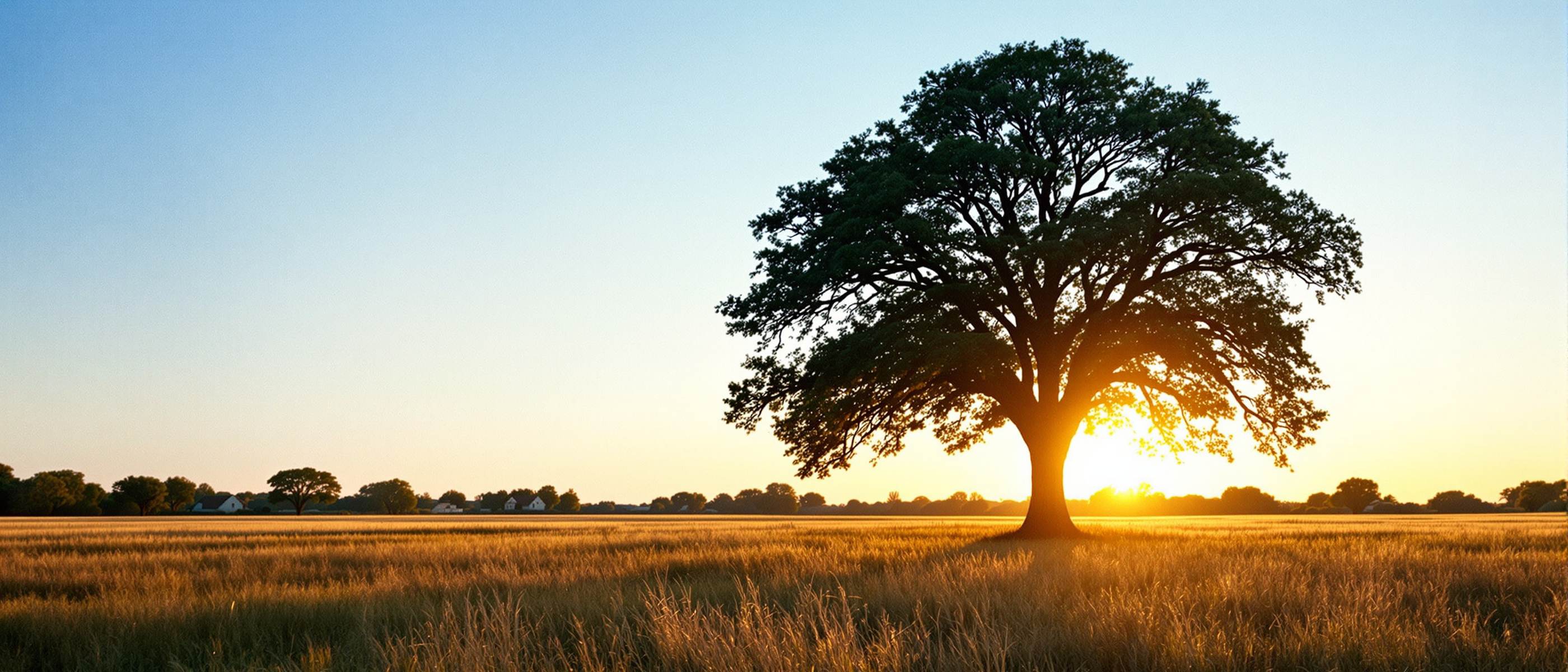
And southeast of Austin, at the end of a gravel road, stands a very old oak that I once wanted to lie under one day.
I haven't given up on that plan.