

I came to America in 2008 as a conservative. My values have stayed the same. The conservatives have not.
Why I'm no longer a conservative
Part of the guide Freedom in the USA: what it means in law and in everyday life
What is happening on the American political right today has nothing to do with classic conservative ideals anymore. Ronald Reagan would be considered far too moderate now and would stand no chance as the Republican presidential nominee. Modern American conservatives would boo him off the stage.
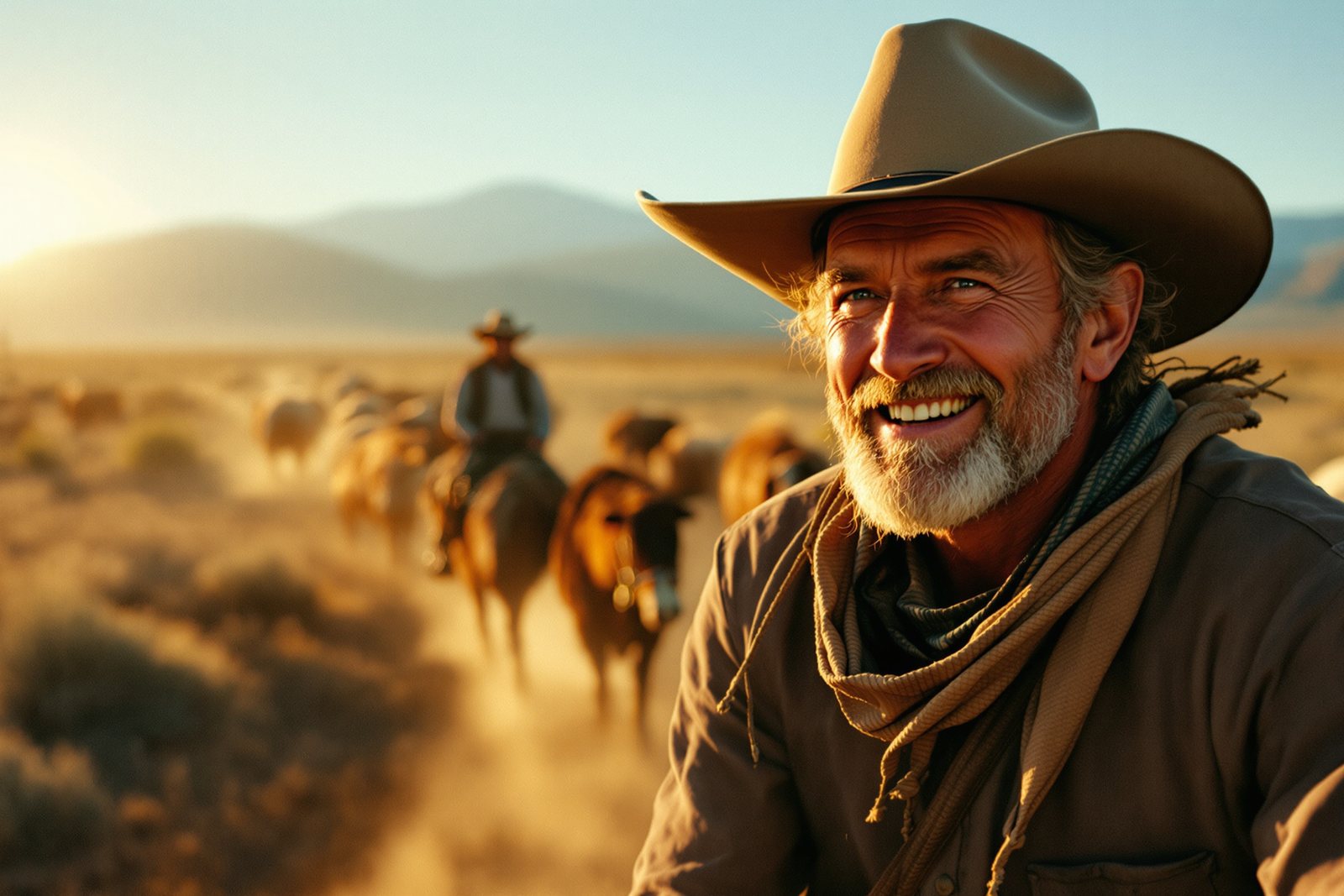
The idea that today's American president still represents conservatives across the Western world, let alone the entire Western world order, is absurd.
So I no longer call myself a conservative either. The word simply carries too many negative associations now. I can no longer identify with the conservative movement. In a way, like many other former conservatives, I've become politically homeless, at least in the USA.
It's not my style to write Americans off wholesale, let alone stoke anti-American prejudice. A country of around 342 million people is so complex and diverse that any generalization would be naive.
And yet America, or at least the America we see in the news, has become foreign to us over the past 20 years. The trend began no later than the presidency of George W. Bush and the high point of neoconservatism.
Granted, Barack Obama was president from 2009 to 2017, and you might think his presidency pushed the country in a different direction. Quite the opposite: the right-wing populist voices didn't get any quieter during Obama's time in office. If anything, his reputation as an ultra-liberal only pulled the right closer together and made it louder. Not to mention that the Republicans in Congress practically blocked him.
Cynics will say that Obama, a Nobel Peace Prize winner, acted like a neoconservative himself on military matters and kept meddling in other countries' affairs. Maybe so. But this piece is about the conservatives, not Obama. We can talk about Obama another time.
And so Trump's election was merely the early culmination of a long-running shift in America's conservative movement toward populism and power-hungry nihilism.
1A quiet childhood and youth in provincial Baden
I grew up in a conservative family, deep in the provinces of southwest Germany, in beautiful Freiburg. Father an entrepreneur, mother a homemaker. Seven younger siblings. Catholic.

It was precisely the provincial feel that made Freiburg so appealing to me back then: the idyllic world of handsome medieval townhouses decked out with colorful geraniums and the fine boutiques of the historic old town were entirely my style. I even had a soft spot for the aging '68ers who had returned to the bosom of the bourgeoisie and seemed drawn to Freiburg like a magnet. They had long since swapped commune life for careers as architects or lawyers and now lived in chic late-19th-century apartments in the Wiehre district. With parquet floors and stucco ceilings, of course. They had become what they had always feared like the devil fears holy water: part of the establishment. A bit stuffy. They voted Green and considered themselves, and Freiburg in general, the center of the universe. "Global eco-capital" and all that.
And of course Freiburg had always had its students, many of them stoned by breakfast, cycling along the Dreisam river in knitted sweaters and cork sandals.
Yes, life in Freiburg was peaceful, or, to borrow a film title, "a long, quiet river".
That well-kept tranquility of my youth, the quality of life in southern Germany and the self-assured middle-class spirit I experienced in Freiburg still shape me today.
2Clean-cut boys, discipline and order
For all the warmth at home, there was a certain drill: my mother strictly forbade my brothers and me to wear long hair, earrings or even sneakers as everyday shoes. Faded jeans were off limits. So, naturally, was the trashy teen magazine Bravo, with its nude photos of pimply teenagers that bordered on the pedophilic.

My siblings and I had to learn a musical instrument. Pop or rock music could only be played at home through headphones. And even though I did things differently with my own kids later on, as a teenager these rules made sense to me. I felt no urge to rebel against them. Teenage rebellion simply wasn't my thing.
So it's no surprise that I already identified as a conservative in my teens. Margaret Thatcher and Ronald Reagan were politicians I admired (and overrated). I believed in values like freedom and personal responsibility, hard work and entrepreneurship.
I could never understand, for example, what was attractive about the passive, do-nothing lifestyle of a typical Freiburg perpetual student. Who would voluntarily spend years just "hanging around" and letting themselves go? Ideally on Daddy's dime, a hard-working entrepreneur bankrolling his offspring's life of idleness?
3The promise of salvation through capitalism
A focus on achievement, hard work, making something of yourself, depending neither on your parents nor on society: that seemed fair to me. It made sense. To us European conservatives, the American economic system and laissez-faire capitalism were the gold standard. We hoped Europe's welfare and social systems, far too generous in our view, would one day be cut back to US levels.

Strangely, I refused to see that this position might clash with the Christian faith I already held strongly as a young man.
This was still the Cold War, and in our eyes the only alternative to the American model was a communist reign of terror along Soviet lines; that's what we learned at school. So we were glad that Germany was an American vassal state and that America, with its Pershing missiles, protected us from the Russian hordes. Back then, President Reagan truly represented not just the USA but the entire Western (our) world order. And we European conservatives were grateful for a figurehead like Reagan.
We wished the politicians of the Bonn Republic, always intent on consensus and compromise, would act a bit more American and stop being such "wimps". Be tough for once. Push through unpopular decisions for once.
4America!
Around 20 years later, in 2008, I moved lock, stock and barrel from London to America, to Miami, Florida, to be exact.

At last! A lifelong dream had come true, and I believed I had arrived where I would stay for the rest of my life.
I had previously moved from Germany to Switzerland and from there to the UK for job offers, but the move to America was less about my career and mainly about personal reasons.
If you're thinking of moving to the USA yourself, you can learn more about your visa options here.
I had always loved and admired America. I was convinced I had landed in the land of freedom and unlimited opportunity. The country I had known during my Cold War childhood and youth only from TV shows like "Knight Rider", "The A-Team" and "The Fall Guy".
The United States was Ronald Reagan's country, the man who, together with Maggie Thatcher and Pope John Paul II, had defeated communism. The USA was the country that freed Germany from the scourge of Nazi rule and then generously helped us Germans rebuild with loans.
In later decades, too, the Americans actively took responsibility in Europe, for example in the Yugoslav civil war, while timid Europeans simply looked on as 8,000 Bosnians were massacred in Srebrenica (less than 1,500 kilometers from Freiburg).
The USA was the land where you could go from proverbial dishwasher to millionaire. If you worked hard, you could go far in America. Freeloaders weren't rewarded with welfare here; they went away empty-handed.
And America was the land of freedom, where no government told you that you needed health insurance or how much you had to put aside for retirement.
There were no state-sanctioned broadcasters like ARD, ZDF or the BBC. TV networks had to fund themselves and deliver programming good enough that companies would gladly back it with their advertising budgets.
In America a liter of gas cost €0.50, because the government didn't use the thumbscrew of fuel tax to teach citizens a lesson in environmental policy.
In the USA, parents were not obliged to send their children to school if, for example, they felt the school was academically weak and served mainly to feed students state propaganda. Here you could take responsibility for your children's education yourself.
In America, every citizen can buy guns. The state paternalism and petty restrictions on gun ownership that you are used to in Europe simply do not exist. Citizens are treated as responsible adults, not as toddlers.
And there was no church tax in America. Here the churches had to make their message so convincing that the faithful would contribute to their congregation voluntarily.
I supported every one of these conservative positions with enthusiasm, and some of them I still do today. Whenever someone asked me what I liked so much about life in the USA, these were the examples I gave. It was the spirit of freedom that fascinated me about living in America. I believed I had finally found my true home.
In writing: which visa fits you and your family, prepared with the immigration attorney on the firm's team.
5The world economy on the brink
We arrived in Florida the very week Lehman Brothers collapsed and the world economy was heading for the abyss. Then Barack Obama was elected President of the United States.
The election of the first Black president, a social democrat with the middle name "Hussein" to boot, sent the machinery of the conservative US media into overdrive for the next eight years. Conservatives zeroed in on Obama in a flash.
Right-wing pundits immediately blamed the dramatic economic upheaval on the new president, who took office in January 2009. A doomsday mood took hold, and conservative radio and TV shows exploited it with relish: the price of gold hit unheard-of highs, the prepper movement boomed, and many Americans began stockpiling guns, ammunition and canned food in their garages to be ready for anything.
2009 also marked the start of the "Tea Party movement", which united those forces in the conservative and Republican camp fighting against the political and academic elites who, in the eyes of Tea Party supporters, had made Obama's victory possible in the first place.
The Tea Party positioned itself well to the right of the Republican establishment and drove it before it. In the midterm elections in the fall of 2010, a number of Democrats and moderate Republicans were chased out of office by Tea Party candidates, fueled by conservative media that courted those candidates and gave them airtime on their shows nonstop.
6My love affair with Sean Hannity, Bill O'Reilly and Laura Ingraham
And I soaked up the messages of Rush Limbaugh, Sean Hannity, Michael Savage and Glenn Beck like a sponge. Talk radio and Fox News: to me, that was part of the American experience. It simply came with the territory if you wanted to be a conservative, I told myself.

As I saw it, the conservative talk show hosts were Reagan's heirs, keeping his message alive and authentic. They called themselves "Reagan conservatives", talked constantly about the former president and his achievements, and about how Obama was betraying his legacy.
And even though I found many of the views they pushed crude and over the top, I felt there was a great deal we shared, a kinship that matched my own convictions in many ways: pro-business, pro-family, pro-tradition, pro-tax cuts, pro-Christianity, pro-freedom, pro-life and so on.
I was fascinated that in the USA, opinions outside the political mainstream that European media have always lulled us with could also find a wide audience. That was a completely new and impressive experience for me.
Coming from Europe, I was used to what I saw as the consistently left-leaning coverage of the major newspapers and TV channels. Here, the shortwave radio in my pickup truck crackled nonstop with a completely different kind of political commentary, talk radio in its purest form: emotional, bluntly provocative, crude, ruthless and brazen:
- Obama is a closet communist;
- Obama wants to take our guns;
- Obama isn't even American;
- Obama is lazy and just plays golf;
- Obama is a racist who hates white people;
- send more troops to Iraq;
- waterboard terror suspects;
- invade Iran;
- health insurance is not a right for all;
- Old South nostalgia that plays down slavery;
- against environmental protection;
- against social safety nets;
- Christians in the USA are the truly persecuted;
- the death penalty is good;
- the rich pay too much in taxes;
- we spend too little on the military;
- we have to say "Merry Christmas", not just "Happy Holidays";
- we need to loosen gun laws;
- we are being overrun by illegal immigrants;
- Muslims are dangerous;
and so on.
These and other, sometimes even wilder claims were broadcast across the USA with fervor 24 hours a day, then as now. And with the soon-to-come mass adoption of social media and smartphones, you could be showered with them in every format at any hour of the day or night.
7Naivety and a lack of historical responsibility
Even though I often couldn't agree with these claims, I told myself to look for what united us rather than what divided us, and that over time I would come to understand them.

I was also aware that the USA is not Europe, and certainly not Germany. In Germany we have confronted our partly very inglorious national past very thoroughly, and the awareness of those darkest years of our history still shapes how we deal with and talk about political issues today.
This sense of responsibility for one's own past is completely foreign to conservatives in the USA in particular. There is not the slightest acknowledgment of the atrocities committed by Americans, for example against Native Americans, enslaved Africans or the civilians of Hiroshima and Nagasaki.
I was well aware of this naive, completely uncritical and unreflective national self-confidence of Americans, and I put the bluster of American talk radio down to this lack of humility, but I considered it essentially harmless and was understanding about it.
Many of the arguments were not new to me; I had heard them in Europe too. Unlike in Europe, however, this way of thinking is accepted in the USA. A broad section of the American population shares these views. You don't have to whisper them; you can speak openly without fear of being socially stigmatized.
8No contradictions with Christianity in sight
Like many Americans, I still didn't realize that many of the opinions held in conservative media and by many American conservatives are utterly incompatible with the Christian, and above all the Catholic, faith.

From the death penalty to warmongering and contempt for Muslims, to open indifference toward the less fortunate and upholding an unjust health care system: these are just a few of the many conservative mantras that run diametrically against Christian conviction. These positions have nothing to do with being "pro-life".
But because most of the leading figures of this scene, like most Republican politicians, are professed Christians or even Catholics, there seemed to me to be no real problem reconciling Christian ideals with conservative ideology. On the contrary: most conservative Christians in the USA stand firmly behind political conservatism and insist that it is part of the "true" Christian faith.
When Pope Benedict XVI's first encyclical in the tradition of Catholic social teaching, Caritas in Veritate, appeared in 2009, the stars of American talk radio tore it apart. Instead of questioning Sean Hannity, I questioned the Pope and sided with Hannity (also a Catholic) in the view that, as a Catholic, you need not give much weight to what the Pope says on economic matters.
On top of that, mainly because I was homeschooling my children, my private life also revolved around circles of conservative Christians. So I had an echo chamber for everything I picked up in the media, and plenty of opportunities to discuss current political events at length with like-minded people.
9R.I.P. Jim
On January 6, 2018, a Saturday, by which time I had been living back in London for a while, I woke up around 6 a.m. I reached for my iPhone automatically and looked at the screen with sleepy eyes (not quite so glaring, thanks to Night Shift mode).

To my surprise, I had half a dozen missed calls, all from Marie, the wife of my very good friend Jim from Texas, who had tried to reach me several times between 4 a.m. and 4:30 a.m.
She had then sent me this message on Facebook: "Please call me right away. Something terrible has happened. I can't write it to you!"
I threw on some clothes and went downstairs from the bedroom. Then I called Marie back.
Marie was remarkably composed as she told me that Jim had taken his own life with a pistol. He was only 46 years old.
Marie herself had been visiting relatives in Houston when it happened, and Jim was home alone with their grown children. Louise, Jim and Marie's daughter, had found her father dead on the bed.
I was speechless and shocked. I stammered my condolences to Marie and assured her of my support.
In a later conversation with Peter, Jim and Marie's son, it turned out that the gun was a SIG Sauer 9mm semi-automatic I had given Jim before a hog-hunting weekend we spent together. In the USA, people give each other guns the way Germans give fondue sets, especially among men. So it wasn't an extravagant gift. But to this day I feel somehow partly responsible for Jim's death, and I still get an uneasy feeling when I think about it.
Jim and Marie were typical rednecks, and I had grown very fond of them. Married for more than 20 years, they lived on a ranch outside Austin, very close to my former ranch. Both were ardent Trump supporters and revered the military. Jim was a gun nut. Not that he had a huge collection, he didn't. But on Facebook he constantly shared posts about hunting, the military and guns.
When my ex-wife and I separated in 2013, Jim in particular was a huge emotional support for me. He and his wife put me in touch with the attorney who represented me so successfully in the divorce. Jim even came with me to the court hearings. Yes, he was a good friend who had taken me and my family deeply into his heart.
I took several trips with Jim: we visited Stuttgart, the German homeland of his ancestors. He came to see me in London. We had wonderful days together in Las Vegas, Ireland and Malta. Sometimes his son Peter came along too; he had become friends with my kids.
But there was a dark side too. Jim had struggled with alcohol for years and took psychiatric medication for anxiety and depression. While his wife Marie held a good position at a government agency in Austin, Jim went years without a job. Not that he couldn't have found work. He simply lacked the drive and, in a way, rested on his wife's decent income.
Then Marie was in a serious car accident and couldn't work for a long time. On top of everything else came a crisis in their marriage and money problems. Because even now, with the family left without an income, Jim couldn't pull himself together and find a job.
And so he spent his last years on his porch, drinking one Dos XX after another and watching his cows in the pasture (he only had five, so they didn't make much work for him).
In the last eight months before his death, Jim and I had drifted apart and were rarely in touch. So I can't say exactly what happened in the final weeks before his suicide that led to this end, or what state of mind Jim was in.
But we spoke in early January to wish each other a happy new year, and I suggested we meet on my next trip to the US. Marie assured me his mood had been positive and that nobody had seen it coming.
Personally, I believe it all simply became too much for Jim in the end, and that, overwhelmed by loneliness, fear of failure and a sense of being lost, he loaded the gun and pulled the trigger on impulse.
10Jim's death and what it symbolizes politically
Jim's suicide is not what changed my political views or why I no longer call myself a conservative. That happened much earlier.
Still, to me Jim's death is symbolic: it stands for the failure of conservative American ideals. Ideals that Trump Republicans praise as the best thing ever, even sell as the very essence of America and as what makes America uniquely great.
First, there is the radical individualism rooted deep in the American mindset and identity. In some way, all Americans are still gold prospectors and trappers. Every man for himself. Everyone against everyone. There is no common good, and each person is responsible only for themselves and their immediate family. Am I my brother's keeper?
Just as deeply rooted is the belief in predestination and the so-called "prosperity gospel". It says God rewards the people who enjoy his favor with material wealth. The richer you are, the better you are as a person. By the same logic, the poor are wrongdoers whom God wants to punish. So it's fine to kick the poor when they're already down.
Then there is the total lack of a social safety net, which almost sent Marie and Jim into free fall after Marie's accident. There was the fear of losing your health insurance along with your job.
Or the American healthcare system, which doesn't address the causes of mental illness but is quick to prescribe psychiatric drugs.
Or, in Marie's case, opioid painkillers that made her dependent and, in the worst case, drive huge numbers of people into heroin and fentanyl addiction when the painkillers are suddenly stopped.
And of course there are the gun laws, which let even mentally fragile people who have been prescribed psychiatric drugs and have a drinking problem easily buy a gun or register one in their name.
Paranoia about refugees and immigrants is another hallmark of American conservatives. You supposedly have to protect yourself with guns from illegal Mexican immigrants because "those people" are thieves and rapists. How tragic, then, when no Mexican ever attacks your home, yet in the end you turn the gun on yourself.
Tragically, Jim and Marie fiercely defended these political positions, even though they themselves suffered from them in the most catastrophic way. Jim was an enthusiastic Trump voter who felt understood and taken seriously by Trump.
To be clear: neither Trump nor the Republicans are to blame for Jim's death. But modern conservative ideology in the US and its political consequences push vulnerable people even further to the margins, deny them help and, in the end, make an act of desperation seem like the only way out.
11I didn't change, the conservatives did
As I mentioned, it wasn't Jim's suicide that changed my political convictions. Almost 10 years passed between my move to America in 2008 and Jim's death in January 2018 (by then I no longer lived in the US). I spent much of that time in the US, in Miami and in Austin, TX.

When I moved in 2008, I was an enthusiastic fan of various conservative heavyweights, but I soon realized that the era of the Reagan conservatives was coming to an end. Sean Hannity and Rush Limbaugh boasted of being Reagan's rightful heirs, but I saw through that nonsense fairly quickly.
One example: there is a campaign video from 1980 in which George H. W. Bush and Ronald Reagan debate Mexican immigrants. Both speak about them with deep humanity, highlighting their qualities and how much they contribute to America's prosperity. Both men argue for better relations with Mexico and for letting illegal immigrants stay.
And there are many more examples. Reagan was big on defense, yes, but he avoided any armed conflict and tried to keep the US out whenever wars broke out somewhere.
Reagan also took a sensible line on gun laws, at least after he left office. He argued that ordinary citizens should be able to buy hunting weapons, but not, for example, military rifles.
By 2008, conservatives in the US had already abandoned these and other positions and were drifting further and further to the right, fueled by the Tea Party movement and electrified by having Obama, their bogeyman, in the White House.
This began to alienate me deeply. I found many of Obama's initiatives completely sensible. To me, Obama was anything but the "lefty" the right portrayed him as.
And when the economy slowly recovered under Obama and the apocalypse never came, I knew I had fallen for right-wing propaganda, and I began to take a critical look at modern American conservatives.
12Reagan vs. Trump: then and now
When you think of Ronald Reagan and what defined the conservative movement back then, four things stand out compared with today's conservatives under Trump:
12.1A positive tone, optimism & encouragement
Reagan was optimistic, friendly and full of encouragement. He never played on people's prejudices and fears to reach his goals. Instead, he tried to show the opportunities his policies would open up.

Trump, by contrast, exploits people's fears to cement his political power. Fear of Mexicans and Muslims is constantly stoked: you need to build a wall against them and arm yourself.
12.2Belief in principles & values
Reagan had firm values and principles that he always defended, even when it got uncomfortable. Freedom for all people mattered to him above all. Just think of his appeal to Gorbachev: "Tear down this wall!"

Compare that with Trump's speech in Saudi Arabia, where he avoided any hint of the Saudis' troubling record on human rights. Trump seems to be on first-name terms with dictators around the world, while he loves to snub democratically elected leaders such as Chancellor Merkel.
12.3Common sense
Reagan used common sense and didn't let ideology blind him. He understood, for example, that a social safety net is necessary, regardless of whether you stand on the left or the right.
Some days, the Trump administration seems to have switched off common sense entirely.
12.4Taking democratic processes seriously
Reagan took the democratic process very seriously. It took almost two years for Congress to finally pass his tax reform. The bill was debated at length, worked on in committees and amended again and again.

Trump's tax reform, on the other hand, was rushed through both chambers behind closed doors, overnight and under cover of darkness.
13What's rotten about the ideology of modern US conservatives
What a difference from today's conservatives in the US! The conservative movement is unrecognizable now, marked by populism and delusion. But there are four other key reasons why I can no longer support the modern American version of conservatism:
13.1Oligarchic: US conservatives fight to redistribute wealth from the bottom to the top
Reagan accepted that the rich might benefit more from his tax cuts than less wealthy citizens, but it was never his goal to cut taxes for the rich at the expense of the middle class.

That is clearly the intention of today's conservatives. They deliberately make the middle and working classes pay for tax cuts for the rich.
Yet it should be perfectly clear that a society can only survive in the long run with a healthy middle class. A handful of super-rich and masses of poor people is the mark of developing countries. That should not be the goal of conservatives.
13.2Nihilistic: the conservative movement no longer stands for anything
For some years now, young men have been modifying their pickup trucks to belch smoke like a locomotive. The truck gets neither faster nor better looking; it just smokes and stinks more. The point is to give "liberals" and "tree huggers" the finger.

It's a perfect example of the nihilistic culture of US conservatives. The modification is utterly pointless and pollutes the environment; its only purpose is to make a statement: "Screw you."
There simply are no identifiable principles left that the conservative movement in the US still stands for. All it seems to care about is gaining power and holding on to it at any cost.
Conservatives love to boast about their Christian ideals. Look at their policies, though, and those ideals are largely absent in practice. How can anyone call themselves "Christian" or even "pro-life" while backing a brutal crackdown on peaceful undocumented immigrants who have lived in the country for years?
Or who can honestly claim to support the traditional family while pushing for wages so low that marriages and families fall apart, because both partners need two full-time jobs just to get by?
Conservatives are also proud of supporting entrepreneurs. In reality, there are countless examples of entrepreneurs being crushed in favor of big corporations.
And the party of small government? The only cuts are to social programs. Defense spending in particular is enormous. Small government is the last thing you could call it.
13.3Senseless: conservative politics in the USA defies common sense
Many conservatives are extremely uneducated, and many have never left their own state in their lives, let alone the USA. And it goes further: they are proud of being uneducated and even consider education harmful.

No wonder these voters cheer when someone promises to revive coal mining. They cheer even as coal plants close in parts of the USA because wind power is now cheaper than coal.
The rampant xenophobia among conservatives is just as naive. Many conservative voters have no idea how poor their education system really is, right up to university level. And it is precisely the universities that cannot find enough American students bright enough for their demanding programs. They depend on foreigners to fill their classrooms.
And gun laws deserve another mention here: every child knows that the USA has by far the highest rate of gun deaths of any developed country. In 2024, 44,447 people in the USA died from firearms, including suicides. Yet there is a flat refusal to adjust gun laws even slightly, for example so that people with mental illness cannot buy guns.
13.4Harmful: today's conservative politics deliberately works against the common good
By stoking fear among the public to hold on to power, through latent racism, through environmentally questionable decisions and many other measures, the conservative leadership is deliberately endangering the common good.
To squeeze out as much money as possible, they act with complete ruthlessness. The same can be said of America's failed justice system. No other country has more prisoners. The prisons are run by corporations that lobby lawmakers for ever harsher sentences.
14Where this leaves me, and what comes next
Let's think back to Ronald Reagan once more: he too started out as a Democrat and later switched to the Republicans. When asked about it, he said he wasn't sure whether he had left the Democrats or the Democratic leadership had left him and the voters.

I think I could say much the same about the conservatives. It is perfectly fine to switch sides now and then. Reagan did it too. My old conservative values haven't changed. And I am sticking with them.
You'll find more personal stories and insights into the country in our Life in the USA section, such as my rant about Americans or the article Corporatism is not the free market.
Find the right path to the USA for you in one conversation.
- The author grew up in a conservative family in Freiburg and admired Reagan and Thatcher as a teenager.
- In 2008 he moved from London to Miami, the same week Lehman Brothers collapsed.
- Talk radio and Fox News shaped his first years in America, until he realized he had fallen for right-wing propaganda.
- To him, the death of his friend Jim symbolizes the failure of conservative American ideals.
- His conservative values haven't changed; the conservatives in the USA have.
How we help you
- Visa RoadmapIn writing: which visa fits you and your family, prepared with the immigration attorney on the firm's team.
- Moving to the USAVisa, bank account, taxes and where to live: your move with Mount Bonnell Advisors.
- Visa and Green Card ConsultationWhich route to the USA fits you, settled in one conversation.
More on Freedom & Home
All articles → What bugs me about you, dear Americans Read more →
 Corporatism is not the free market Read more →
 Freedom in the USA: what it means in law and in everyday life Read more →
 Small Town USA Read more →
 Homeschooling in the USA Read more →
 US gun laws: how to buy a gun legally as a foreigner Read more →