The law still says 48 stars, the flag shows 50. Welcome to a country that loves its symbols and still forces no one to salute them.
Patriotism in the USA: Flag, Pledge of Allegiance, Anthem and Holidays
Part of the guide Freedom in the USA: what it means in law and in everyday life
Flags on houses, hands on hearts before the football game, children reciting a pledge every school day: to many Europeans, American patriotism feels foreign at first. Once you know the rules behind it, you understand it better, and you notice how much freedom it holds.
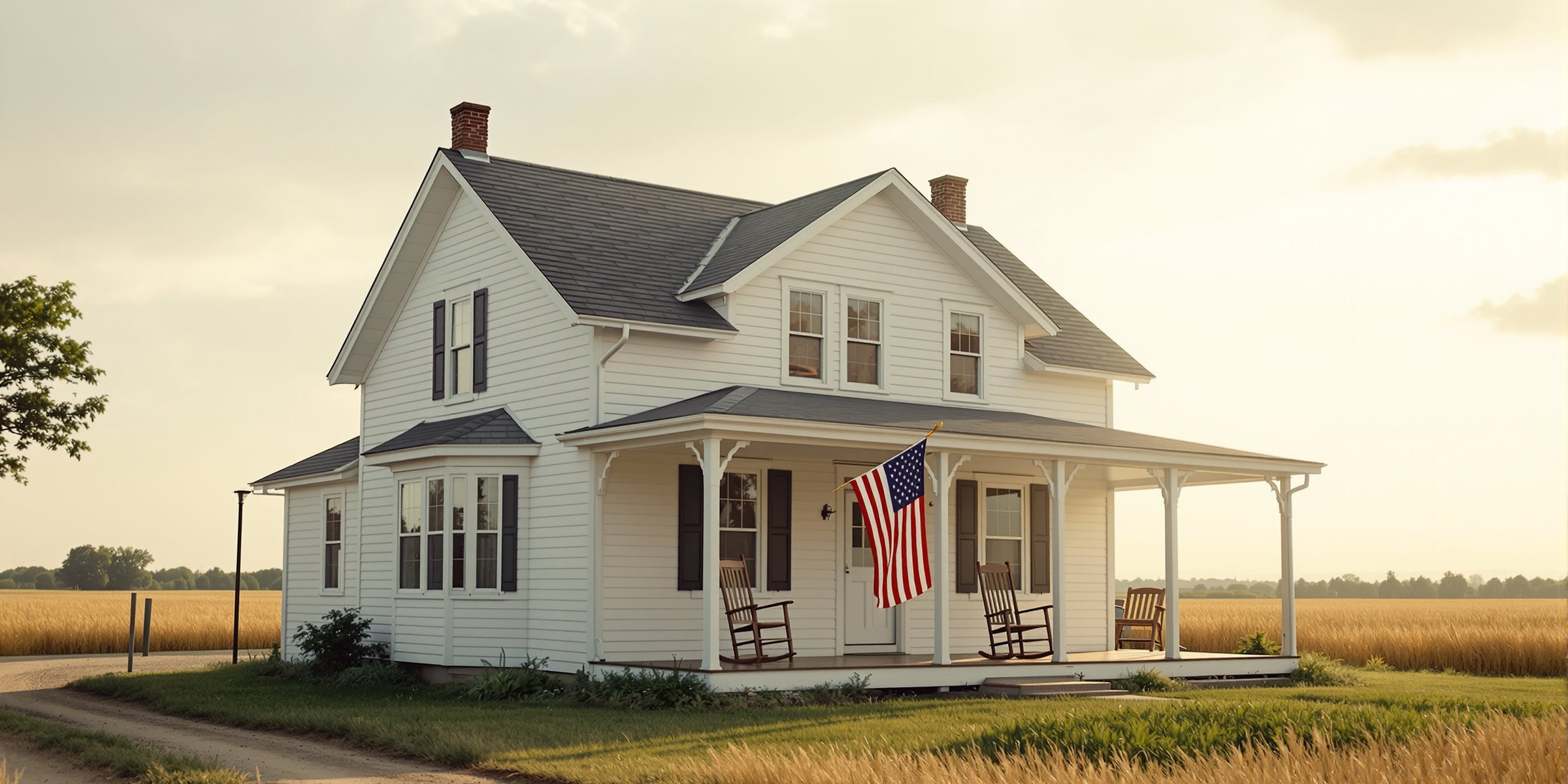
Few things puzzle newcomers from Europe in their first months as much as American patriotism. The flag hangs on houses, on the fire station and at the gas station. Before every football game the whole stadium rises when the anthem plays. Children recite a pledge to the flag at school. Most Europeans grew up far more reserved about national symbols.
This article explains what lies behind the gestures: the rules for the flag, the pledge and the anthem, the holidays the country celebrates, what Texas adds, and why American patriotism is a commitment to a constitution, not to ancestry. What the 4th of July feels like in a small town is described in our article On the Fourth of July, you know whether you have arrived.
1The flag: 13 stripes and a law with 48 stars
The flag of the United States is set out in federal law, in Title 4 of the United States Code. Section 1 prescribes thirteen horizontal stripes, alternating red and white, and a blue field with white stars. The wording still says forty-eight stars, because the law dates from 1947. That there are now fifty is covered by the next section: under Section 2, a star is added for each new state, on the 4th of July following its admission. The President fixed the arrangement of the fifty stars in Executive Order 10834, and this flag has been the official flag of the USA since July 4, 1960. So the number of stars is not a design question but a matter of constitutional history.
How to treat the flag is laid down in the Flag Code, 4 U.S.C. §§ 5 to 10. Custom is to display the flag only from sunrise to sunset; if you want a patriotic effect, you may fly it around the clock as long as it is lit at night. It should be hoisted briskly and lowered ceremoniously. It should never touch the ground, never serve as clothing, bedding or drapery, and never be flown upside down, except as a distress signal in extreme danger. On Memorial Day it flies at half-staff until noon, then it is raised all the way.
The language of these rules stands out. The Flag Code is written mostly as guidance: the flag should, the flag should not. In 1989, in Texas v. Johnson, the Supreme Court even struck down a criminal law protecting the flag as incompatible with free speech. You do not sanctify the flag by punishing its desecration, the Court wrote. So Americans honor their flag not because they have to, but because they want to. How differently Europe handles this is covered in Free speech: USA vs Europe.
2The Pledge of Allegiance and the anthem
The text of the Pledge of Allegiance is also written into law, in 4 U.S.C. § 4: you pledge allegiance to the flag of the United States of America and to the republic for which it stands, one nation under God, indivisible, with liberty and justice for all. It is recited standing, facing the flag, right hand over the heart; men not in uniform remove their headwear. Congress added the words under God in 1954.
At Texas public schools, the pledge is part of daily life. Under Section 25,082 of the Texas Education Code, students recite the pledge to the US flag once every school day, then the pledge to the Texas flag, followed by a minute of silence in which each child may reflect, pray, meditate or quietly do something else. On a written request from the parents, the school excuses a child from the pledge. That is not Texan generosity but constitutional law: in 1943, in West Virginia State Board of Education v. Barnette, the Supreme Court ruled that no state may force children to salute the flag and recite the pledge. No official, the Court said, can prescribe what shall be orthodox in politics, nationalism or religion.
Since a law passed in 1931, the national anthem has been The Star-Spangled Banner, now codified in 36 U.S.C. § 301. When it is played and the flag is displayed, everyone present not in uniform should face the flag, stand at attention and place the right hand over the heart; members of the military and veterans may give a military salute. If no flag is displayed, you face the music. Here too, the word should says it all. Coming from Europe, you don't have to sing along, but you will notice that standing up is a matter of courtesy, as natural as standing for a funeral procession.
3Texas: one flag, a second pledge
Texas has its own flag, and it is proud of it. Under § 3100.001 of the Texas Government Code, the state flag is the national flag of the Republic of Texas from 1839: a blue vertical stripe with a white five-pointed star in the center, and two horizontal stripes, white on top, red below. By law, red, white and blue stand for bravery, purity and loyalty. The Texas pledge, § 3100.101, reads: Honor the Texas flag; I pledge allegiance to thee, Texas, one state under God, one and indivisible. When it is recited together with the pledge to the US flag, the American one comes first.
Some visitors hear that Texas is the only state allowed to fly its flag at the same height as the American one. It's a nice story, but not a rule. The federal Flag Code only requires that on the same halyard the US flag flies on top and that no state flag stands above it or to its right. On separate poles, the flags of all states may fly at the same height. Texas itself prescribes in § 3100.055 that both flags on adjacent poles should be at the same height and about the same size, with the US flag on the viewer's left, raised first and lowered last. What is Texan about it is not the height but the passion behind it.
Then there are Texas's own holidays. Alongside the national holidays, the Texas Government Code lists, among others, March 2 as Texas Independence Day, April 21 as San Jacinto Day and June 19 as Emancipation Day in Texas, commemorating the emancipation of the slaves in Texas in 1865. So if you live in Texas, you celebrate independence twice: the state's in March, the country's in July.
Visa, bank account, taxes and where to live: your move with Mount Bonnell Advisors.
4Holidays: eleven federal, time off by contract
The federal legal holidays are listed in 5 U.S.C. § 6103. There are eleven, from New Year’s Day to Christmas Day, and five of them always fall on a Monday. Some have a clear patriotic core. Independence Day marks July 4, 1776, when the Continental Congress adopted the Declaration of Independence. The National Archives calls the idea that all the delegates present also signed it that day one of the most common misconceptions about the document. On Memorial Day the flag flies at half-staff until noon. Under Texas law, Veterans Day on November 11 is dedicated to the cause of world peace and to the veterans of all wars. According to the Census Bureau, about 15.7 million veterans lived in the USA in 2024, 5.9 percent of the civilian population aged 18 and over.
One detail matters for Europeans, and you will feel it in your employment contract. The federal holidays apply to the federal government. The Department of Labor makes clear that federal labor law does not require payment for time not worked, such as holidays; that is a matter of agreement between employer and employee. So your contract decides whether a holiday is a paid day off. If you get a job offer from the USA, check which holidays the contract includes.
| Holiday | Rule in the law | Date 2027 |
|---|---|---|
| New Year’s Day | January 1 | Friday, January 1 |
| Birthday of Martin Luther King, Jr. | third Monday in January | January 18 |
| Washington’s Birthday | third Monday in February | February 15 |
| Memorial Day | last Monday in May | May 31 |
| Juneteenth National Independence Day | June 19 | Saturday, June 19 |
| Independence Day | July 4 | Sunday, July 4 |
| Labor Day | first Monday in September | September 6 |
| Columbus Day | second Monday in October | October 11 |
| Veterans Day | November 11 | Thursday, November 11 |
| Thanksgiving Day | fourth Thursday in November | November 25 |
| Christmas Day | December 25 | Saturday, December 25 |
Source: 5 U.S.C. § 6103(a). If a holiday falls on a Saturday, federal employees with a Monday to Friday workweek get the preceding Friday off, 5 U.S.C. § 6103(b). 2027 dates calculated under the rules of the law. Checked October 24, 2026.
5The oath: belonging as a commitment
Naturalization shows most clearly what American patriotism is. The oath prescribed by 8 C.F.R. § 337.1 is sworn not to a people but to a constitution. Whoever becomes American swears to renounce all allegiance to any foreign prince, potentate, state or sovereignty, and to support, defend and bear true faith to the Constitution and laws of the United States against all enemies. Anyone who does not wish to swear for religious or conscientious reasons may solemnly affirm instead, and the words so help me God are then left out. Anyone holding a hereditary title of nobility also publicly renounces it at naturalization.
This logic explains why Americans can be so relaxed about their patriotism. Belonging rests on a commitment anyone can make, not on an origin you either have or don't. Someone who arrived from Oslo, Stockholm or Dublin three years ago stands at the naturalization ceremony with the same hand on the same heart as someone whose family has lived in the country for ten generations. What the citizenship test covers is explained in our article on the citizenship test.
7How to handle it as a newcomer
Stand up when the anthem plays, take your hat off, and put your hand on your heart if you like. Nobody expects you to feel American before you are one, but everyone notices whether you respect the moment. Fly the flag on 4 July if it means something to you, and leave it if it doesn't. Celebrate Thanksgiving with the neighbors when they invite you, and invite them to your own celebrations, whether a Christmas market, your national day or 1 August. Patriotism in America is open to guests who bring their own.
If you want to stay, you first need a status that fits your plans, and perhaps one day the oath. The visa roadmap shows which visa path suits you and your family. What freedom means in America, in law and in everyday life, is covered in the guide Freedom in the USA, and how flags, festivals and football games shape life in the countryside is the subject of our article on life in a small American town.
In writing: which visa fits you and your family, prepared with the immigration attorney on the firm's team.
- The flag has 13 stripes and one star for each state; the statute still says 48 stars, while the 50-star flag has been official since July 4, 1960.
- The Flag Code sets out respectful handling as guidance rather than binding rules; under Texas v. Johnson, burning the flag is protected speech.
- The Pledge of Allegiance is recited in schools, in Texas every day together with the Texas pledge, but no child can be forced to say it.
- There are eleven federal holidays; under federal law private employers don't have to pay for them, and Texas adds its own holidays such as Texas Independence Day.
- In America, belonging is a commitment: the naturalization oath is sworn to the Constitution, not to an ancestry.
How we help you
- Visa RoadmapIn writing: which visa fits you and your family, prepared with the immigration attorney on the firm's team.
- Moving to the USAVisa, bank account, taxes and where to live: your move with Mount Bonnell Advisors.
- Visa and Green Card ConsultationWhich route to the USA fits you, settled in one conversation.