
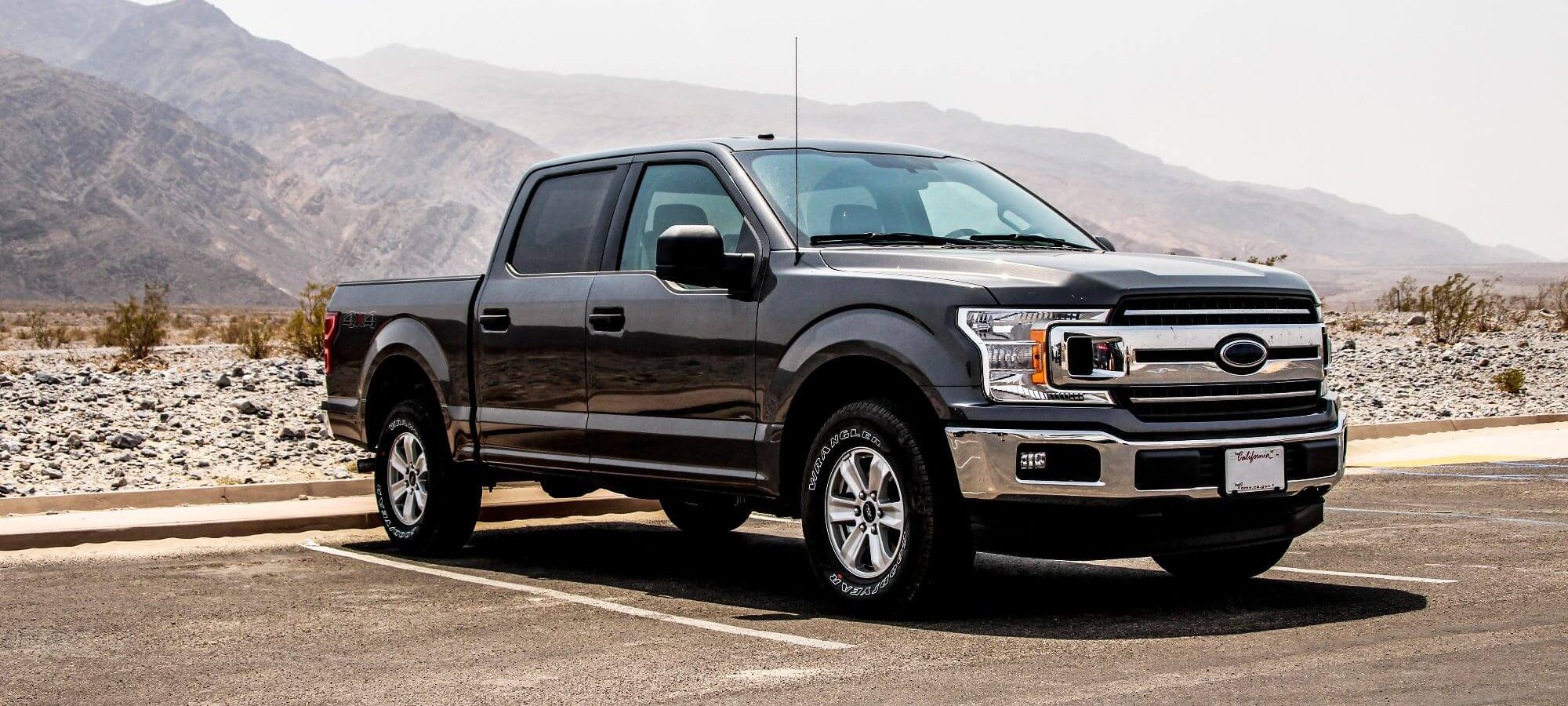
Five liters of displacement, an automatic transmission, and the supermarket is ten kilometers away. Welcome to America.
Getting Around: Your Pickup Truck Is Waiting
Part of the guide Arriving in the USA: your first 90 days as a checklist
The USA is the ultimate car nation. Cars dominate local passenger transport with a share of 85% (for comparison: in Europe, the share of cars is only 50%-65%). Only a handful of US cities and metro areas have public transit as well developed as Europe's. The East Coast is the exception.

In the USA, gasoline and diesel are cheap, vehicle tax is merely symbolic and the roads are excellent. All revenue from fuel taxes on cars and trucks goes into building and maintaining the road network, rather than disappearing into the general budget as it does in Europe.
1Why is the USA so dependent on cars?
And because improved production methods like the assembly line brought mass motorization to the USA as early as the 1930s (the 20th century), the shift toward private cars has been going strong for almost 100 years.
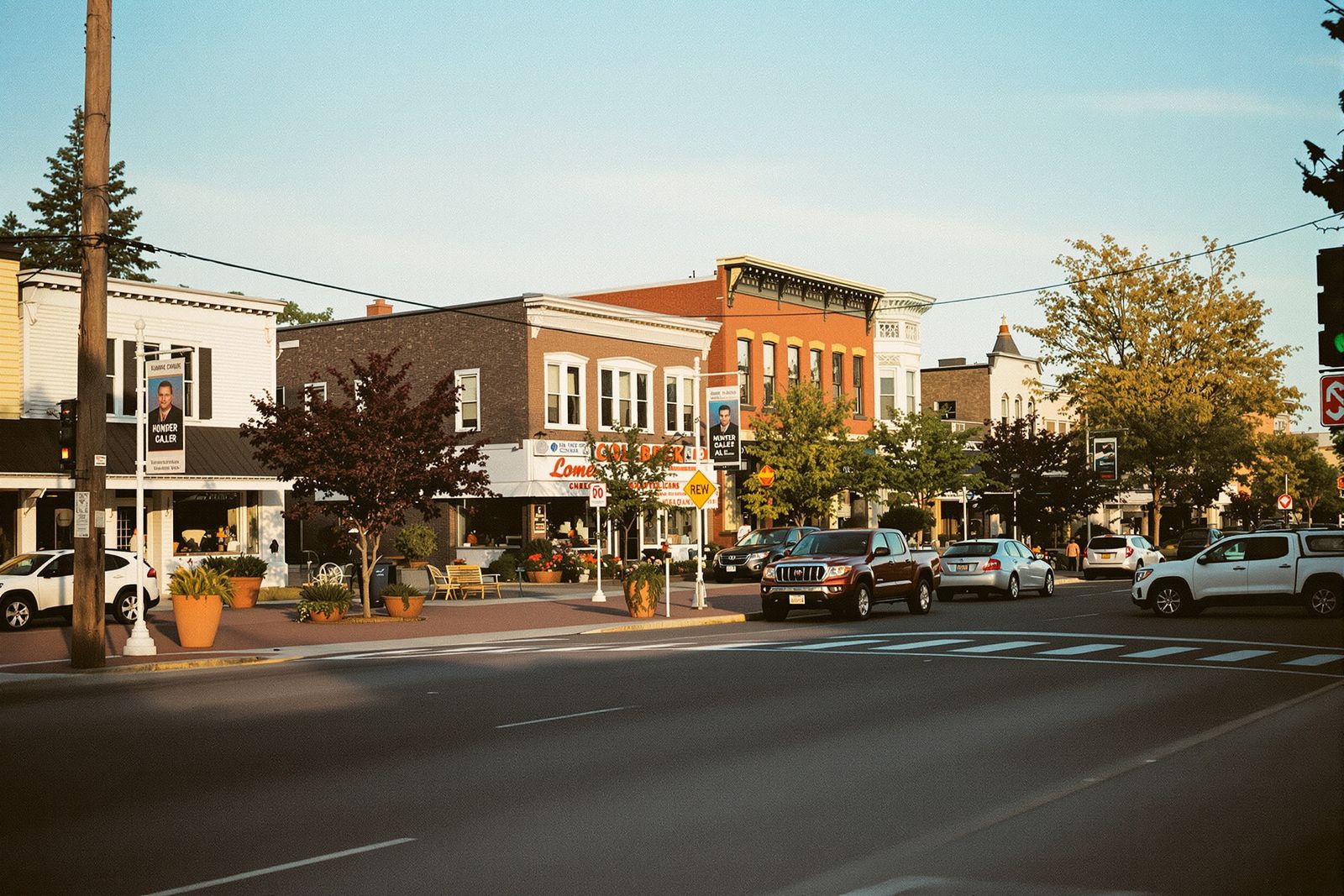
Walking or cycling is rarely a real option. Not only are sidewalks and bike lanes missing in large areas: American towns are planned and built on such a sprawling scale that the nearest supermarket is often 5-10 km away.
On top of that, US zoning law and land-use plans usually rule out mixed use. In Europe it is standard for a new development to include doctors' offices, shops and so on alongside homes; in the USA that is not allowed. Businesses have to be located in commercial zones. That, too, means long distances.
2American rail: the eternal patient
Once the herald of modernity that drove the settlement of the American West, the railroad in the USA is now used mainly for freight, and very successfully. Here the USA is ahead of Europe, moving more than six times as much freight by rail. Over 50% of US freight now travels by rail.

For passengers, though, rail plays only a minor role in America. For US rail companies, it has been a loss-making business for years. In 2011, the US rail company Amtrak carried just 31 million passengers. For comparison: in the African country of Mozambique, 108 million passengers traveled by rail that same year.
Don't get me wrong: you can still cross the USA from coast to coast by train. Amtrak, the American rail company, runs a network of routes across the entire country. But fast connections are lacking, and passenger trains make up only a small share of total traffic.
There is too little investment in track and other infrastructure, and conservative politicians in particular prefer to put their money into roads and perhaps airports.
3Buses & air travel
Many cities have basic bus service. But local buses in particular are often used only by people who can't afford a car and are struggling with poverty.

Much the same applies to long-distance buses. The best-known operator is Greyhound. These buses, too, are mostly used by travelers who can't afford a flight or a car.
Given the sheer size of the USA, air travel is extremely well developed. Many smaller cities have an airport and can be reached via hubs. Unfortunately, there are no budget airlines like Ryanair or easyJet in the USA, so a round-trip ticket can easily set you back $500.
In reality, most Americans happily put up with long drives of 12 hours or more and would rather take their own car than fly. For families especially, that makes economic sense.
So without a car, you won't last long in the USA. But driving doesn't have to be a chore. Thanks to automatic transmissions and wide roads, most Europeans find driving in the USA easy.
4US driver's license and driving test
Since you can't do without a car, it will probably be one of your first big purchases in the USA. But before that, you should get a US driver's license. It isn't strictly necessary to buy and insure a car, but without a US license you quickly feel like an illegal immigrant. So my advice: get your US driver's license first.

In some states you will have to pass a written and a practical driving test; in others you can get a US license without a test by presenting the license from your home country.
Don't imagine the driving test is as complicated as in Europe, and don't be afraid of it. Usually you don't need to prepare. And if you don't pass the multiple-choice test on the computer the first time, you can simply try again right away.
For the practical test, you drive once around the block with the examiner from the licensing office: easy! But you have to bring your own car; rental cars are not allowed. And here's the catch-22: you don't have a car because you don't have a license, and without a car you can't take the test. There are two solutions: borrow a car from a friend, or go to a private testing center that provides a car for the test.
5Buying a car the fun way
Once you have your license in hand and are ready to buy a car, the first thing you'll notice is that cars cost less in America than in Europe. Good.

Another difference from Europe: 99.9% of all vehicles in the USA have automatic transmissions. You won't find diesel cars either, unless you want one of the bigger pickup trucks. And small cars are nowhere near as popular as in Europe. Gas is cheap, so people prefer bigger cars. Many American men (me included!) drive the obligatory pickup truck with a 5L gasoline engine, 450 horsepower and four-wheel drive. But of course you can go more understated.
To buy a car, you go to the dealer of your choice and buy one of the cars on the lot. Lengthy ordering processes, where you wait weeks or months for a car built to your specification, are unknown in the USA.
Half a day later, you drive off the lot in your new car. The dealer helps with every detail: financing, insurance, license plates and so on. You don't have to worry about a thing. Speaking of financing: even though getting a car loan in the USA is harder without a positive credit history, you should definitely try, even if it means a larger down payment. A car loan will quickly boost your creditworthiness and your credit score.
With that in mind, it's wise to buy a car only once you have your Social Security Number (SSN), since you need it to apply for financing.
Credit for your company and for you, built step by step.
6Drunk driving and other traffic offenses
A word on traffic police, tickets and traffic offenses: speed cameras are banned in most states. What is allowed is a police officer measuring the speed of oncoming vehicles with a radar gun.

Speeding and other traffic offenses earn you points, and too many points lead to higher insurance premiums and driving bans. So the system is quite similar to Europe's. I would advise every client to contest every single ticket in court. It often costs less than $150, and thanks to inefficient administration you often win.
Drunk driving is taken very seriously in the USA. If you're caught, you are guaranteed a night in jail, and your mugshot is published online with your name. You then have to answer for it in court and can easily end up paying $15,000 to $20,000 to get out of it reasonably unscathed. It's not worth it. Take a taxi instead, even if it costs you $100.
Here you can learn more about moving to the USA, health insurance and the Social Security Number.
One hour with the firm: your case, your questions, a clear answer.
- In the USA, cars dominate local passenger transport at 85%. Rail and buses play a minor role for travelers, while air travel is well developed.
- Get your US driver's license early: depending on the state, with a written and driving test or by presenting the license from your home country.
- Bring your own car to the driving test; rental cars are not allowed.
- A car loan builds your credit score. For financing, you usually need an SSN.
- Drunk driving can easily cost you $15,000 to $20,000.
How we help you
- ConsultationOne hour with the firm: your case, your questions, a clear answer.
- Credit BuilderCredit for your company and for you, built step by step.
- US Bank Account OpeningYour own access to the American financial system, even without an SSN.
- Moving to the USAVisa, bank account, taxes and where to live: your move with Mount Bonnell Advisors.
More practical guides: settling in the USA
All articles → Arriving in the USA: your first 90 days as a checklist Read more →
 Where in America is life best? Read more →
 Financial planning: credit score & credit history Read more →
 Schools & education: the best universities in the world, but... Read more →
 Health insurance & healthcare: expensive, but good Read more →