

Fayetteville, Huntsville, Provo: you've never heard of them. That's exactly the point.
Where in America is the best place to live?
Part of the guide Arriving in the USA: your first 90 days as a checklist
The first question before any move to the USA is always the same: where to? Before I moved to the USA myself, my then wife and I watched CSI: Miami and were too naive to notice that much of the show wasn't even filmed in Miami. For us, it was obvious: it had to be Miami. And that's where we moved.

That's how most location decisions get made: from a vacation, a TV show, a picture in your head. Miami, California, New York. Those pictures aren't wrong. They've just become expensive and slow.
1Let's say it right away: you won't know these cities
This page covers the twelve strongest large metro economies in the USA. Hardly any reader in Europe could point to them on a map one by one. Fayetteville isn't in North Carolina, it's in Arkansas. Provo isn't Provence. Olympia is a state capital, not a place in Greece. And number one is a region in the Ozarks that's home to the headquarters of three Fortune 500 companies.
That isn't a glitch in the ranking, it's the message. America's economic growth has moved away from the cities Europeans know. Los Angeles, Chicago, New York and San Francisco aren't on this list. Neither is Miami. If you plan today with a 2005 picture in your head, you're planning for a country that no longer exists.
And that's the real point: not knowing is an advantage here, not a weakness. A place nobody in Europe can name is a place that isn't priced in yet. Find a region before everyone else does, and you buy yourself years. Those are exactly the years that people who moved to Austin and Boise in 2015 took with them, and exactly the years that are gone there today.
If you're willing to think smaller, the math works out even better: we've given the ten strongest small metro areas in the USA their own page. That's where getting in costs the least.
2Where the numbers come from
We rely on the Milken Institute's Best-Performing Cities Index 2026, published on 27 January 2026. It rates 411 US metro areas on 13 indicators across three areas: the job market (short- and long-term job and wage growth), high-tech performance (output and industry concentration) and access to economic opportunity (housing affordability, broadband, income distribution). It ranks them in two classes: 206 large regions with 275,000 or more residents, and 205 small ones. This page covers the top twelve in the large class, in full and in index order.
The data come from the Census, the Bureau of Labor Statistics and the Bureau of Economic Analysis, mostly for data year 2024, with short-term job growth measured from July 2024 to July 2025. We calculated population figures and growth directly from the Census estimates as of July 1, 2025; unemployment rates come from BLS statistics for June 2026, and typical home values from the Zillow Home Value Index for July 2026. Wherever we give a number, we say where it comes from and when it was collected.
What this list is not: a recommendation on where your company should be based. In the USA, where you live and where your company sits are two separate decisions. We have a separate page on choosing a company location, and you'll find the states with the most foreign direct investment in our overview of foreign direct investment.
One hour with the firm: your case, your questions, a clear answer.
3No. 1: America's best job market is where Walmart comes from
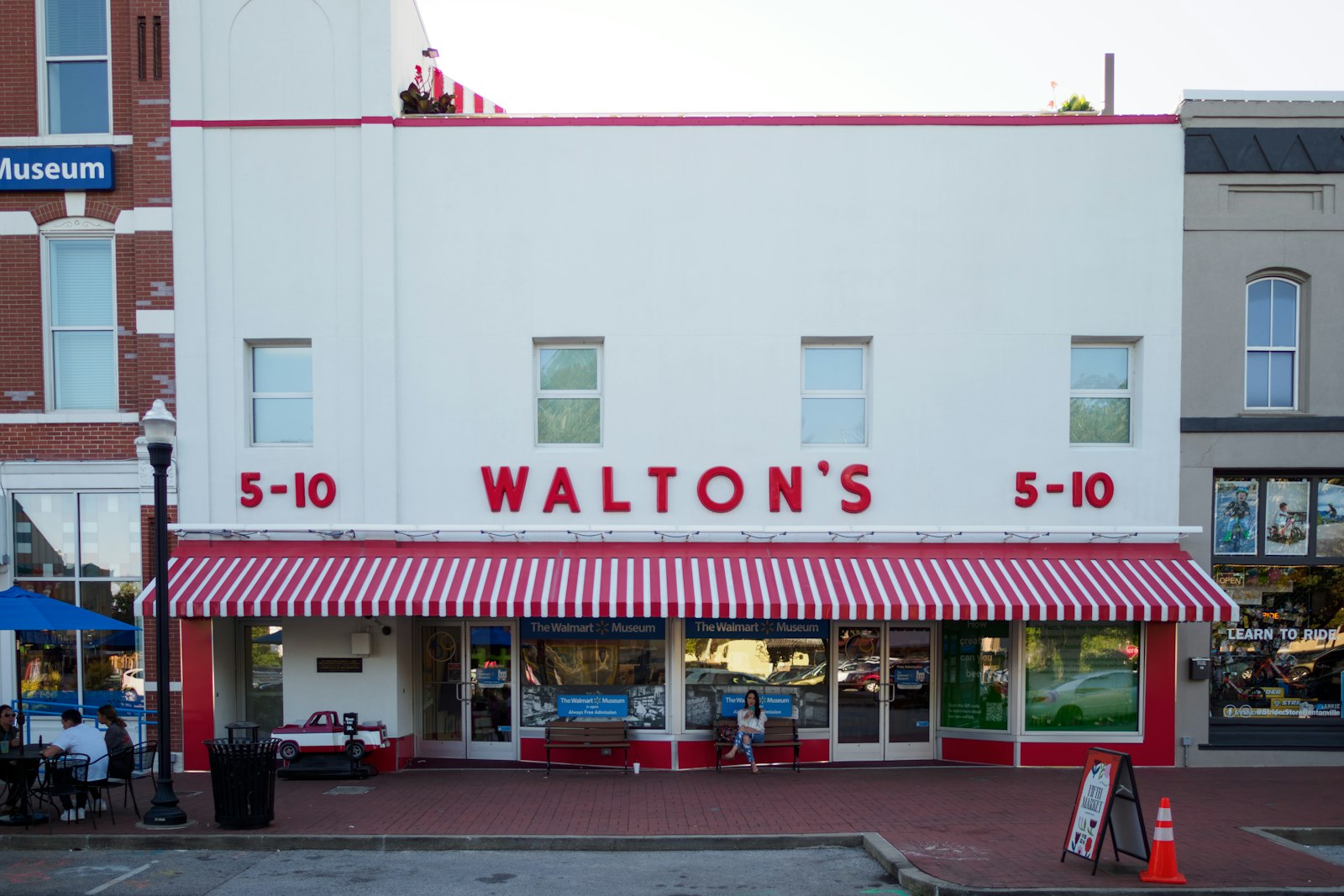
Fayetteville-Springdale-Rogers, Arkansas ranks No. 1 among large metro areas, up from No. 7 in last year's edition. The region sits in northwest Arkansas, in the Ozark Mountains, and it's in the top thirteen on every single job market indicator in the index. It ranks 4 for one-year wage growth and 10 for short-term job growth.
The reason sits in Bentonville, a twenty-minute drive north: the headquarters of Walmart, with more than 20,000 employees. Add two more Fortune 500 headquarters, logistics giant J.B. Hunt and food giant Tyson Foods, plus the University of Arkansas as a talent pipeline. If you're a European supplier or brand serious about American retail, this is where you sit right next to your biggest customer. That's not a side effect, it's the reason sales offices have been setting up in northwest Arkansas for years.
What really stands out about this region is something else: it's growing fast and still staying affordable. It ranks 15 among large cities on the index's affordability measure, and construction employment grew by 49.7 percent between 2019 and 2024. In other words, they're actually building instead of just complaining about a housing shortage. The index names two weaknesses explicitly: income inequality has risen, where the region ranks only 132, and the high-tech sector depends on a few industries (rank 113 for the number of high-tech industries with above-average concentration).
3.1Key figures
- Index rank 2026: 1 (previous edition 7)
- Population: 622,177 (July 1, 2025, Census)
- Population growth 2024 to 2025: +2.4% (USA overall: +0.5%)
- Unemployment rate June 2026: 3.6% (USA: 4.4%, BLS, not seasonally adjusted)
- Typical home value, July 2026: $368,500, +3.0% year over year (Zillow)
4No. 2: Huntsville, Alabama, is getting America's Space Command

Huntsville, Alabama, ranks No. 2 and is the fastest-growing of the twelve regions: +2.6 percent population in a single year, five times the national average. If Alabama makes you think of cotton, you've been wrong since the 1950s. Huntsville is the city where Wernher von Braun had the Saturn V developed, and the rocket park in the photo has stood there since 1960.
What's changing Huntsville right now is a decision made in Washington. U.S. Space Command is moving its headquarters from Colorado Springs to Redstone Arsenal in Huntsville; the President announced the move in September 2025. On April 29, 2026, the command officially took over its first facility there, the Joint Intelligence Support Element, which will have 80 people. In May 2026, the City of Huntsville approved a $45 million package: about 15 million from the State of Alabama for military-standard housing and 30 million for site development and infrastructure for the new headquarters. A command this size doesn't move alone; its contractors move with it.
For you as a business owner, that means two things. First, Huntsville has a very high density of engineers, and Cummings Research Park is one of the largest research parks in the country. Second, government is the dominant customer. If you work in defense, aerospace or supplying those sectors, you'll find an ecosystem here that doesn't exist in this form in Europe. If you don't, you should know what you're getting into.
The real reason Huntsville ranks so high is the last line: $316,600 for a typical home. That's below the US average of $371,800 and less than in Austin. An engineering city with full employment where housing costs less than the national average is a rare combination.
4.1Key figures
- Index rank 2026: 2 (previous edition 4)
- Population: 556,444 (July 1, 2025, Census)
- Population growth 2024 to 2025: +2.6%, the highest on this list
- Unemployment rate June 2026: 3.3% (BLS)
- Typical home value, July 2026: $316,600, +0.9% year over year (Zillow)
5No. 3: In Charleston, German industry got there long ago

Charleston-North Charleston in South Carolina jumps from #11 to #3 and is the only true port city among the leaders. If you are looking for a city on this list that works as a home even without the economic case, this is it: cobblestone streets, pastel houses, great food and the beach on your doorstep. Charleston is the region where the move is easiest to sell to your family.
Economically, Charleston is more European than most people realize. Mercedes-Benz Vans builds the Sprinter for the North American market in Ladson, with more than $500 million invested, over 1,700 direct jobs and at least 600 more at suppliers. Volvo Cars builds cars in Ridgeville. Boeing employs more than 8,200 people in South Carolina and in November 2025 broke ground on a billion-dollar expansion of its 787 plant in North Charleston, aiming to raise output to ten aircraft a month and create more than 1,000 jobs. If you run a mid-sized European company building US manufacturing, you will find skilled workers here who have already worked for a European group.
And the honest downside: the port is not running smoothly right now. For the fiscal year that ended June 30, 2026, the South Carolina Ports Authority reported 4.6 percent fewer containers than the year before. Charleston is also growing more slowly than the leaders, at +1.7 percent. Its jump in the index comes from the job market and new industry, not from cargo volumes.
5.1Key figures
- Index rank 2026: 3 (previous edition 11)
- Population: 889,263 (July 1, 2025, Census)
- Population growth 2024 to 2025: +1.7%
- Unemployment rate June 2026: 3.7% (BLS)
- Typical home value, July 2026: $435,600, 0.5% below the previous year (Zillow)
6#4: Boise City, two chip fabs in a city you have never heard of

Boise City in Idaho ranks #4, up from #10 in last year's edition. Idaho is one of the search terms that regularly brings readers to this page, and that is no accident: in recent years the state has drawn more newcomers from California than almost any other.
The economic core is a single company. Micron Technology is headquartered in Boise and is building two memory chip fabs there. Micron itself speaks of more than 17,000 new jobs and names 2027 as the start of DRAM production; together with its plants in New York and Virginia, the company is receiving $6.4 billion in direct CHIPS Act funding. Industry reports put the total Idaho buildout at around $50 billion. Equipment makers cluster around a fab like this: ASML, Applied Materials, Lam Research, Tokyo Electron.
If you are a European entrepreneur in equipment manufacturing, metrology, cleanroom technology or industrial automation, this is the most interesting address on the list. If you have ever worked on a semiconductor fab in Europe, you already know the customer list.
The price shows up in the numbers too: at $497,100, Boise sits a third above the US average. Boise is no longer a hidden gem but a place whose discovery is already priced in. Move here and you pay for the Foothills too.
6.1Key figures
- Index rank 2026: 4 (previous edition 10)
- Population: 864,243 (July 1, 2025, Census)
- Population growth 2024 to 2025: +2.2%
- Unemployment rate June 2026: 3.5% (BLS)
- Typical home value, July 2026: $497,100, +0.9% year over year (Zillow)
7#5: Raleigh-Cary, the faller that still ranks fifth

Raleigh-Cary in North Carolina was the top-ranked large US metro in last year's edition and is now fifth. That sounds like a step back, but it isn't: North Carolina has three of the top fifteen large cities, and the region is still growing at +2.4 percent a year, even though with 1.6 million residents it is the third-largest of the twelve.
The engine is Research Triangle Park, at around 2,800 hectares the largest research park in the United States, stretched between three universities: North Carolina State in Raleigh, Duke in Durham and UNC in Chapel Hill. Residents include Cisco, the Cary-based analytics company SAS, Lenovo's North American headquarters in Morrisville and an unusually dense biotech and pharma scene: Pfizer, Novo Nordisk, IQVIA, Labcorp, Bayer Crop Science, Grifols and FUJIFILM Diosynth Biotechnologies.
Worth knowing if you remember the headlines from 2021: the big Apple campus at the edge of the park has not been built. Apple paused construction in 2024 and at the end of 2025 secured a four-year extension of its incentive agreement. The offices in Cary and Durham remain; the campus is an open question. If someone pitches you the location with the Apple argument, ask questions.
Here too, home values tell the story: $437,500, 1.9 percent below the previous year. The market is cooling while the population keeps growing. For newcomers, that is the friendlier side of the cycle.
7.1Key figures
- Index rank 2026: 5 (previous edition 1)
- Population: 1,595,720 (July 1, 2025, Census)
- Population growth 2024 to 2025: +2.4%
- Unemployment rate, June 2026: 3.1%, the lowest of the twelve (BLS)
- Typical home value, July 2026: $437,500, 1.9% below the previous year (Zillow)
8#6: Provo-Orem-Lehi grows because children are born there

Provo-Orem-Lehi in Utah makes the biggest leap in the top group, from #15 to #6. The region sits at the southern end of Silicon Slopes, the tech corridor running along Interstate 15 from Salt Lake City through Lehi, American Fork and Lindon to Provo. Adobe employs more than 3,000 people at its Lehi campus, Ancestry is headquartered there, Qualtrics was founded in Provo and Domo is based in American Fork. Brigham Young University in Provo supplies the talent.
The number that makes the area interesting for industrial companies is a different one: Texas Instruments is building a second 300-millimeter wafer fab in Lehi for $11 billion, announced on February 15, 2023, the largest single investment in Utah's history. It is going up right next to the existing plant, and the two are to run as one fab; TI itself cites around 800 additional jobs and production starting from 2026. If you work in the semiconductor space, Utah is the second address on this list alongside Boise.
What is most unusual, though, is how Provo grows. Of the roughly 14,400 people the region added in the year to July 2025, 9,284 came from natural increase and only 3,279 from people moving in from other US states. That is rare in America and the reason Utah County is one of the youngest regions in the country. For families with children that is a solid argument; for employers it is a promise of future talent. The price: $544,900 for a typical home, almost 47 percent above the US average.
8.1Key figures
- Index rank 2026: 6 (previous edition 15)
- Population: 773,426 (July 1, 2025, Census)
- Population growth 2024 to 2025: +1.9%, mostly from natural increase
- Unemployment rate June 2026: 3.8% (BLS)
- Typical home value, July 2026: $544,900, +1.9% year over year (Zillow)
9#7: Salt Lake City shows where the ceiling is

Salt Lake City-Murray ranks #7, down from #3 last year, and forms the northern end of the same tech corridor. The region is the financial, transportation and administrative hub of the Great Basin: an international hub airport, the University of Utah and a banking center whose reach goes far beyond Utah. Economically, Salt Lake City is the most mature region on this list.
You can read exactly that in the population figures, and it is the most honest warning this page has to offer. In the year to July 2025 the region grew by just 0.5 percent, slower than any of the twelve except Olympia. The reason: on balance, 6,099 people moved away to other US states. The region still grows thanks to natural increase (7,705) and immigration from abroad (4,503).
This is the pattern of a region that has caught up with its own success. At $566,200, a typical home in Salt Lake City is the second most expensive on this list. People who move here come not for the price but for the job market, the mountains on their doorstep and infrastructure that Boise or Provo cannot match. If price is your reason, read on below under the small metros, where two Utah locations, Logan and St. George, rank near the top.
9.1Key figures
- Index rank 2026: 7 (previous edition 3)
- Population: 1,308,377 (July 1, 2025, Census)
- Population growth 2024 to 2025: +0.5%, with negative domestic migration
- Unemployment rate June 2026: 3.6% (BLS)
- Typical home value, July 2026: $566,200, +1.4% year over year (Zillow)
10#8: Orlando is not the city you think it is
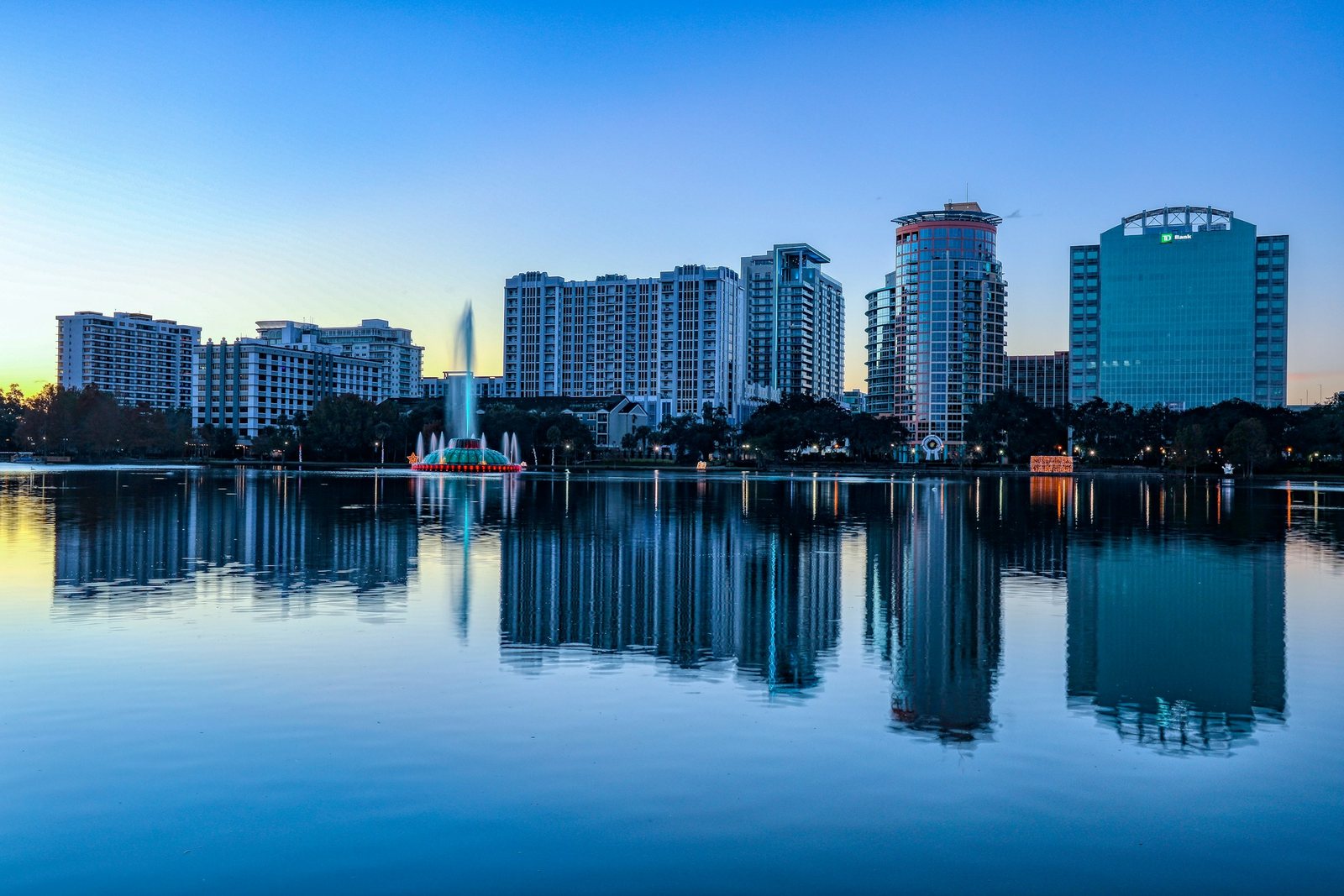
Orlando-Kissimmee-Sanford in Florida, with almost three million residents, is the largest region on this list and jumps from #17 to #8. Orlando is the one name here every European reader knows, and it comes with the wrong picture. Leisure and hospitality account for about a fifth of jobs. The other four fifths are something else.
The Central Florida Research Park next to the University of Central Florida is home to more than 140 companies, including Boeing, BAE Systems, L3Harris and Northrop Grumman. The reason is a cluster found nowhere else at this density: modeling, simulation and training, born out of US military procurement and now just as rooted in medical and training technology. In the southeast of the city lies Lake Nona Medical City, a 650-hectare campus for health and life sciences. If you sell simulators, optics, sensors or medical training technology, Orlando is your market.
The downside is in the numbers too, and it is clear. At 4.6 percent, Orlando has the highest unemployment rate on this list, the typical home value has fallen 2.3 percent, and the population is only still growing because 30,785 people immigrated from abroad. On balance, 1,785 moved away to other US states. The index measures 2024. The job market of 2026 is weaker.
10.1Key figures
- Index rank 2026: 8 (previous edition 17)
- Population: 2,957,672 (July 1, 2025, Census)
- Population growth 2024 to 2025: +1.3%, driven by immigration from abroad
- Unemployment rate, June 2026: 4.6%, the highest of the twelve (BLS)
- Typical home value, July 2026: $386,900, 2.3% below the previous year (Zillow)
11#9: Austin, where we are based ourselves

Mount Bonnell Advisors is based in Austin, and that is exactly why we write this section like every other one. Austin-Round Rock-San Marcos ranks #9 in the 2026 index, down from #6 in last year's edition. With 2.62 million residents it is the second-largest region on this list and the only one strong on all three growth channels at once: 19,860 newcomers from other states, 17,457 from abroad and 16,621 from natural increase. No other place here has that breadth.
The job market is the best known on this list: Tesla, Oracle, Samsung in the northern suburb of Taylor, Dell in Round Rock, plus the University of Texas and a supplier base that has been growing for fifteen years. What Texas adds on top is a tax advantage: the state levies no income tax of its own. On a high personal income, that difference outweighs any rent gap on this page. Arkansas, Alabama, South Carolina, Idaho, North Carolina and Utah all levy one.
The housing market provides the counterweight. The typical home value is $424,300, 5.2 percent below the previous year, the sharpest drop of all 22 regions on this page and its sister page. At 4.1 percent, the unemployment rate is the second highest on this list. Austin is digesting its own boom. For anyone buying now, that is more of an opportunity than a warning, but this is no longer a place you have to sell on promises of growth.
We think Austin is an excellent place to live, for reasons no index measures, and we have a separate page on it. If you want to hear us say that our own city happens to be objectively the best, you won't get that here.
11.1Key figures
- Index rank 2026: 9 (previous edition 6)
- Population: 2,620,945 (July 1, 2025, Census)
- Population growth 2024 to 2025: +2.1%, across all three channels
- Unemployment rate June 2026: 4.1% (BLS)
- Typical home value, July 2026: $424,300, 5.2% below the previous year (Zillow)
Visa, bank account, taxes and where to live: your move with Mount Bonnell Advisors.
12No. 10: Olympia, the most boring economy on this list

Olympia-Lacey-Tumwater is the capital region of Washington State, a good hour's drive south of Seattle, and with 304,261 residents the smallest on this list. It ranks No. 10, after No. 8 the year before. State government accounts for around 23 percent of all jobs in Thurston County. Healthcare, education and construction round it out.
That sounds unexciting, and that is the point. A capital region has no business cycle in the usual sense: state government doesn't hire when the stock market rises or lay people off when it falls. In June 2026, the unemployment rate was 4.1 percent, below the statewide 4.7 percent, with 133,600 jobs. Average hourly earnings in May 2025 were $36.29, against $33.54 nationally.
The downside is the other side of the same coin. One employer sets the tone, and for an entrepreneur who doesn't sell to the state, the local market is thin. On top of that, prices spill over from Seattle without Seattle's wages: $532,100 for a typical home, 43 percent above the US average, while hourly wages are only about 8 percent higher. Olympia is a good place to work and an expensive place to buy.
12.1Key figures
- Index rank 2026: 10 (previous edition 8)
- Population: 304,261 (July 1, 2025, Census)
- Population growth 2024 to 2025: +0.7%
- Unemployment rate June 2026: 4.1% (BLS), Washington statewide 4.7%
- Typical home value, July 2026: $532,100, +0.3% year over year (Zillow)
13No. 11: Wilmington grows entirely through people moving in

Wilmington on the North Carolina coast ranks No. 11 and, at +2.6 percent, is the fastest-growing region on this list after Huntsville. One figure sets it apart: the region has 820 more deaths than births and still grows by 12,400. All of that growth comes from people moving in, mostly from other US states. Wilmington is a retirement coast that now has jobs too.
The economy stands on three pillars. First, the Port of Wilmington, North Carolina's only major container and refrigerated port, with the warehousing and distribution space that goes with it. Second, a contract research cluster that grew out of PPD, now part of Thermo Fisher Scientific, joined by companies such as Alcami, plus the University of North Carolina Wilmington and New Hanover Health. Third, film production around the Screen Gems studios, which earned the town its nickname and whose future depends on the shape of North Carolina's film incentives, currently a political battleground.
For a European entrepreneur, Wilmington is the place on this list that offers coast, port and an affordable market all at once: $448,200 for a typical home, practically unchanged from last year, with 3.5 percent unemployment.
13.1Key figures
- Index rank 2026: 11 (previous edition 13)
- Population: 492,772 (July 1, 2025, Census)
- Population growth 2024 to 2025: +2.6%, entirely from people moving in
- Unemployment rate June 2026: 3.5% (BLS)
- Typical home value, July 2026: $448,200, 0.1% below the previous year (Zillow)
14No. 12: Arlington-Alexandria-Reston, the newcomer overtaken by the present
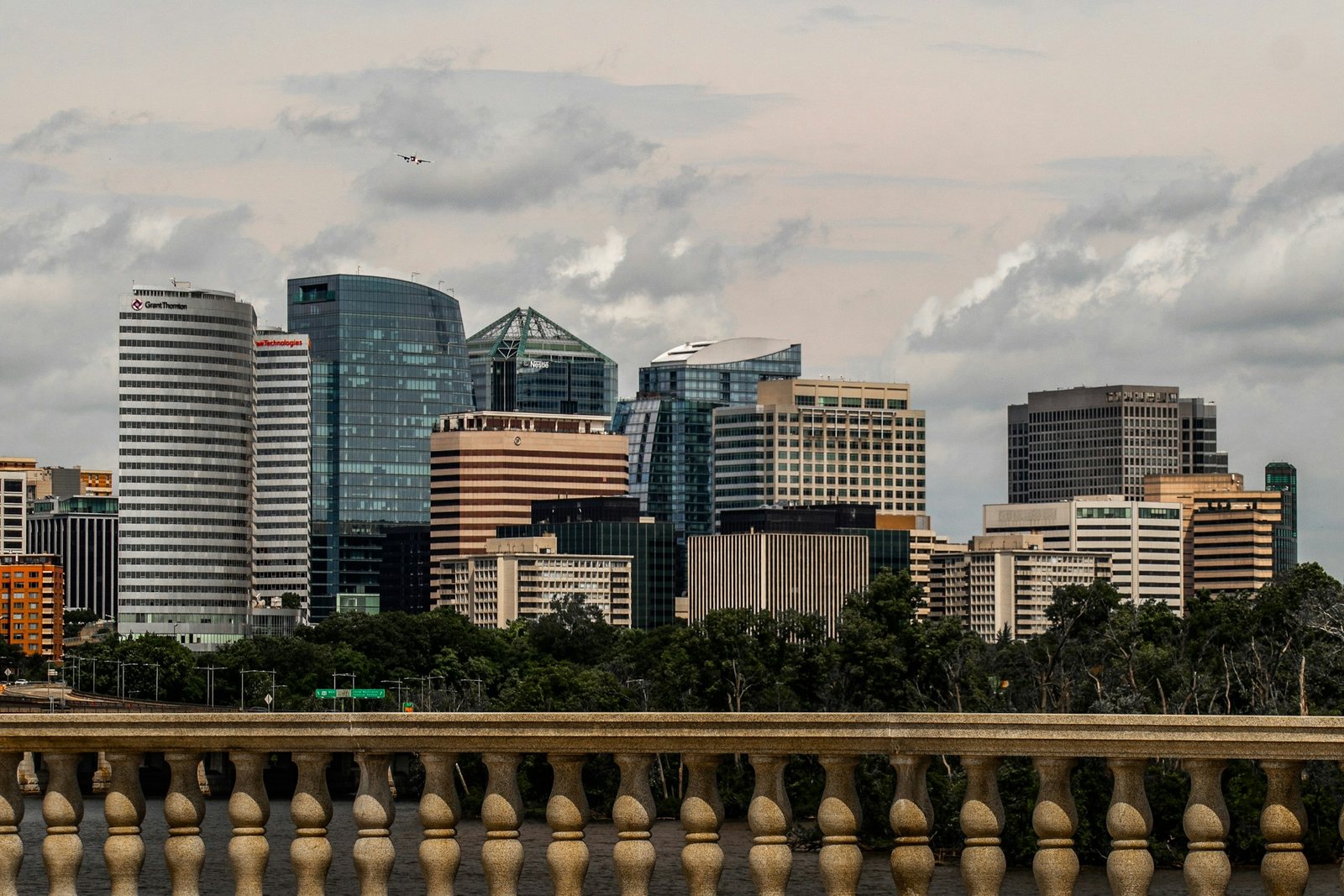
Arlington-Alexandria-Reston in Virginia is new to the top group at No. 12. Formally it isn't a metro area of its own but the Virginia part of Greater Washington, counted statistically as a Metropolitan Division. With 3.25 million residents it is by far the largest unit on this list, and the most expensive: in Arlington County the typical home value is $816,100.
What the index measures is real. Amazon built its second headquarters in Arlington's National Landing, invested over $2.53 billion and, by its own account, created around 8,500 jobs. Northern Virginia's data center economy is the densest in the world; in March 2026 the industry group NVTC put it at $40 billion in output and over 112,000 jobs, and Dominion Energy raised its capital plan through 2030 to $64.7 billion, mostly because of contracted data center capacity.
And then comes the present. In January 2026, employment in this very Metropolitan Division stood at 1,617,500 jobs, 22,700 or 1.4 percent fewer than a year earlier, the steepest drop of all ten Virginia regions (Virginia Works, published April 22, 2026). Across Greater Washington, 62,100 federal jobs disappeared over the same period, and federal employment fell to 313,700, the lowest level since 1990. Amazon has lost its hiring momentum: under its incentive agreement with Virginia it should have reached 11,643 jobs by the end of 2025, and the second construction phase is on hold with no date.
If you're looking for the region on this page that shows what an index can't do, this is it. No. 12 describes 2024. For a location decision in 2026, it is a historical finding, not a signpost.
14.1Key figures
- Rank in the 2026 index: 12 (not in the top 12 in the previous edition)
- Population: 3,247,647 (July 1, 2025, Census, Metropolitan Division)
- Population growth 2024 to 2025: +1.1%, with negative domestic migration
- Unemployment rate June 2026: 3.6% (BLS)
- Typical home value July 2026: $816,100 in Arlington County, +0.1% (Zillow; Zillow has no separate figure for the Metropolitan Division)
15The cross-check: two measurements, the same places
Every ranking is partly a product of its method. That's why it pays to compare it with a completely different measurement: the Census population estimates from July 1, 2024 to July 1, 2025. They don't ask about wages, high tech or affordability, only where people actually moved.
- Huntsville: +2.6%
- Wilmington: +2.6%
- Fayetteville-Springdale-Rogers: +2.4%
- Raleigh-Cary: +2.4%
- For comparison, the US overall: +0.5%
So four of the twelve regions are also among the country's fastest-growing metro areas by population. Two independent measurements point to the same places. That is the difference between a ranking and a finding.
16What the index doesn't see
To read the numbers correctly, keep three caveats in mind that matter to us:
- The index is a rearview mirror. The data year is 2024, and employment data runs through July 2025. Anything that has happened since isn't in it. In Arlington, the gap between measurement and present, at over 22,000 jobs, is so large that the ranking needs explaining.
- A good job market isn't the same as a good market for you. Huntsville lives off the federal government, Olympia off the state, Boise off one corporation. If that isn't your customer, you're looking at a different place from the one the index rates.
- Affordability is one metric out of thirteen. The index rewards it but doesn't decide by it. This list includes regions at $316,600 and at $816,100 for the same typical home.
17What this list doesn't answer
An index measures job markets, not lives. In the end, four questions matter more for where you settle than any ranking:
- Are you allowed to go there at all? Where you live only matters once your visa is in place. Our overview of US visas lays out the routes, and for entrepreneurs the main candidates are the E-2 investor visa and the L-1 visa.
- What does life there really cost? A home value is one number; a household is fifty. Our cost-of-living comparison of Europe, the UK and the USA does the math.
- What will you pay in taxes? Of the twelve regions, only Austin is in a state with no income tax of its own. On a high income, that difference is bigger than any gap in rents. See our page on the US tax system.
- Where should the company be based? Not necessarily where you live. We cover that under state and entity type.
If you want to plan your move step by step, you'll find every building block in our overview of moving to the US, from health insurance and credit history to the tax consequences in your home country. And if the twelve regions here feel too big and too expensive, the story continues on our page about the ten best small towns in the USA.
Data sources: Milken Institute, Best-Performing Cities 2026 (January 27, 2026), data year mostly 2024, employment data through July 2025; U.S. Census Bureau, metro area population estimates as of July 1, 2025 (Vintage 2025); Bureau of Labor Statistics, Local Area Unemployment Statistics for June 2026, not seasonally adjusted; Zillow Home Value Index, as of July 2026. Next update with the 2027 index in January 2027.
In writing: which visa fits you and your family, prepared with the immigration attorney on the firm's team.
- This page presents the twelve best-performing large US metro areas from the Milken Institute's Best-Performing Cities 2026 index, from Fayetteville-Springdale-Rogers to Arlington-Alexandria-Reston.
- Los Angeles, Chicago, New York, San Francisco and Miami aren't on the list. Growth has moved to places most Europeans barely know.
- Huntsville, Wilmington, Fayetteville and Raleigh are also the fastest growing by Census figures, at 2.4 to 2.6% in a single year.
- Of the twelve regions, only Austin is in a state with no income tax of its own.
- Before choosing where to live come the visa, the cost of living, taxes and the question of where the company is based.
How we help you
- ConsultationOne hour with the firm: your case, your questions, a clear answer.
- Visa RoadmapIn writing: which visa fits you and your family, prepared with the immigration attorney on the firm's team.
- Visa Roadmap for Company FormationFormation and visa in one plan, so the company carries the visa.
- Moving to the USAVisa, bank account, taxes and where to live: your move with Mount Bonnell Advisors.
- Visa and Green Card ConsultationWhich route to the USA fits you, settled in one conversation.
More practical guides: settling in the USA
All articles → Arriving in the USA: your first 90 days as a checklist Read more →
 Financial planning: credit score & credit history Read more →
 Schools & education: the best universities in the world, but... Read more →
 Health insurance & healthcare: expensive, but good Read more →
 Getting Around: Your Pickup Truck Is Waiting Read more →