

Florida charges you no income tax. Instead, every vacation guest pays three taxes on top, and you have to collect them.
Buying and renting out a house in Florida: what comes before your first guest
Part of the guide The ideal legal structure for foreigners investing in US real estate
A house on the Gulf of Mexico that guests from the North pay for in winter and that is all yours in summer: for many buyers from Europe, that is the whole reason to buy in America. Florida makes it easy and exacting at the same time. The state levies no income tax on individuals, but it requires a license for vacation rentals, a registration with the Department of Revenue, and sales tax and tourist tax from every guest. On top of that come the rules of your owners' association and insurance that has to reckon with the weather. Here is what applies to you.
1Florida: no income tax state, but no tax-free beach
Florida has a reputation that draws many buyers from Europe, and on one point it is spot on: the state levies no income tax on individuals. The Department of Revenue says so plainly, there is no filing requirement, and concludes that individuals therefore owe no tax on capital gains either. If you rent out a vacation home in Florida, you file no income tax return with the state.
That doesn't make the house tax-free. You pay tax on the rent to the IRS, the county sends a property tax bill every year, and on rentals to vacation guests Florida levies taxes that you collect from your guests and pay over. The purchase itself triggers documentary stamp tax of 70 cents per $100 of the price (§ 201.02). How the purchase runs from offer to recording is covered in Buying real estate in the USA: the process; this page is about what comes after.
One hurdle doesn't apply to buyers from Europe. Florida restricts buyers from countries it considers of concern, and § 692,201 names China, Russia, Iran, North Korea, Cuba, the Venezuelan regime and Syria. No European country is on the list.
2Homestead: what a vacation home doesn't get
Florida's most important tax break is for residents. If you own the property and make it your permanent residence, Art. VII § 6 of the state constitution and § 196,031 give you the homestead exemption: up to $50,000 of assessed value is exempt, the first $25,000 from all property taxes and up to another $25,000 on value above $50,000, excluding school taxes. You apply to the county property appraiser by March 1 on Form DR-501, and what counts is who owned and lived in the home on January 1.
Whether a residence is permanent is up to the property appraiser, based on the circumstances. § 196,015 lists, among other things, a declaration of domicile in the public records, the children's school, your place of work, your previous residence and the date it ended, voter registration, a Florida driver's license and who pays the utilities. If you live in Europe and spend the winter in Florida, you will generally not pass this test.
That has a second consequence that adds up over the years. With homestead, the assessed value may rise by no more than 3 percent a year or the rate of inflation, whichever is lower; that is the Save Our Homes cap. Without homestead the cap is 10 percent a year, and it doesn't apply to school district taxes (§ 193.1555). So your neighbor who lives there and you pay different property tax on comparable houses for good. Florida also grants the protection from creditors in Art. X § 4 of the constitution only to the homestead of a natural person.
Property tax is due from November, and paying early saves money: a 4 percent discount in November, 3 in December, 2 in January, 1 in February (§ 197,162).
3Renting to guests: the state license
As soon as you rent to vacation guests, Florida treats you as a lodging business. The law defines a transient public lodging establishment as a unit rented more than three times in a calendar year for periods of less than 30 consecutive days, or regularly advertised as such (§ 509,013). A house or condominium unit that fits that definition is a vacation rental (§ 509,242).
Every such business needs a license from the Division of Hotels and Restaurants, which can't be transferred to another person or location; renting without one is a second-degree misdemeanor under § 509,241. You renew the license every year. If you sell the house, the buyer needs their own.
Cities and counties have little say over whether you may rent at all. Under § 509,032(7), local rules may neither ban vacation rentals nor regulate how long or how often they are rented. The exception is rules adopted on or before June 1, 2011. If you buy in a community with such an older rule, you may be bound by restrictions that would be prohibited elsewhere. Check with the planning department before you buy.
Form 1040 or 1040-NR, handled in English.
4Sales tax and tourist tax: what your guest pays
Florida charges 6 percent sales tax on rent for accommodation of up to six months (§ 212.03). Tenants who rent for longer than six months under a written lease don't pay it. On top comes the county's discretionary sales surtax, at a rate the county sets. You always report and pay both to the Department of Revenue. Following the Department's instructions, every single unit you collect rent for is registered with its own application.
On top of that, counties levy the tourist development tax. § 125.0104 allows a base rate of 1 or 2 percent, set by the county, plus further add-ons under their own rules. The tax is charged to the guest and collected by whoever receives the rent, meaning you or your property manager. In the Department of Revenue's overview, local rates range from zero to 7 percent; in most coastal counties they are 5 or 6 percent. The column to watch is "who collects": in many counties you pay the tourist tax not to the Department but directly to the county.
So for a guest in Orlando, sales tax, surtax and tourist tax all add up. Under § 125.0104, whoever receives the rent collects the tourist tax from the guest; it comes on top of all other taxes. If a property manager collects rent for you, agree in writing who reports and pays which tax.
| County | Local rate | Who collects |
|---|---|---|
| Broward | 6 % | County |
| Collier | 5 % | County |
| Lee | 5 % | County |
| Miami-Dade | 6%; Miami Beach 7%, Surfside and Bal Harbour 4% | County |
| Monroe | 5 % | County |
| Orange | 6 % | County |
| Osceola | 6 % | County |
| Palm Beach | 6 % | County |
| Pinellas | 6 % | County |
| Sarasota | 6 % | County |
| Walton | 5% in certain ZIP codes, otherwise 2% | County |
Source: Florida Department of Revenue, Local Option Transient Rental Tax Rates (Tourist Development Tax Rates), Form DR-15TDT, R. 10/26. These rates apply in addition to the state's 6% sales tax and the local discretionary sales surtax. The Department notes that not all counties report changes; confirm the rate with the county.
5Owners' associations: HOA and condominium rules of their own
Many Florida houses sit in a homeowners' association, and apartments almost always in a condominium. Both have governing documents that can regulate rentals, and they take precedence over what the owner wants. The law protects you only partly from later changes.
In a condominium, an amendment that bans rentals, changes the rental term or limits the number of rentals applies only to owners who vote for it and to those who buy after the amendment (§ 718,110(13)). So when you buy, you buy the rules in force on the day of purchase. For an HOA, the same generally applies to amendments after July 1, 2021, with one exception that is decisive for vacation landlords: the association may ban or regulate rentals of less than six months and limit rentals to no more than three times per calendar year, and that then applies to all owners (§ 720,306(1)(h)).
So before making an offer, read the governing documents, the house rules and the minutes of recent meetings. Ask about minimum rental periods, guest registration, fees for landlords and any planned votes. A vacation property whose association bans short-term rentals is no longer a vacation property for your plans.
| Obligation | When | Where | Legal basis |
|---|---|---|---|
| Vacation rental license | more than three rentals a year of under 30 days, or advertising for them | Division of Hotels and Restaurants | §§ 509.013, 509.241, 509.242 |
| Sales tax registration | for every unit rented for under six months | Florida Department of Revenue | § 212.03; Form DR-1 |
| State sales tax | rentals of up to six months | Department of Revenue | 6 % (§ 212.03) |
| Discretionary sales surtax | the same rentals | Department of Revenue | county rate |
| Tourist development tax | the same rentals | County or Department of Revenue | § 125.0104; rate per DR-15TDT |
| Property tax | Annually | County Tax Collector | Discount of 4% in November down to 1% in February (§ 197,162) |
| Federal tax on rental income | Annually | IRS | 30% gross, or net under § 871(d) |
Source: Florida Statutes §§ 125.0104, 197,162, 212.03, 509,013, 509,241, 509,242; Florida Department of Revenue, Registering Your Business (DR-1N) and DR-15TDT; 26 U.S.C. § 871(a) and (d).
6Insurance: wind, water and liability
In Florida, insurance is one of your biggest running costs, and it comes in several parts. Homeowners insurance, as the Texas insurance regulator describes it, covers damage from fire, weather and theft. It does not cover flooding. In Florida that is even written into law, in the wording of the flood disclosure the seller must give you before you sign the contract (§ 689,302). For flooding you need a separate policy, for example through the federal National Flood Insurance Program.
If you finance with a loan and the house sits in a special flood hazard area designated by the federal agency FEMA, flood insurance is mandatory, at least for the outstanding loan balance or the program's maximum coverage (42 U.S.C. § 4012a). Florida's state-run insurer, which covers homes that cannot get coverage elsewhere, is also phasing in a flood coverage requirement for its residential policies, applying to all policies from January 1, 2027 (§ 627,351(6)).
Renting it out adds two more things: a policy that expressly covers renting to guests, and liability insurance for injuries guests suffer on the property. With every quote, check whether windstorm damage carries a separate deductible and how high it is. Who you insure with is your choice. Compare several quotes before you pay the earnest money, because the premium can make or break the return on a vacation rental.
7Tax with the IRS: vacation home or rental property
Florida has no income tax, but the IRS does. If you do nothing, your property manager withholds 30 percent of the gross rent (§ 871(a)). With the election under § 871(d), you file Form 1040-NR and pay tax only on the profit after expenses and depreciation. To stop the withholding, you give your manager Form W-8ECI, and for that you need an ITIN.
If you use the vacation home yourself, one threshold matters. If your personal use exceeds 14 days or 10 percent of the days it is rented at fair market rent, whichever is greater, the IRS treats it as your residence (§ 280A(d)), and rental expenses become only partly deductible. If you rent it out for fewer than 15 days a year, the rent is tax-free, but you cannot deduct any expenses (§ 280A(g)). So if you want to spend a few winter weeks there yourself, plan the calendar carefully.
When you sell later, the buyer withholds 15 percent of the price under FIRPTA if you are a foreign person. Depreciation, the 16-month deadline for deductions and the treatment back home are covered in Taxes on US real estate.
Buying US real estate through a US C Corporation with a UK holding company.
8Who buys: you, an LLC or a corporation
With a vacation rental and a steady stream of guests, liability is a real issue. An LLC separates it, and in Florida a member is not liable for the company's debts (§ 605.0304). But Florida has a quirk you should know about: with a single-member LLC, a creditor holding a judgment against you personally can force the sale of your interest if distributions will not pay off the judgment within a reasonable time (§ 605.0503(4)). In Texas, the creditor is limited to a charging order in the same situation.
For tax, a single-member LLC changes little, and it does not help with your estate. A US corporation, unlike you, pays corporate income tax in Florida. Which structure fits your use, your heirs and your country of residence is covered in Buying US property through an LLC, and what falls into your US estate when you die in US estate tax for foreign owners. What life in Florida feels like beyond vacation weeks is on our page about Florida.
- The homestead exemption and the 3 percent cap on assessment increases apply only to a permanent residence in Florida. For a vacation home, the assessed value can rise by up to 10 percent a year, except for school taxes.
- If you rent out more than three times a year for less than 30 days, or advertise it that way, you are running a vacation rental and need a state license.
- Rentals of up to six months carry 6 percent sales tax, the county surtax and a tourist development tax of up to 7 percent; every unit is registered with the Department of Revenue.
- A homeowners association can restrict short-term rentals under six months for all owners. Read the governing documents before you make an offer.
- Homeowners insurance does not cover flooding. You pay tax on the rent to the IRS, either 30 percent gross or net under § 871(d).
How we help you
- US blocker for real estateBuying US property through a US C Corporation with a UK holding company.
- Your US Tax ReturnForm 1040 or 1040-NR, handled in English.
- ITIN ExpressYour ITIN through our special procedure, no tax return needed.
- ConsultationOne hour with the firm: your case, your questions, a clear answer.
More on US real estate
All articles → The ideal structure for foreigners investing in US real estate Read more →
 US estate tax for non-US citizens Read more →
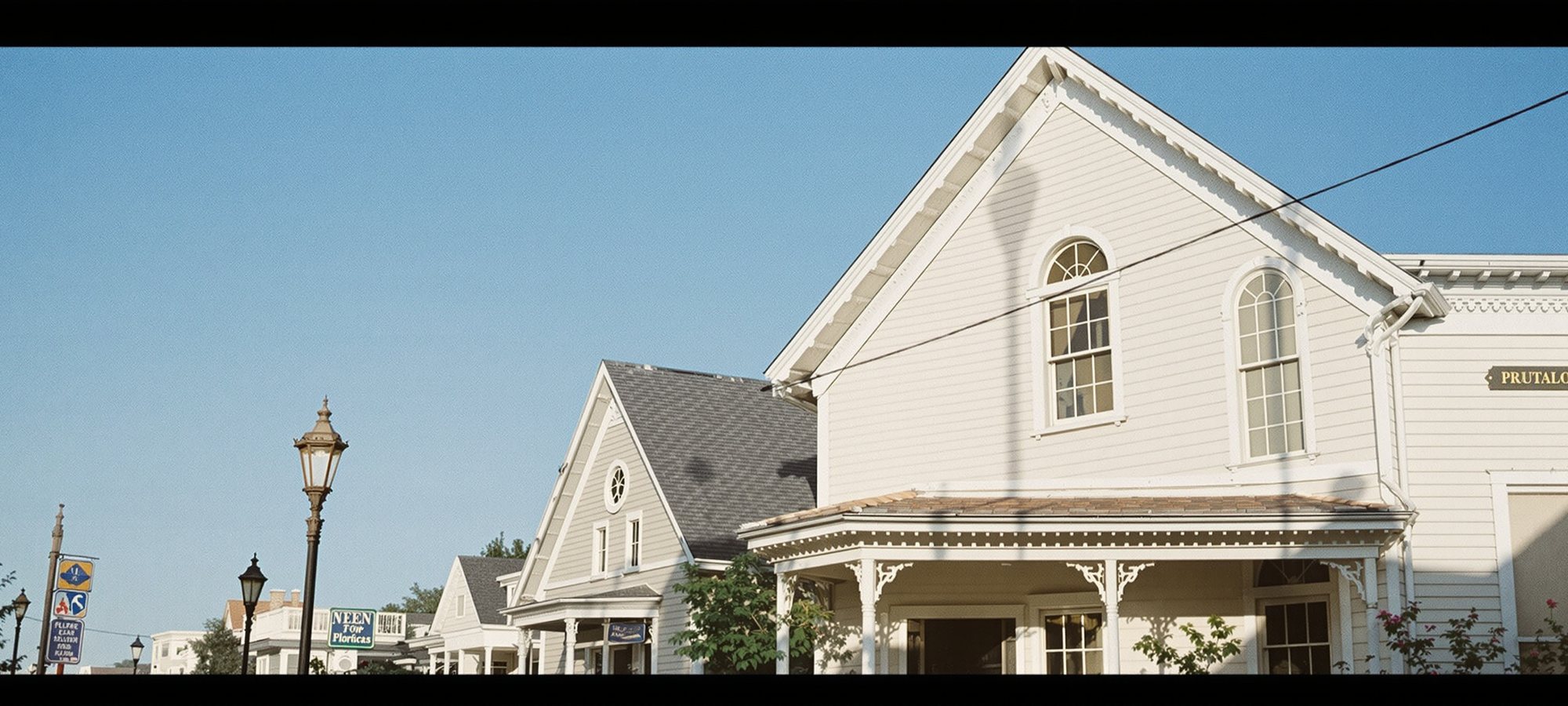 "I've got a little place in Florida…": taxes for US property owners, made simple Read more →
 Buying US property through an LLC: liability, taxes, heirs Read more →
 Taxes on US real estate: rent, property tax and sale Read more →
 Financing US real estate as a foreigner: loans and paperwork Read more →