Form 1040-SR: The US Tax Return for Seniors
Everything you need to know about the new Form 1040-SR tax return! We explain what sets it apart, what advantages it brings and who it suits. Get expert advice from the experienced team at Mount Bonnell Advisors so you can file your tax return without the stress!

Is Form 1040-SR the right tax form for you? In this article you will find everything about Form 1040-SR. We explain what makes Form 1040-SR different, what advantages it offers and who it suits.
The US tax system can be pretty complicated. That's why our website offers extensive information on US tax law.
Mount Bonnell Advisors supports you through the whole process, whether you currently live in the USA or abroad. We handle all the formalities and make sure your tax return reaches the right US authority on time.
Who can use Form 1040-SR (Form 1040-SR)?
As long as you were born before January 2, 1958, you count as 65 or older for tax year 2022 and can file your taxes with Form 1040-SR.
Seniors aged 65 and over do not have to be retired to use the new form. As long as you meet the age requirement, you can keep earning money and still use Form 1040-SR.
If you retired early but are below the age threshold, however, you still have to fill in the regular Form 1040.
What is Form 1040 (Form 1040-SR)?
Form 1040 is the basic IRS income tax form, used for the individual income tax returns that must or should be filed every year.
It applies to individual taxpayers who earn money from employment, self-employment, retirement, interest and dividends, and other kinds of earned and unearned income. It does not apply to business returns or trust returns.
Who has to file a US tax return?
Not every US citizen is required to file a US tax return every year. Whether and to what extent you have to file depends mainly on whether your total annual income exceeds a threshold set by the IRS, on your age, and on your filing status.
Above all, keep in mind that you have to file a tax return not only as a US resident, but also as a US citizen currently living abroad or even resident there. In some rare cases, you could even end up paying tax on all your income twice, in both countries; double taxation treaties between the USA and many countries are designed to prevent this. We are happy to check in advance whether you are required to file with the Internal Revenue Service or exempt, and to go through the most important questions with you.
What is the Form 1040-SR tax return?
The Internal Revenue Service has made it a goal to inform all seniors about the availability and benefits of Form 1040-SR. So what are the features of Form 1040-SR?
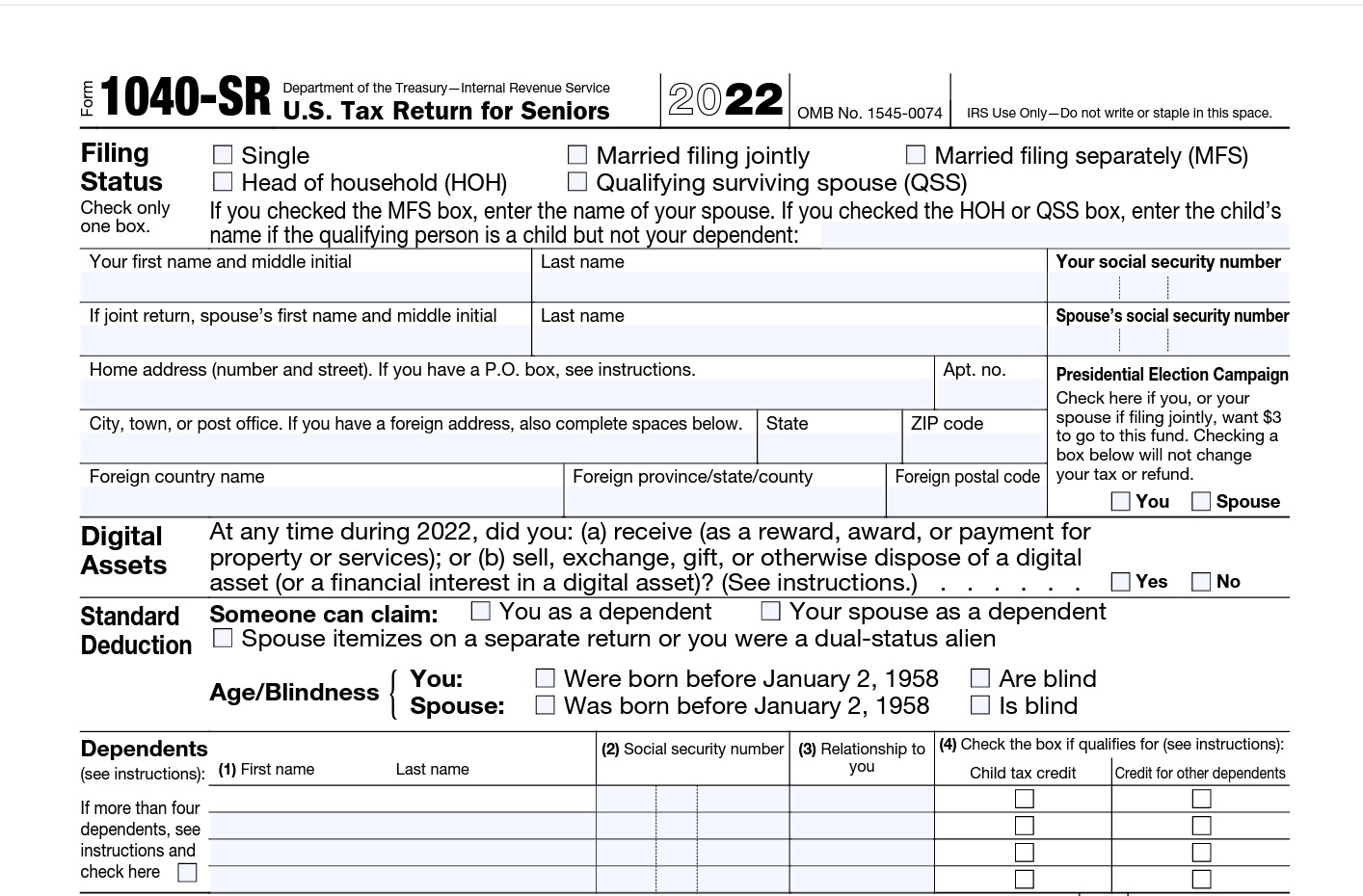
Form 1040-SR uses a larger font and puts more emphasis on the tax benefits for seniors, especially the additional standard deduction.
Higher standard deduction
Most importantly, seniors who don't itemize get a higher standard deduction. Form 1040-SR includes a chart showing the amount of this additional standard deduction for taxpayers aged 65 and over.
Taxpayers who were at least 65 by the end of 2022 can increase their standard deduction by at least $1,400. The chart attached to Form 1040-SR lists only the combined deduction amounts, which depend on filing status and other eligibility requirements.
No income limit
Form 1040-SR has no cap on total income for a given tax year.
The old Form 1040-EZ, by contrast, capped interest income at $1,500 and total income at $100,000.
Broader income categories
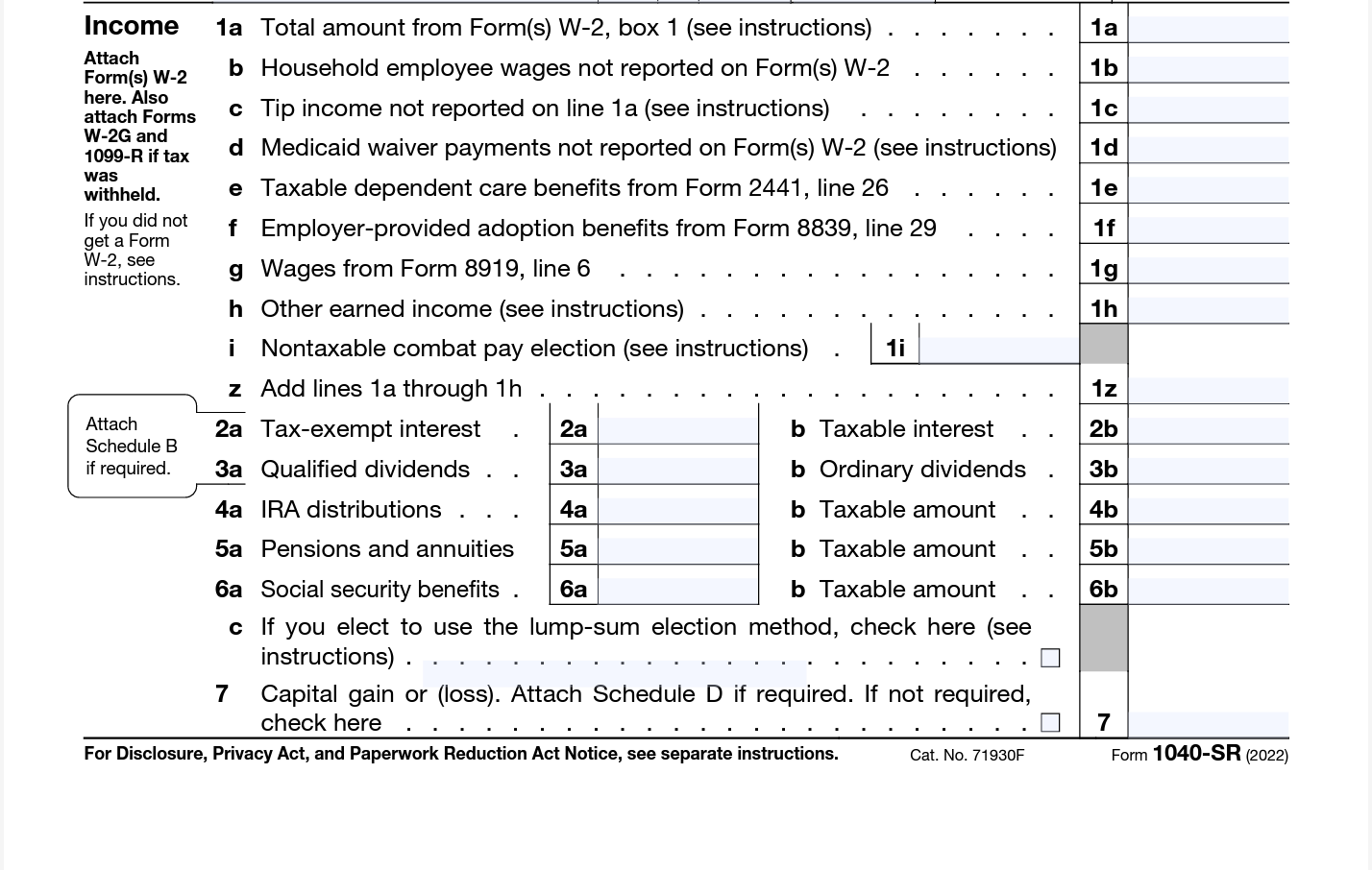
While the old Form 1040-EZ only allowed you to report wages, salaries and tips, Form 1040-SR also accepts income from certain other sources:
-
Wages
-
Salaries
-
Tips
-
Taxable scholarships or grants
-
Unemployment compensation
-
Alaska Permanent Fund dividends
-
Social Security benefits
-
Distributions from qualified pension plans
-
Annuities or similar deferred payment arrangements
-
Unlimited interest and dividends
-
Capital gains and losses
What about deductions?
Like Form 1040, Form 1040-SR can be used whether you take the standard deduction or itemize.
The vast majority of Americans take the standard deduction, though, since the allowed amounts were practically doubled by the 2018 tax reform.
The additional standard deduction for seniors is one more reason to skip itemizing.
What is the difference between Form 1040 and Form 1040-SR (Form 1040-SR)?
Since the two forms work in practically the same way, Form 1040-SR makes the most sense if you fill in your tax return by hand rather than online. Form 1040-SR has a larger font and bigger boxes for entering figures, so it is a little easier to read and complete.
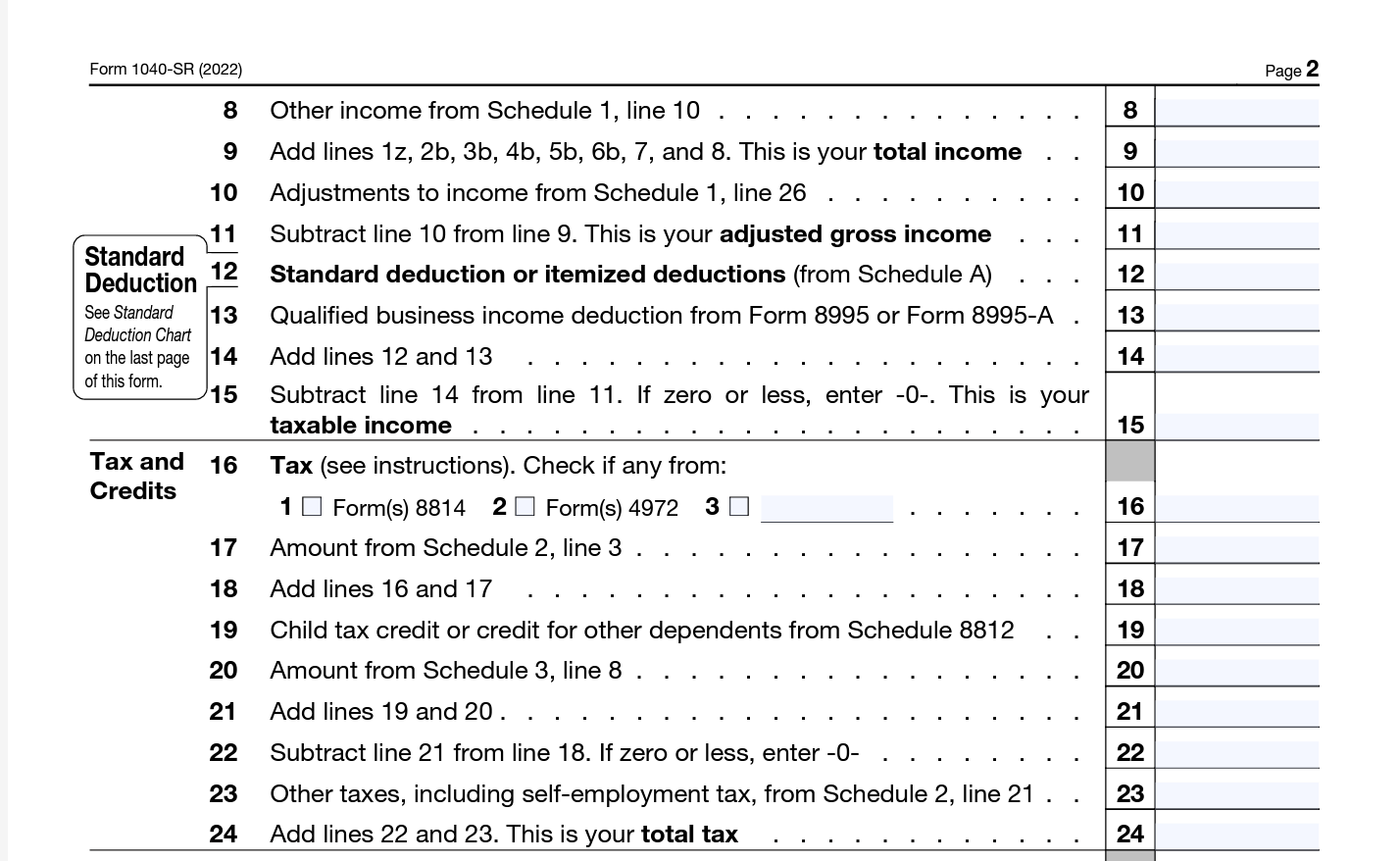
The standard deduction chart on Form 1040-SR is useful for seniors because it lists the larger standard deductions available to people aged 65 and over, in an easier-to-read format. The regular Form 1040 only lists the standard deductions available to non-seniors, in smaller print. (The IRS advises not to file the standard deduction chart from Form 1040-SR with your return.)
Like the regular IRS Form 1040, Form 1040-SR has lines for income typical for many seniors, such as IRA distributions, pensions and annuities, and Social Security benefits. The old Form 1040-EZ, which the IRS has discontinued, did not cover these kinds of income.
So the main advantages of Form 1040-SR are better readability for those who do their taxes on paper and the inclusion of senior-specific standard deduction information.
Choosing the right form
If you file your tax return electronically, you usually don't need to pick a form. After a short online tax questionnaire, the right IRS 1040 return is prepared automatically based on the information you provide.
Consultation
As US tax experts, we take care of all your tax questions and concerns.
Request a no-obligation quote for preparing your US tax return now! We handle US tax returns for individuals and businesses, with advice in English. For an overview of typical mistakes, see our article 9 tax traps in the USA.
Consultation & implementation
If you'd like to find out what this means for your own situation, the best step is to book a consultation.