
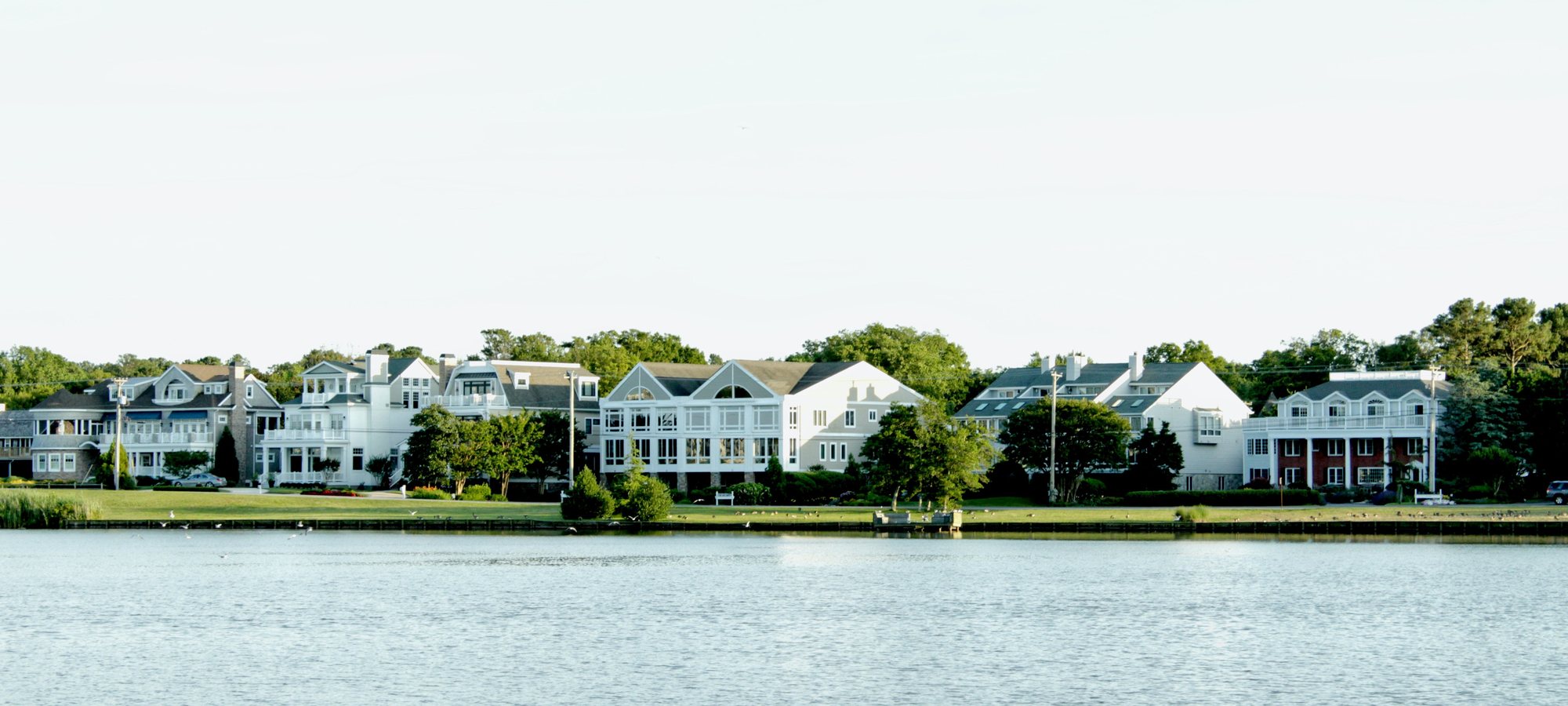
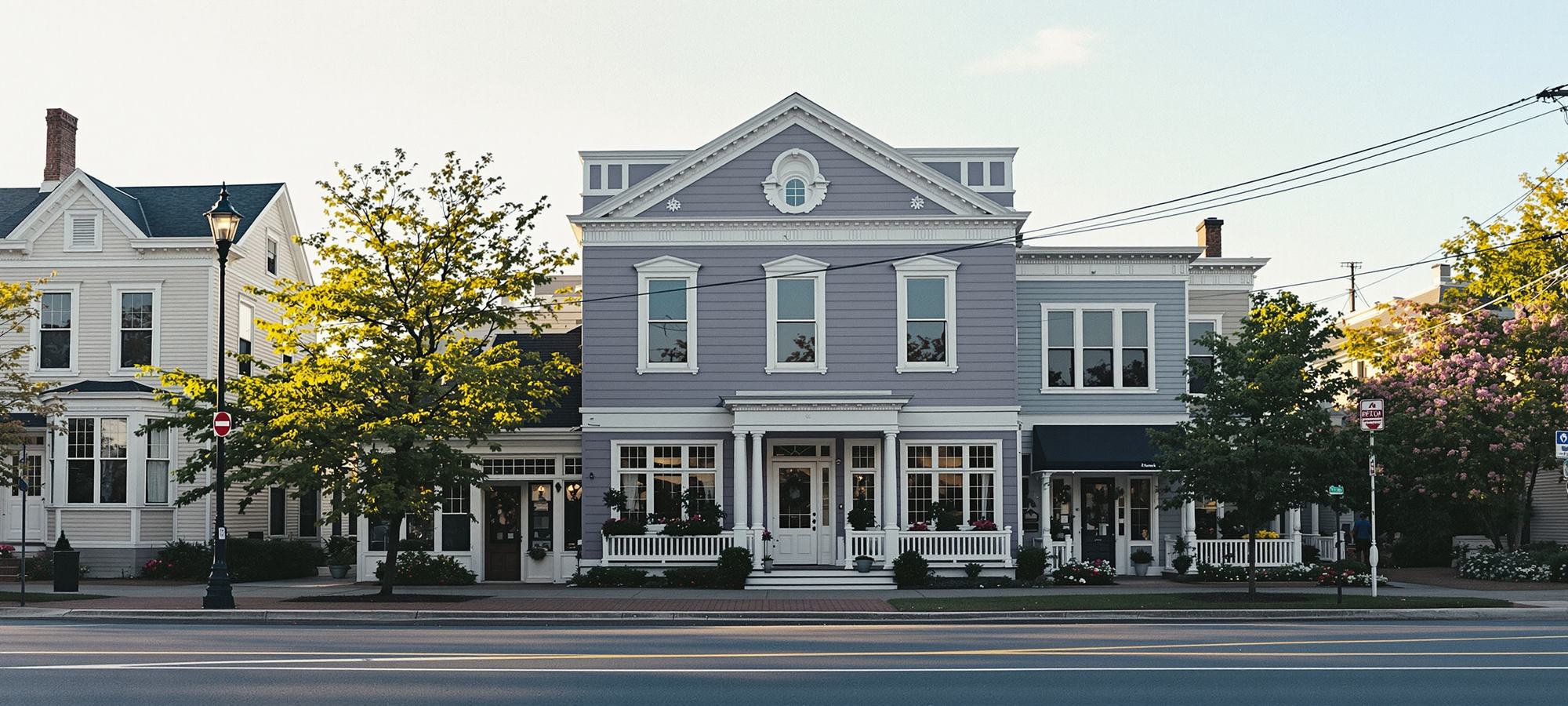
One unremarkable office building, hundreds of thousands of companies. How did Delaware pull it off?
Why big US corporations love Delaware as their place of incorporation
Part of the guide US company formation: the guide for your real business in America
Pull up the registration documents of just about any corporation and chances are you will find the address “1209 North Orange Street”. This unremarkable office building takes up less than a city block in Wilmington, Delaware, and is the official registered address of more than 285,000 companies from around the world.
At first glance, there seems to be no reason at all why Delaware, home of the Blue Hens and a great many Civil War memorials, should be a paradise for business. It is not only the second-smallest state in the US; with just over 1 million residents it also ranks number 6 among the least populous.
Even so, more than 2 million businesses from around the world are registered there, including 68% of all Fortune 500 companies. The biggest names include:
How did Delaware become America's corporate paradise? And why do so many businesses set up there? That is what this page is about.
1How it all began…
The groundwork for Delaware's legislation was laid more than 100 years ago in New Jersey. But let's start at the beginning: in the early 19th century, every US company had to incorporate in the state where it did business and was subject to that state's tax rules.
After industrialization, giant companies such as Standard Oil and the Whiskey Trust began merging fragmented markets. To push back, many states passed laws aimed at reining in monopolies with heavy taxes. New Jersey took a different route. Delaware's neighbor saw a chance to win industry over to its side.
In 1891, the Garden State passed an extremely generous corporate law, designed to let companies do pretty much as they pleased. Companies from other states, for example, could save a lot in taxes by setting up a subsidiary in New Jersey, while enjoying perks such as unlimited market expansion.
Plenty of big corporations took up the offer, and the state earned so much in taxes that it paid off its entire public debt. To keep businesses and their tax revenue, other states created incentives too and took more business-friendly paths in tax policy.
What followed was a real race for corporate favor. And this so-called "race to the bottom" was won by Delaware. In 1899, the state passed the Delaware General Corporation Law, which promised to keep restrictions on business to a minimum and to make the state the most welcoming business enclave in the country. Delaware was to be a place where companies could roam the open fields of capitalism freely, without income tax, bureaucratic oversight or shareholder disputes.

A copy of the 1899 Delaware Corporation Law (Widener University, Delaware Law School)
In the decades that followed, many other states (including New Jersey) let their business friendliness slip a little. With one exception: Delaware. The small East Coast state kept its tax- and business-friendly laws and is still the first choice for many companies. Thanks to its favorable terms, it also draws international companies.
So what exactly makes Delaware so tempting?
Entity type, state and tax consequences, before you commit.
2The Delaware loophole
To show why Delaware is so attractive to companies, let's look at an example. Say you run a tennis ball company in California with net income of $100 million a year.
In California you pay state income tax (8.84% of net income), possibly an alternative minimum tax (6.65%), on top of the corporate tax rate of 21% at the federal level.
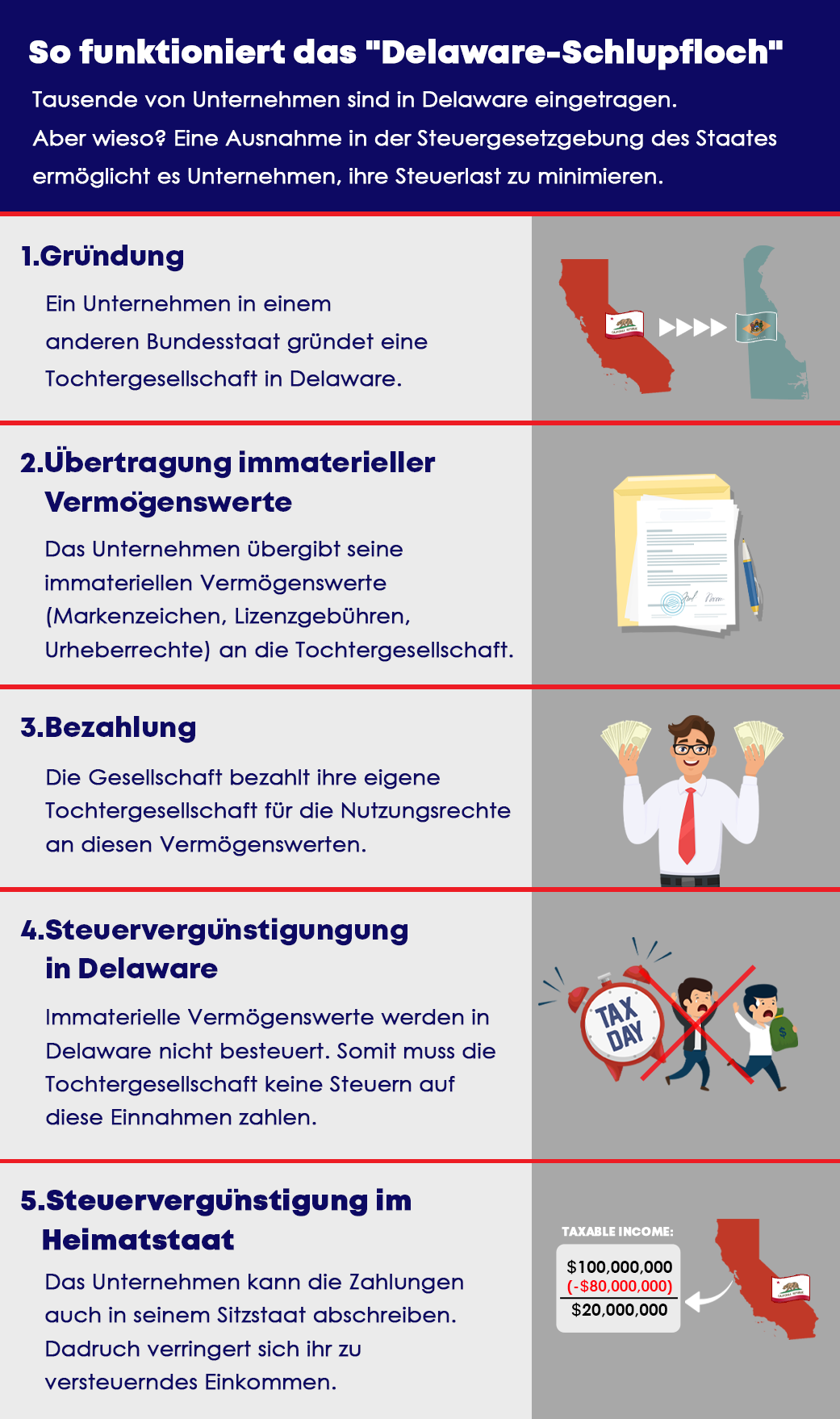
This is where the Delaware loophole comes in: in many cases it lets large companies save millions in state taxes. Here is how it works.
In Delaware, intangible assets (such as trademarks, copyrights and leases) are tax-free. Big corporations take advantage of this by transferring these assets to a subsidiary in Delaware. They then pay their own company royalties for using them. That saves money on both sides:
- The company can deduct these payments in its home state and slash its tax bill.
- The company is not taxed on its business in Delaware.
So if you pay your Delaware subsidiary (let's call it "Tennis Ballz, LLC") $80 million for the rights to use your own copyrights, you could potentially cut your taxable income from $100 million to $20 million and save millions in taxes.
Of course, any tax attorney in Delaware will tell you the system is a bit more complex than this. In general, though, the process can be simplified like this:
The most famous example is Toys "R" Us.
A little over twenty years ago, the national chain set up a subsidiary in Delaware, Geoffrey LLC, and paid it an annual fee for the rights to use its own name and mascot. In 1990 alone, these payments saved the company around $2.8 million (today $5.5 million) in taxes in South Carolina.
A Delaware subsidiary also comes with a number of other tax advantages, including:
- No state corporate tax
- No sales tax
- No tax on interest/other investment income
- No VAT
- No personal property tax
- No inheritance tax
(Mind you: all of this applies only at the state level! The much steeper federal taxes still apply!!!)
Instead of all these taxes, a company in Delaware pays only a franchise tax ($175 to $200,000 depending on size, up to $250,000 for very large companies; a Delaware LLC pays a flat annual tax of $400) plus low fees for a local Registered Agent, annual reports and registration.
For the individual corporations these fees are peanuts next to the tax savings, but for Delaware they are a major source of revenue. In fiscal year 2025, the Division of Corporations took in $2,050.4 million: $1,846.5 million from corporate taxes, $171.4 million from fees and $32.5 million from the UCC registry. Measured against total state revenue of around $6.63 billion, as estimated by the Delaware Economic and Financial Advisory Council, that is about 31 percent, almost a third of the state budget. At the end of 2025, 2,287,728 entities were registered in Delaware, including 1,653,329 LLCs; in 2025 alone, 334,461 new formations were added, a good fifteen percent more than the year before.
For other states, on the other hand, the practice is less welcome. A widely cited study in the Johns Hopkins University Law Review put the revenue lost by the other states through the so-called Delaware loophole at up to $9.5 billion over a decade. There is no official update of this estimate; the literature has cited the same order of magnitude ever since.
We have taken a closer look at Delaware as America's tax haven on a separate page and pulled together everything you need to know. If you finally want to understand how it all fits together, click here.
Tax breaks aren't the only reason big companies are drawn to Delaware, though. Most value the state for its privacy and its courts. For many, these are the deciding factors in setting up in the East Coast state.
2.1Privacy & convenience
Any company that wants to register in Delaware works through a Registered Agent: a local person or company that acts as the go-between, handles the paperwork and gives the subsidiary a physical address.
Delaware has 2 giant Registered Agent providers:
- CT Corporation (1209 Orange Street), as mentioned at the start, is home to more than 285,000 companies, including Walmart, Apple and Coca-Cola.
- CSC (2711 Centerville Road) is the Registered Agent for corporations such as McDonald's, Amazon and Facebook.
This unremarkable office building at 1209 North Orange Street in Wilmington, Delaware, is the address of around 300,000 companies from all over the world. Yet none of them is actually based here.
Unlike in other states, the formation process in Delaware can be done in under an hour. And the state doesn't require companies to disclose the names of their members or directors. Forming there offers more privacy , which is why it appeals to so many entrepreneurs.
"Delaware is the state that requires the least information," a Delaware registration agent told the New York Times in 2012. "In fact, it requires none at all. Delaware not only has the most secretive companies in the world, they're also the easiest to set up there."
Carl Levin, a retired senator from Michigan, once said it was easier to form a company in Delaware than to get a driver's license. Combined with greater anonymity, this has also brought a number of shady businesses to Delaware in recent years:
- Viktor Bout, a Russian arms dealer once known as the "Merchant of Death", had nearly a dozen shell companies in Delaware.
- Tim Durham used a Delaware shell company to defraud more than 5,000 elderly Americans in a $207 million Ponzi scheme.
- Carl Ferrer ran Backpage.com, a sex-trafficking website, through a Delaware shell company.
- El Chapo used a Delaware LLC to hide his cartel's drug money.
Black sheep aside, the vast majority of Delaware corporations and LLCs are, of course, entirely legitimate businesses. And what attracts these reputable companies above all are the small state's courts.
2.2A business-friendly court system
Delaware has what's called the Court of Chancery. Here, corporate lawsuits are decided by judges who specialize in corporate law, not by juries. While an average civil case in the US can take 2-3 years, the process in Delaware is far more focused and much faster.
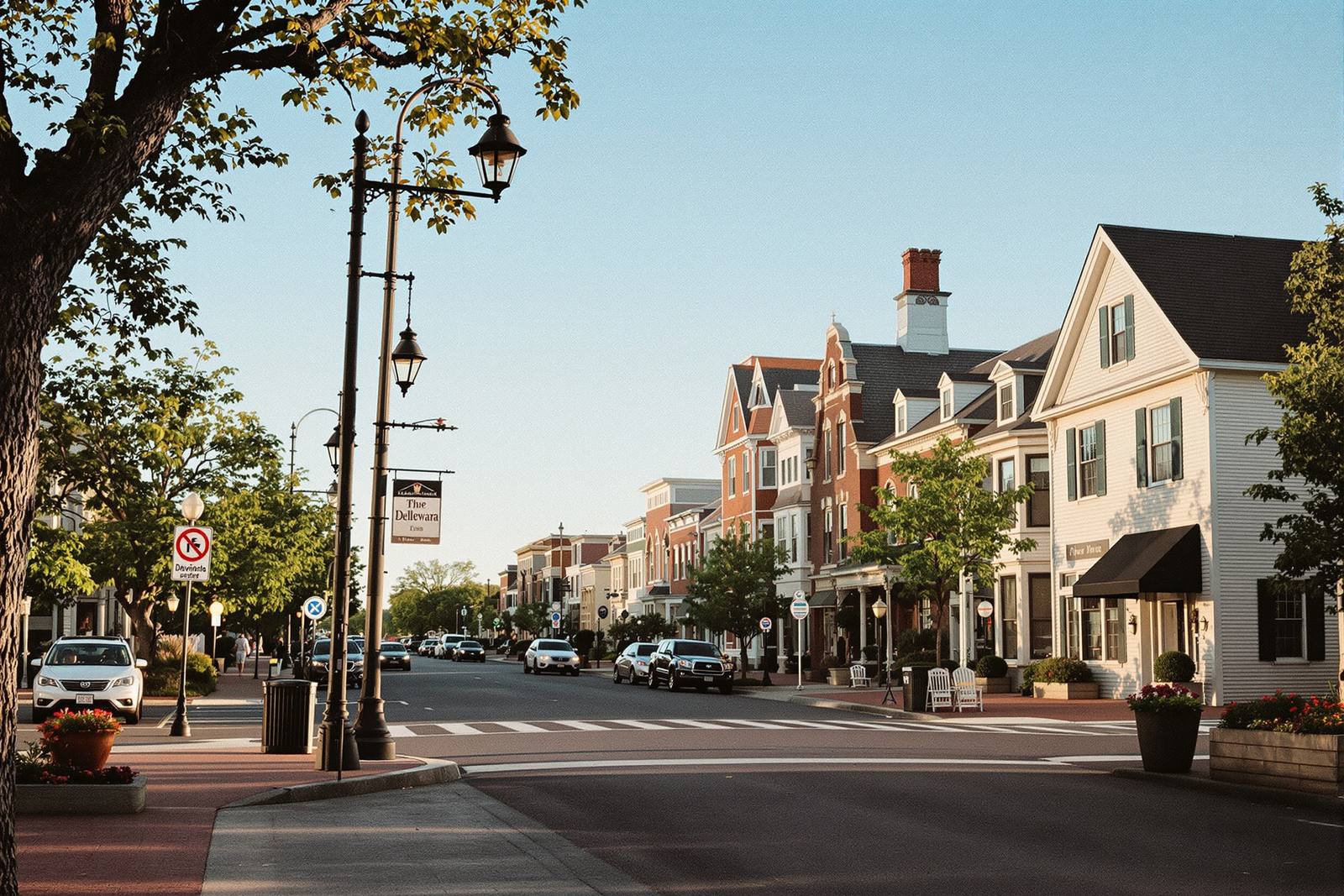
The judicial officers of the Delaware Court of Chancery oversee the state's business disputes (Delaware.gov).
In a report by Priceonomics, the former Chancellor of the Court of Chancery said: "If you need an answer in four days, you'll get it in four days. [Delaware's] Supreme Court will move heaven and earth to give you an appellate answer." Many legal experts criticize these courts for acting mostly in favor of corporations, especially in disputes with shareholders.
2.3The bigger picture
For all its advantages, Delaware's status as a domestic tax haven is widely debated. The state sits somewhere between prized tax paradise and much-criticized bogeyman. What's undeniable is that it reflects a broader trend and is just one piece of a bigger puzzle. Over recent decades, the US has steadily moved away from financial transparency.
According to the Tax Justice Network, an advocacy group that tracks tax avoidance, the US is now the world's largest secrecy jurisdiction. In the 2025 Financial Secrecy Index it ranks number 1, ahead of Switzerland and Singapore. America's so-called "wealth defense" industry rests on a system of shell companies, secret cash stores and tax avoidance schemes. It has steadily widened the country's income inequality. The gap between rich and poor keeps growing.
There were efforts to push back: a law passed at the end of 2020 at the federal level, the Corporate Transparency Act, was meant to ban anonymous shell companies in the US. As of 2026, little of it remains: in March 2025, FinCEN used an interim final rule to limit the reporting requirement to foreign entities; companies formed in the US no longer have to report their owners. Anyone who wants to voice concerns in the meantime now has the mailing address of more than two thirds of the Fortune 500…
3Who Delaware is really worth it for
It's important to understand that the advantages Delaware offers companies, as described on this page, apply only to large corporations. Through intra-group royalties and similar payments to a subsidiary in Delaware , they can save millions in tax.
What's more, structures like these only reduce the state-level tax burden, so they're aimed at companies within the US. A group company set up in Delaware changes nothing about the taxes owed to the federal government.
Here you can find out which states are especially popular with foreign investors, and why. Our page on the Delaware Flip shows why startups still often choose a Delaware holding company, and our Delaware hub covers everything about the state itself.
LLC, Inc or LP in Delaware, Florida, California, New York, Texas or Wyoming.
- 1209 North Orange Street in Wilmington is the registered address of more than 285,000 companies; Delaware is home to over two million registered entities, including a good two thirds of the Fortune 500.
- The race began in New Jersey in 1891. Delaware followed in 1899 with its General Corporation Law and was the only state to stick with its business-friendly course.
- The Delaware loophole: corporations transfer intangible assets to a Delaware subsidiary and pay it royalties that lower their tax in their home state.
- Beyond tax, the draws are privacy, formation in under an hour and the Court of Chancery, with specialized judges instead of juries.
- The advantages apply to large corporations and only at the state level. A Delaware company changes nothing about federal tax.
How we help you
- US Company FormationLLC, Inc or LP in Delaware, Florida, California, New York, Texas or Wyoming.
- Form a CorporationThe US corporation (Inc) for growth, investors and your visa.
- Delaware holdingThe holding above your US companies, with one consolidated tax return.
- Tax structureA clean structure between parent company and US subsidiary, or between you and your US company, coordinated with your accountant.
- Company formation consultationEntity type, state and tax consequences, before you commit.
More on forming a US company
All articles → Forming a US company: the guide for your real business in America Read more →
 Delaware for Dummies 2026: the US tax haven, finally explained Read more →
 Protect your US LLC's liability shield & avoid the risks Read more →
 Common US business entities at a glance Read more →
 Forming a company in the USA: which state is the best home? Read more →