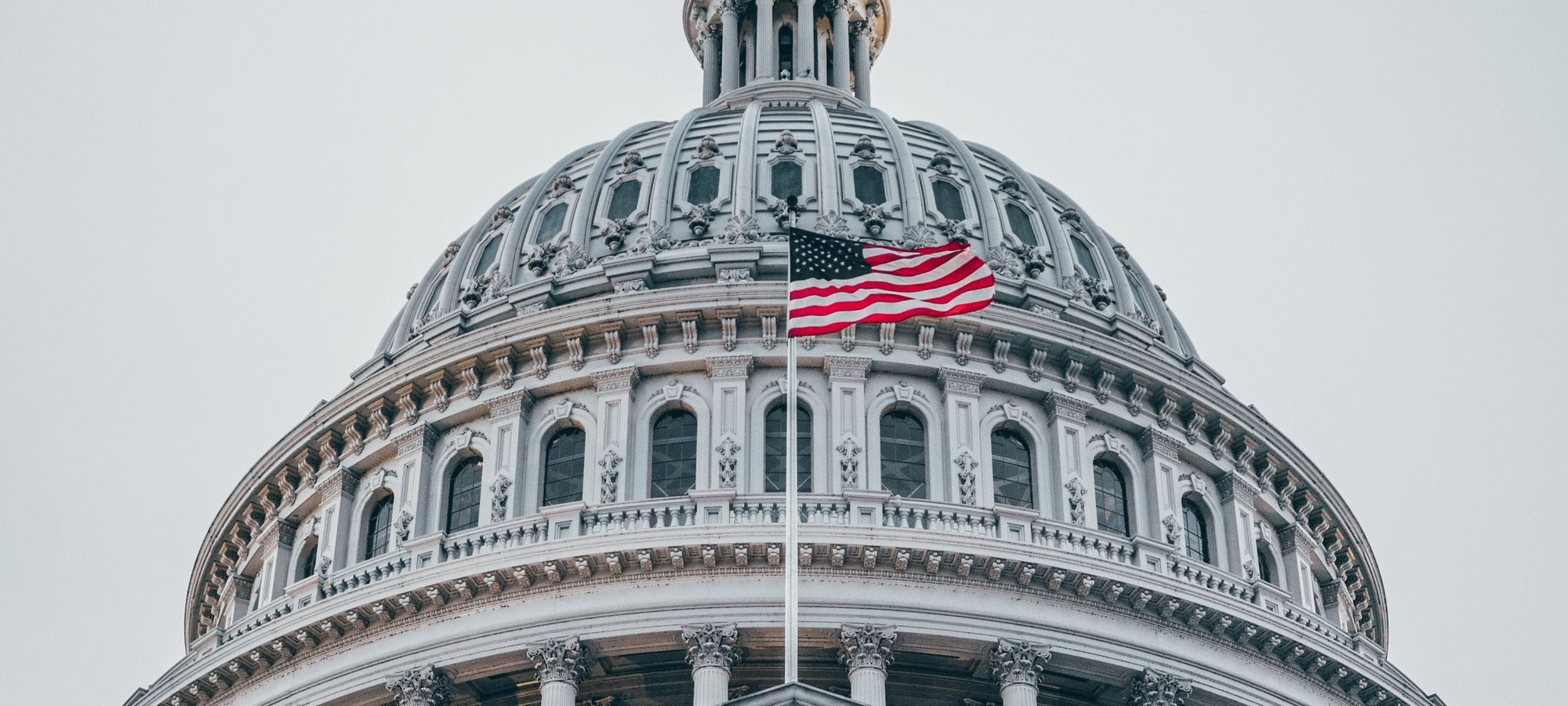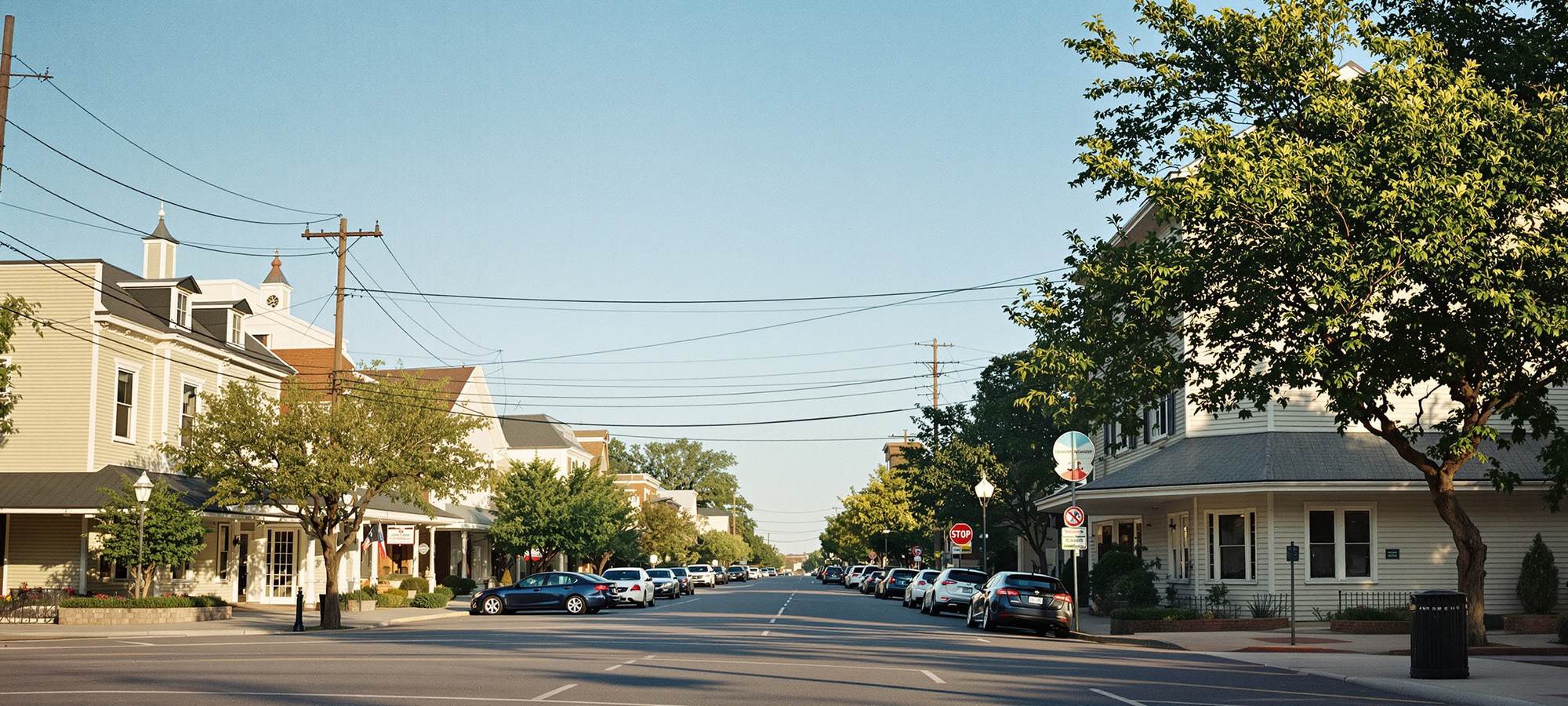
No state church, no church tax, and more congregations per town than many Europeans have ever seen.
Faith and religion in America: what a European newcomer should know about church life, the law and daily customs
After a year in Texas, many Europeans name religion as the thing that surprised them most. Faith is simply very visible here: churches on every main road, a blessing before a business lunch, colleagues who mention their Bible study as casually as their gym. At the same time, America has no state church and no church tax, and a growing share of Americans belong to no religion at all.
The religious map in numbers
The most detailed source is the Pew Research Center's Religious Landscape Study, a very large survey conducted in 2023 and 2024 and published in February 2025:
| Group | Share of US adults |
|---|---|
| Christian, total | 62% |
| Evangelical Protestant | 23% |
| Mainline Protestant | 11% |
| Historically Black Protestant | 5% |
| Catholic | 19% |
| Other Christian (including Latter-day Saints 2%, Orthodox 1%) | 3% |
| Religiously unaffiliated (atheist 5%, agnostic 6%, nothing in particular 19%) | 29% |
| Other religions (including Jewish 2%, Muslim 1%, Buddhist 1%, Hindu 1%) | 7% |
Pew found that 44% of adults pray at least daily, 33% attend religious services at least monthly, and 83% believe in God or a universal spirit. After decades of decline, the Christian share has been relatively stable since 2019 and the rise of the unaffiliated has levelled off, at least for now.
Gallup's figures for 2025, published in March 2026, point the same way: 47% of Americans say religion is very important in their lives, 31% attend services weekly or almost weekly, 57% seldom or never attend, and 24% state no religious preference, a new high in Gallup's series. Compared with most of Western Europe, these are high levels of practice; compared with America's own past, they are lower.
Church and state: the constitutional deal
The First Amendment opens with two short clauses: "Congress shall make no law respecting an establishment of religion, or prohibiting the free exercise thereof." The Constitution also provides that no religious test shall ever be required as a qualification for any federal office. Together these mean:
- No state church. Government may not establish an official church the way some European states did or still do.
- No church tax. Congregations live on voluntary donations. Nobody registers your religion with the tax office, and leaving a church costs you nothing but a conversation.
- Free exercise. You may practise any faith or none, and the courts give religious practice strong protection.
Where exactly the line runs, for example on prayer in public schools, religious symbols on public land or public money for religious schools, is argued constantly and decided case by case by the courts. For a newcomer the practical result is a public square that is more openly religious than in France or Sweden, alongside a government that must stay neutral between faiths.
Finding a congregation, or not
Many Europeans who were nominal members at home find themselves visiting a church in the US, and not always for religious reasons. Congregations are among the strongest community institutions here. They run playgroups, food banks, youth sports, English classes, support groups and social events, and newcomers are usually welcomed with genuine warmth. For families arriving without a network, a congregation can be the quickest path to friends.
The variety is enormous. Within Christianity alone you find Catholic parishes, Lutheran, Methodist, Presbyterian and Episcopal churches close to European traditions, Baptist and nondenominational megachurches with rock bands and thousands of members, and small country churches with a few dozen families. Larger cities have synagogues, mosques, Hindu and Buddhist temples and Orthodox churches, often with services in European languages for immigrant communities.
Visiting costs nothing. Expect a greeting at the door, an invitation to coffee afterwards and possibly a follow-up note. A polite "we are just visiting" is always accepted. Nobody will think less of you for declining; equally, nobody expects you to explain why you do not attend. In small towns church life is part of the social fabric, as our guide to life in a small American town describes.
Donations and tax: how congregations are funded
Without a church tax, American congregations depend on members' gifts, and Americans give generously. Federal tax law supports that in several ways:
- Churches that meet the requirements of section 501(c)(3) are automatically treated as tax exempt by the IRS, without applying for recognition, and they are not required to file an annual return. Donations to them are deductible like gifts to other qualified charities.
- From the 2026 tax year, taxpayers who take the standard deduction may deduct up to $1,000 of cash donations to qualified charities, or $2,000 on a joint return, a change made by the One Big Beautiful Bill Act. In the years just before, only taxpayers who itemised could deduct donations.
- Taxpayers who itemise can deduct larger gifts, subject to percentage limits, and keep written acknowledgements for larger contributions.
Many congregations encourage regular giving, sometimes framed as a tithe of ten percent of income. That is a religious tradition, never a legal obligation. If you want to set up a religious or charitable organisation of your own, our guide to forming a nonprofit explains the structure.
Faith at work
For employers, religion is a legal topic. Federal law, enforced by the Equal Employment Opportunity Commission, prohibits religious discrimination at employers with 15 or more employees and requires them to reasonably accommodate an employee's religious beliefs and practices unless that would cause undue hardship. Since the Supreme Court's 2023 decision in Groff v. DeJoy, the EEOC explains, undue hardship means a burden that is substantial in the overall context of the business; showing more than a minimal cost no longer suffices. Typical accommodations are flexible schedules, voluntary shift swaps and exceptions to dress and grooming rules, such as for religious head coverings.
In daily office life, colleagues may mention church, a mission trip or prayer for a sick relative without any intention to convert you. A friendly response is all that is expected. As with politics, debating religion with a client you have just met is rarely wise; our guide to US business etiquette covers the conversational ground rules, and our guide to conservatives and liberals shows how closely faith and voting are linked in American politics.
Holidays, schools and the calendar
Of the eleven federal holidays, only Christmas Day is a religious feast. Good Friday, Easter Monday, Ascension, Whit Monday and All Saints are not federal holidays, and most private employers treat them as ordinary working days. Thanksgiving, in late November, is a national family holiday with roots in giving thanks and is celebrated by Americans of every faith and none.
Public schools are government institutions and may not sponsor religious worship; how far individual prayer by students and staff is protected has been shaped by the courts and by federal guidance to schools. Religious private schools, Catholic, Protestant, Jewish and others, are a common alternative, and many admit students of other faiths. Our overview of the US school system explains the choices.
Coming to the US for religious work
Ministers and other religious workers have their own visa category. For the R-1 nonimmigrant classification, a US employer that is a qualifying nonprofit religious organisation files Form I-129. The worker must have belonged to a denomination with a bona fide nonprofit religious organisation in the US for at least two years immediately before the petition and must work at least part time, averaging at least 20 hours a week, as a minister or in a religious vocation or occupation.
R-1 status may be granted for up to 30 months, with extensions of up to another 30 months, and a total of five years in the US. Under a rule in effect since 16 January 2026, a worker who reaches the five-year limit must still depart but no longer has to spend a full year abroad before seeking readmission. Spouses and unmarried children under 21 may come in R-2 status but may not work. For an overview of all routes, see our guide to US visa types.
Questions our clients ask
Will my neighbours expect me to go to church?
In big cities, almost never. In small towns in the South and Midwest, you may be invited, sometimes more than once. The invitation is usually meant as hospitality. A friendly thank you is enough, and many newcomers accept once out of curiosity and enjoy the potluck lunch afterwards.
Is it rude to say I am not religious?
No. Nearly three in ten American adults are religiously unaffiliated, according to Pew. What tends to land badly is mocking belief, a habit some Europeans bring from home without noticing. Respect for other people's faith is expected in both directions.
Can I join a congregation of my own tradition?
Usually yes, especially in metropolitan areas. Lutheran, Catholic, Orthodox and Reformed congregations with European roots exist across the country, and some still hold services in the language of their founders. Ask the national body of your denomination for a list.
The painted churches of Texas
In the mid-19th century, Czech and German settlers came to Central Texas looking, in the words of a 2005 Texas legislative resolution, for economic opportunity and religious freedom. In Fayette County they built churches, and four of them near Schulenburg, in Ammannsville, Dubina, High Hill and Praha, became known as the Painted Churches of Texas. They are Catholic churches, typically Gothic Revival on the outside, with interiors where nearly every wall is covered in bright, dense murals. St. Mary's in High Hill has stained glass windows imported from Germany in the late 1800s; the church in Praha contains wood from the Black Forest. The Texas Legislature designated Schulenburg the official home of the Painted Churches in 2005.
For a European who has just moved to Austin, a Sunday drive to these churches is a reminder that American religion was built by immigrants, many of them from Europe, who brought their faith and their craftsmanship with them. It is also a fine introduction to the Texas countryside.
We help you choose where to live, handle the practical steps of arrival and connect you with the services your family needs.
Sources
Law as of 29.10.2026
- Pew Research Center, Religious Landscape Study 2023-24, executive summary, 26 February 2025
- Pew Research Center, Religious Landscape Study database
- Gallup, Americans' Religious Engagement Holds at Lower Levels, 3 March 2026
- U.S. Constitution, First Amendment
- U.S. Constitution, Article VI (no religious test)
- Internal Revenue Service, Churches, integrated auxiliaries and conventions or associations of churches
- Internal Revenue Service, Topic no. 506, Charitable contributions
- U.S. Equal Employment Opportunity Commission, Religious discrimination
- U.S. Office of Personnel Management, Federal holidays
- U.S. Citizenship and Immigration Services, R-1 Nonimmigrant Religious Workers
- Texas Legislature, 79(R) H.C.R. No. 93 (2005), Painted Churches of Texas