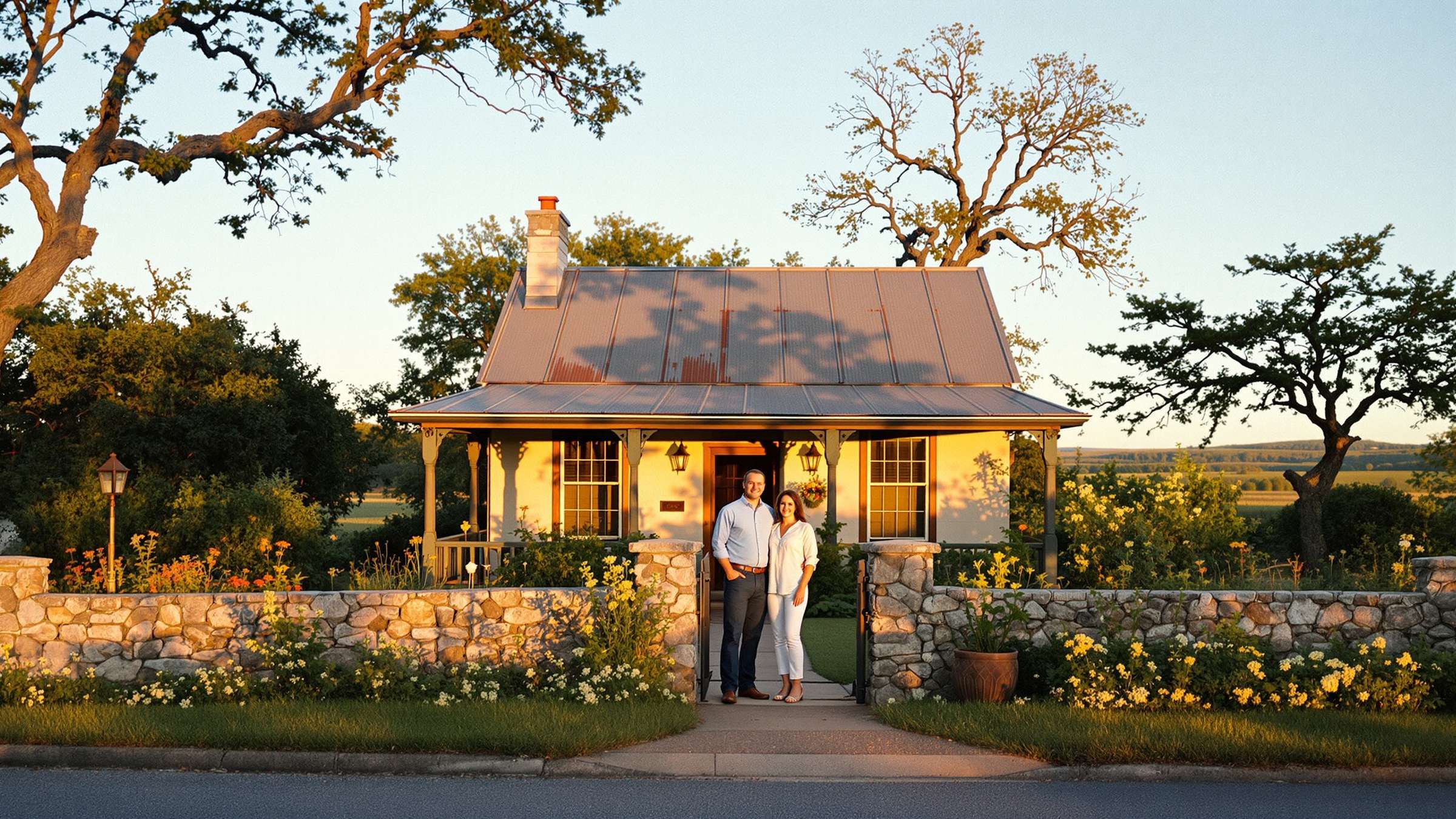

The open road is real. So are the visa clock, the domicile question and the campground rules.
Living full time in an RV in the US: visas, a home address, campsites and costs
Every year, a few of our clients tell us they want to see America from the inside of a motorhome, for months or even years. A whole industry supports that choice: RV parks, dealers, mail services, insurers and a big community of people who live on the road. Before your first night at a campground, three things need to be squared away. Your immigration status sets how long you can stay. Your home on wheels still needs a home address on paper. And campsites on public land have stay limits that shape your route.
First question: how long can you stay?
The RV is the easy part. Your immigration status determines how long the trip can last, and it is where many European dreams of a year on the road hit reality.
| Status | How long | What it means for RV life |
|---|---|---|
| Visa Waiver Program (ESTA) | Up to 90 days per entry | A long vacation, not a life on the road |
| B-2 visitor visa | Typically admitted for up to six months, with a maximum of one year; extensions come in increments of up to six months | A longer trip, with a visa interview at the consulate and proof that you will return home |
| Work or investor visa (E-2, L-1, H-1B, O-1) | For as long as the status lasts | Possible, as long as you keep doing what the visa is for |
| Green card or US citizenship | Unlimited | Full freedom, with tax residence in the US |
The 90-day Visa Waiver limit comes from 8 U.S.C. 1187. B visitors fall under 8 CFR 214.2(b): admission for no more than one year, with extensions of up to six months at a time. A visitor may not take a job in the US, and the regulation also bars enrolling in a course of study on a B visa. Whether working remotely for your European employer or clients during a long visit is acceptable depends on the facts. The attorneys on the firm's team can tell you where your situation stands. Get that answer before you build a plan around it.
If you hold an E-2 or L-1 visa, remember that the visa exists for a job or a business. A founder who runs the company from a laptop on the road can be fine. A founder whose US business has quietly stopped needing them may have a status problem. The right status depends on your plan, and our overview of US visa types shows which status fits which plan. For the visitor rules, see ESTA and the B-1 visa.
Choosing the rig
"RV" is an umbrella term. The main types, from largest to smallest:
- Class A motorhome: the bus-sized coach, with the most space and the highest running costs. Most full-timers who choose one tow a small car behind it.
- Fifth wheel: a large trailer that hitches into the bed of a pickup truck. Full-timers like it because you park the trailer and explore in the truck.
- Travel trailer: a conventional trailer pulled from a hitch, lighter and cheaper.
- Class C motorhome: built on a truck or van chassis, with the sleeping area over the cab.
- Class B camper van: a van conversion that is easy to drive and park, but tight for long stretches.
Two practical points. First, size and weight determine where you can go: many older campgrounds in national and state parks have length limits, and some mountain roads are closed to long vehicles. Second, heavy motorhomes and heavy truck-and-trailer combinations can require a higher class of driver's license in some states, even for private use. Check the rules of the state where you will be licensed before you buy.
In Texas, a vehicle purchase is subject to the motor vehicle sales tax of 6.25 percent of the sales price minus any trade-in, according to the Comptroller. A new resident who brings in a vehicle already registered in their name in another state or a foreign country pays a new resident tax of $90 instead of use tax. In our experience, shipping a European camper over is rarely worth it: US safety and emissions standards differ, and parts and service are hard to find. Most clients buy in the US, new or used, and sell the vehicle before they leave. The basics of driving, licenses and buying a car in the US are covered in our guide.
A home address when your home has wheels
American life runs on an address. Banks, the driver's license office, vehicle registration, insurers, the IRS and your mobile phone provider all ask for one. For someone without a fixed home, the concept is called domicile: the state you treat as your permanent home and intend to return to. For a full-timer, it determines:
- which state issues your driver's license and registers the RV;
- which state's insurance rules and rates apply;
- whether you owe state income tax, since your domicile state can tax you as a resident;
- for US citizens, where they vote and serve on juries.
Many full-timers pick a state with no personal income tax and simple rules for people on the road. Texas, Florida and South Dakota are the names we hear most. Texas has an extra pull for our clients, who often already have a company, a bank or a property here. In practice, a full-timer's domicile rests on a mailing address in that state, usually through a mail forwarding service, plus the license, the registration, voter registration where applicable, and a pattern of returning.
Banks and agencies are wary of addresses that are only mailboxes, so set this up before you give up your last fixed address. Our guides to proof of address in the US and a US business address show which addresses each institution accepts.
Where to stay: from RV parks to public land
Full-timers combine several kinds of overnight stops, and the mix drives both the budget and the route:
| Type | What you get | Rules to know |
|---|---|---|
| Private RV parks and resorts | Water, power and sewer hookups, laundry, wifi, sometimes pools | Nightly, weekly and monthly rates; monthly stays are usually far cheaper per night |
| State park campgrounds | Scenic sites, often with hookups | Reservations needed in busy seasons. In Texas, a $70 annual State Parks Pass covers entry to 88 parks and gives camping discounts |
| National park campgrounds | The best locations in the country | Often booked months ahead; length limits for large rigs; stay limits set by each park |
| National forests (dispersed camping) | Free camping outside developed campgrounds, with no services | Usually limited to 14 days, and some forests set shorter limits or rolling windows; in the Pacific Southwest Region, camp at least 150 feet from water |
| BLM Long-Term Visitor Areas | Desert camping for the whole winter in Arizona and California | Midland, California: $180 a season or $40 for up to 14 days (permit required September 15 to April 15) |
Winter in the desert
The Bureau of Land Management runs Long-Term Visitor Areas in the deserts of southern California and Arizona, a winter base for many full-timers. At the Midland LTVA in California, a permit is required from September 15 to April 15: $180 for the whole season or any part of it, or $40 for a short visit of up to 14 consecutive days, renewable without limit. Outside the season, camping there is free, subject to the 14-day limit. Fees at the Arizona sites are set by the Yuma Field Office and may differ, so check before you go.
As of 2026, the national parks also charge higher fees to visitors who are not US residents. If you are on the road as a resident, the $80 annual pass covers your entry fees. Our guide to recreation in the USA lays out the new resident and nonresident fees.
Money: financing, interest and running costs
Most people buy an RV with a loan from a bank, a credit union or the dealer. For a European without a US credit history, the usual hurdle applies: lenders want to see a record. Building a US credit file early, with a secured card and a US bank account, makes the RV loan easier later.
One US tax rule surprises people. The IRS treats an RV with sleeping, cooking and toilet facilities as a possible qualified home for the mortgage interest deduction. IRS Publication 936 lists a mobile home, house trailer, boat or similar property with those facilities as a home. If the RV secures the loan and is your main or second home, the interest can be deductible as home mortgage interest, provided you itemize deductions and meet the other conditions. For a full-timer who has sold the house, the RV may be the main home.
Running costs are easy to underestimate. A realistic budget includes:
- campsite fees, which vary more than anything else, from free public land to resort prices;
- fuel, since large motorhomes burn far more of it than European cars;
- insurance for the RV and, if you tow one, the car;
- maintenance and repairs, tires, and the occasional mobile mechanic far from any town;
- mail forwarding, mobile data and a backup internet connection if you work on the road;
- health insurance, covered below.
For full-time use, tell the insurer that the RV is your home. Ordinary recreational policies can be written on the assumption that you live somewhere else, and a claim for your personal belongings or your liability at a campsite can then be disputed.
Health cover on the road
Health insurance is the hardest part of full-time RV life in the US, for Americans and Europeans alike. Plans sold through the Marketplace under the Affordable Care Act are tied to a state and usually to a regional network of doctors and hospitals. A plan bought in your domicile state may treat a hospital two thousand miles away as out of network, except in emergencies.
Immigration status matters here too. Lawfully present immigrants, including holders of valid nonimmigrant visas such as E-2 or L-1, can buy Marketplace coverage. As of January 1, 2027, however, HealthCare.gov states that only certain statuses can qualify for Marketplace savings: lawful permanent residents, Cuban and Haitian entrants, and Compact of Free Association migrants. A European on an E-2 visa can still buy a plan from 2027, but without the premium tax credit, so compare the cost with international expatriate plans that cover the whole country.
Visitors on ESTA or a B-2 visa need travel medical insurance from home, and the policy should state clearly that it covers a long stay and the US. For networks, deductibles and plan types, see our page on US health insurance.
Running a business from the road
Several of our clients run a US company while traveling. It works well when the company has a stable base that does not move with you:
- a registered agent in the state of formation, so official letters and lawsuits reach the company;
- a business address for banks, customers and tax authorities, separate from the RV;
- bookkeeping and tax deadlines handled by someone who does not depend on your campground wifi;
- a clear view of where the business actually operates, because spending months working in one state can create tax obligations there.
If you work on the road under a visa tied to your business, keep a record of what you do for the company and where. It is the easiest evidence when the visa comes up for renewal.
Before the first night: a short checklist
- Confirm that your immigration status allows the length of trip you plan, including any extension you would need.
- Choose a domicile state, set up the mailing address and get your driver's license there, checking whether your rig needs a higher license class.
- Buy the RV with financing arranged in advance, and insure it as a full-time residence.
- Line up health insurance that works across state lines, keeping the 2027 Marketplace change in mind if you hold a visa.
- Plan the first route around the seasons: deserts and the South in winter, mountains and the North in summer, with reservations for the famous parks.
- Know the stay limits on public land: usually 14 days in national forests, plus the LTVA permit season in the desert.
- Keep a fixed base for your company, your bank and the IRS, so your paperwork does not travel with you.
Done right, life on the road is one of the most rewarding ways for a European to get to know America, its landscapes and especially its people, who will stop by at every campground to ask where you are from.
From Austin we help Europeans set up the address, banking, insurance contacts and the practical side of a long stay or a move to the US.
Sources
Law as of 29.10.2026
- 8 U.S.C. 1187, Visa waiver program for certain visitors (Cornell LII)
- 8 CFR 214.2(b), Visitors (Cornell LII)
- Texas Comptroller, Motor Vehicle Sales and Use Tax
- Texas Parks and Wildlife Department, Texas State Parks Pass
- USDA Forest Service, Pacific Southwest Region, Dispersed camping
- Bureau of Land Management, Midland Long Term Visitor Area
- National Park Service, Nonresident Fees
- IRS, Publication 936, Home Mortgage Interest Deduction
- HealthCare.gov, Coverage for lawfully present immigrants