
I was born in Freiburg im Breisgau in 1977, on the edge of the Black Forest, and my first pictures of America came from my father's bookshelf. That's where the Karl May novels stood. I devoured them, long before I knew their author had never set foot in the Wild West. I didn't care: Old Shatterhand, the quiet German who earns respect out in the wide open spaces, became my inner atlas.
Freiburg: America on the bookshelf
On Saturday afternoons I sat with my father in front of the TV whenever the Winnetou films were on: Lex Barker as Old Shatterhand, Pierre Brice as Winnetou. On my way to school I walked past the house where Friedrich Ernst Fehsenfeld, Karl May's first major publisher, had brought out the Freiburg edition of the travel novels. I often stopped in front of it. I took it as a sign.
These were the Cold War years. My father was an old-school conservative with newspaper clippings about Ronald Reagan in his drawer, and for us the world was clearly ordered. America was the protector, the West in its purest form, and we in Freiburg lived under its umbrella.
Zurich, London, Miami
The road to America ran through Europe. In 1999 I started at PwC in Zurich, and in 2000 I left Germany. In May 2003 I joined Allianz in London, and in 2006 I founded my own firm there in the City, St Matthew. Working for myself gave me, for the first time, the freedom to go where I had wanted to go since I was a boy.
In September 2008 I moved with my family from London to Miami to open our first office outside Europe. That was the business reason. The real reason was on that bookshelf in Freiburg: America was never a market to me. It was a childhood dream with a tax ID.
Miami was heat, palm trees and pastel Art Deco facades, a terrific city. But everything about it is transit. People come, people go, and after a few years you notice that nothing puts down roots.
Summer 2010: At the Alamo
In the summer of 2010 we were still living in Florida and spent our vacation around Austin. One day took us to San Antonio, to the Alamo. I stood with my family in front of the old mission church, where in 1836 a handful of defenders held out for thirteen days against the Mexican army. The boy with the Karl May books was finally standing in the real Texas.
That summer the whole family fell in love: with the land around Austin, what it cost, the friendliness of the people and that unshakable Texan quirkiness. A year later I'd had enough of Miami.
Summer 2011: The ranch in Bastrop County
Two miles of gravel road, and a gate at the end. That's how our life on the Vaquera Ranch in Bastrop County began in the summer of 2011, about 45 minutes' drive southeast of Austin, near the little town of Rockne.
I first saw the land in the hour before sunset. The pastures were bathed in a light that seems to come from within things: the grass glows, the oak bark turns copper. That evening I understood that light can be a reason to stay somewhere.
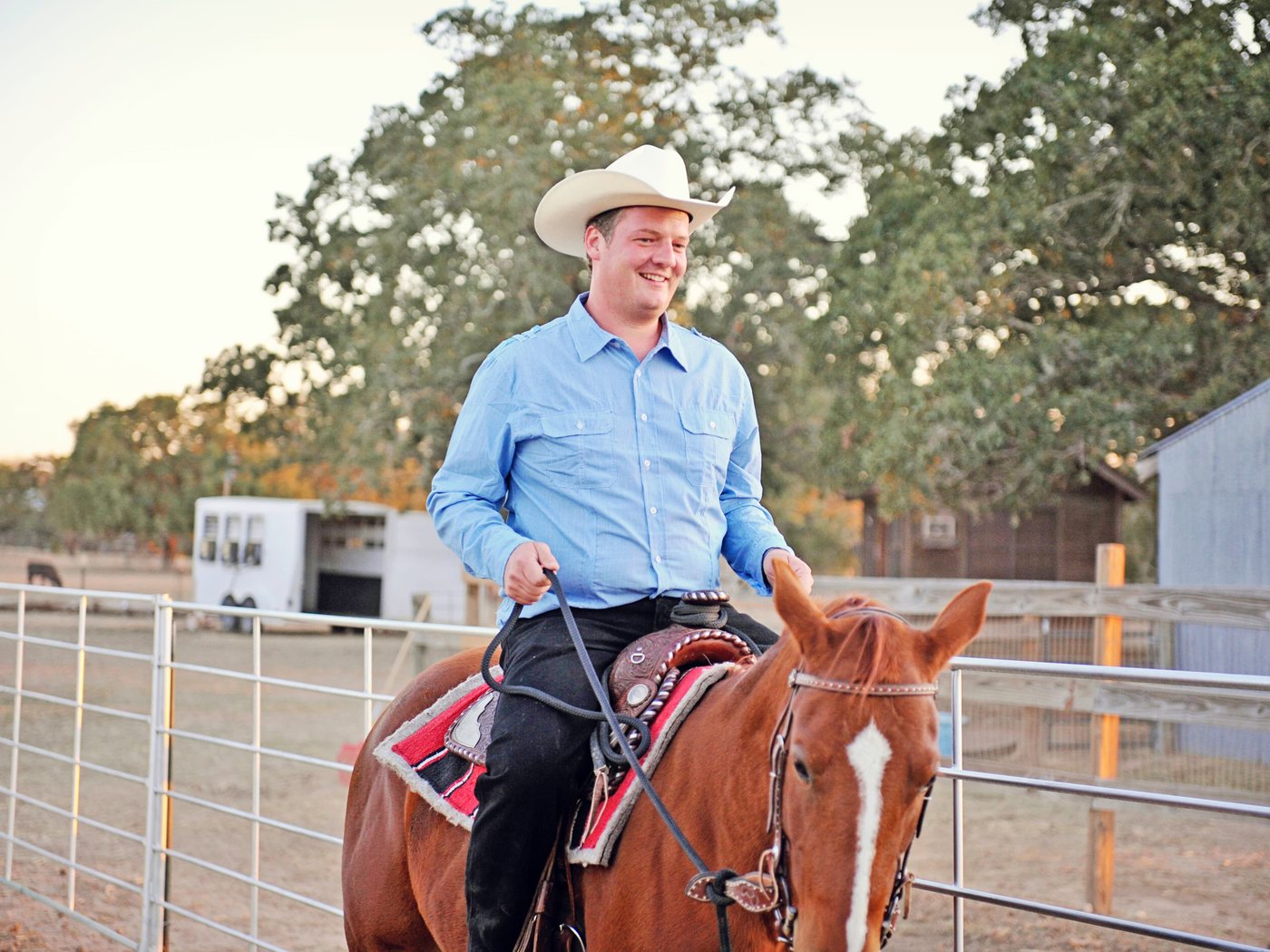
Down the slope was the stock tank, a pond of almost two and a half acres where the kids swam all summer. Up top stood the wooden ranch house under a red tin roof, the red barn no Texas ranch can do without, and between the buildings an oak that must be several hundred years old. One day I wanted to lie beneath it.
Ten minutes away was Rockne, a town of three hundred souls founded by German immigrants in the 1860s. On Sundays we went to Mass at Sacred Heart Church there, and only gradually did I realize that, as a German, I had moved to a place Germans had founded.
My day started at five, when the London workday was long underway. Before my calls, I walked the fences with a coffee, the grass wet, mist hanging over the hollows. Whenever I could, I took my London calls outside in the pasture. By noon Texas time Europe was done, and the rest of the day belonged to the ranch.
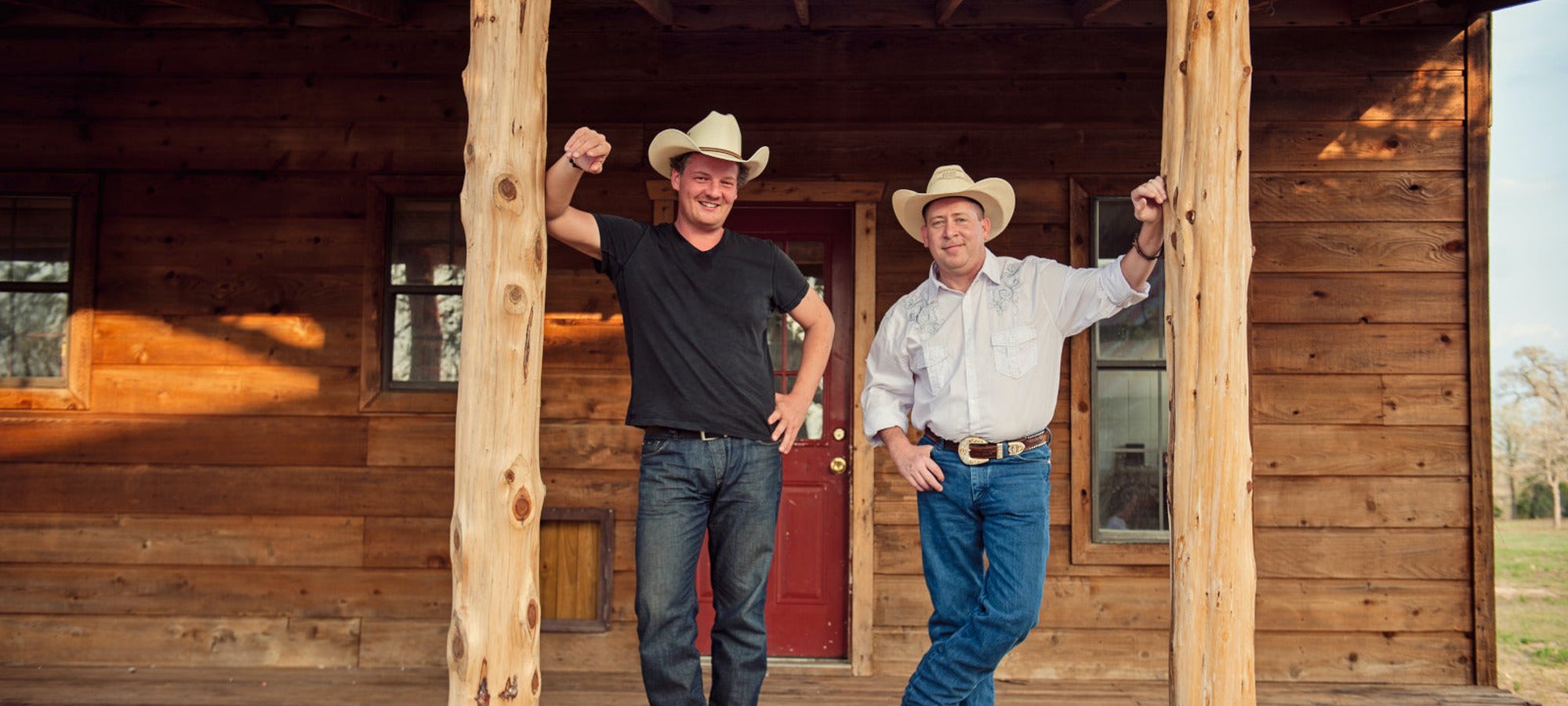
We had felled and peeled the cedar logs we're leaning on in this photo with our own hands a few months earlier. David once introduced me to his Texan friends as the German Cowboy. I can live with that title.
Sunday morning on Mount Bonnell
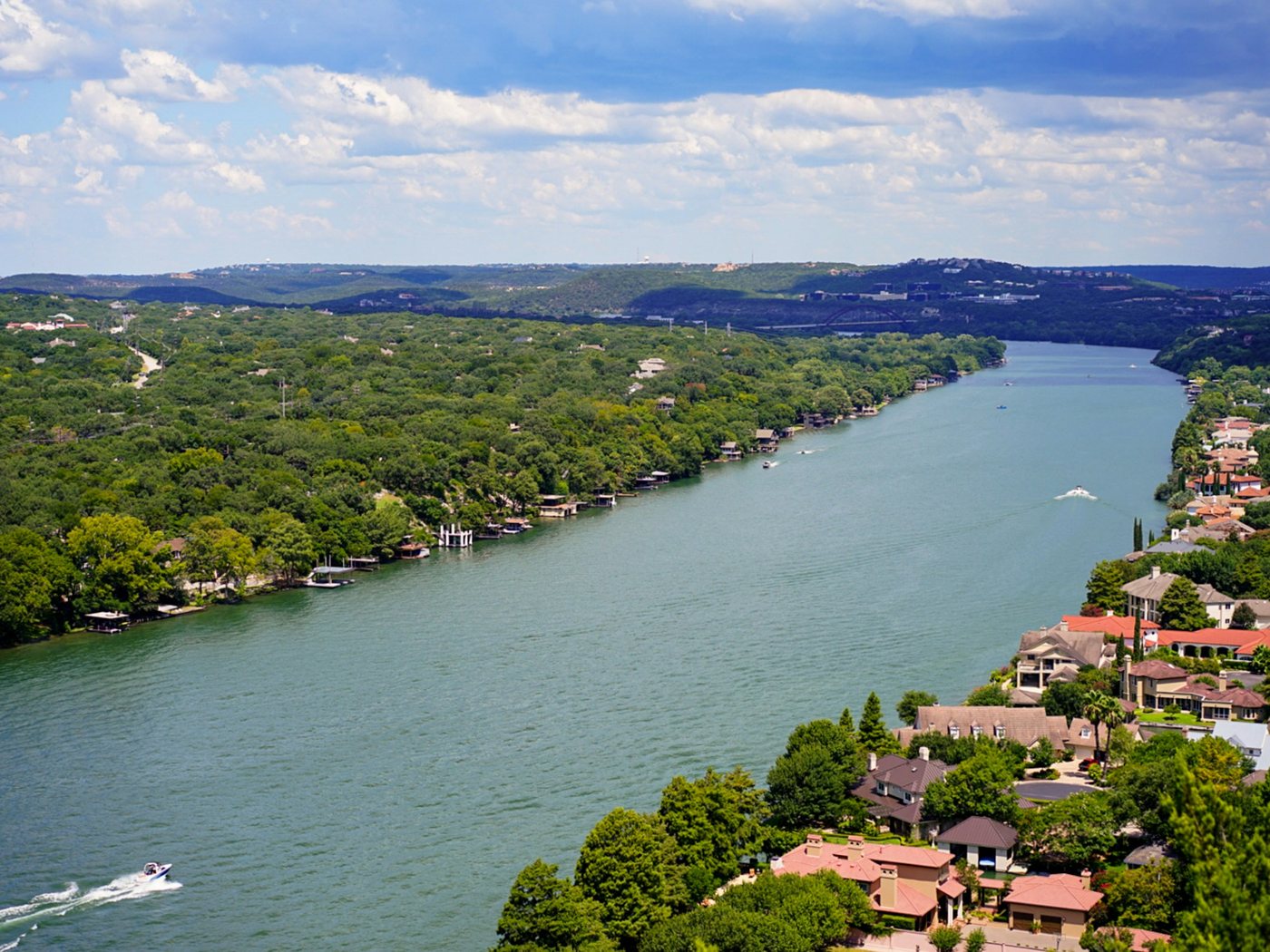
When I was in Austin, I'd drive up North Lamar early on Sundays and on to Mount Bonnell. At that hour the summit is almost empty. Up top stands the historical marker from 1969, below you the Colorado River winds through the hills as Lake Austin, and beyond it lies the city.
It's one of the highest points in Austin and, to me, the most beautiful. My firm bears its name.
What remained
The ranch years ended in 2013, during a time that was among the hardest of my personal life. I lost the ranches I had built. How that happened stays private.
Years in Europe followed, in Malta and Ireland. In August 2016 I came back to Austin. Texas has been my home in America since 2011, and today I live between Austin and London.
Southeast of Austin, at the end of a gravel road, stands the old oak I once wanted to lie beneath. I haven't given up on that plan. I tell the whole ranch story in The Oak I Once Wanted to Be Buried Under.
The whole story
Texas is one of six countries I've lived in: Switzerland, England, the USA, Malta, Ireland and Scotland. How I got from Freiburg via Zurich and London to Texas, and how I live between Austin and London today, I tell on sebsauerborn.com.
Why entrepreneurs book him
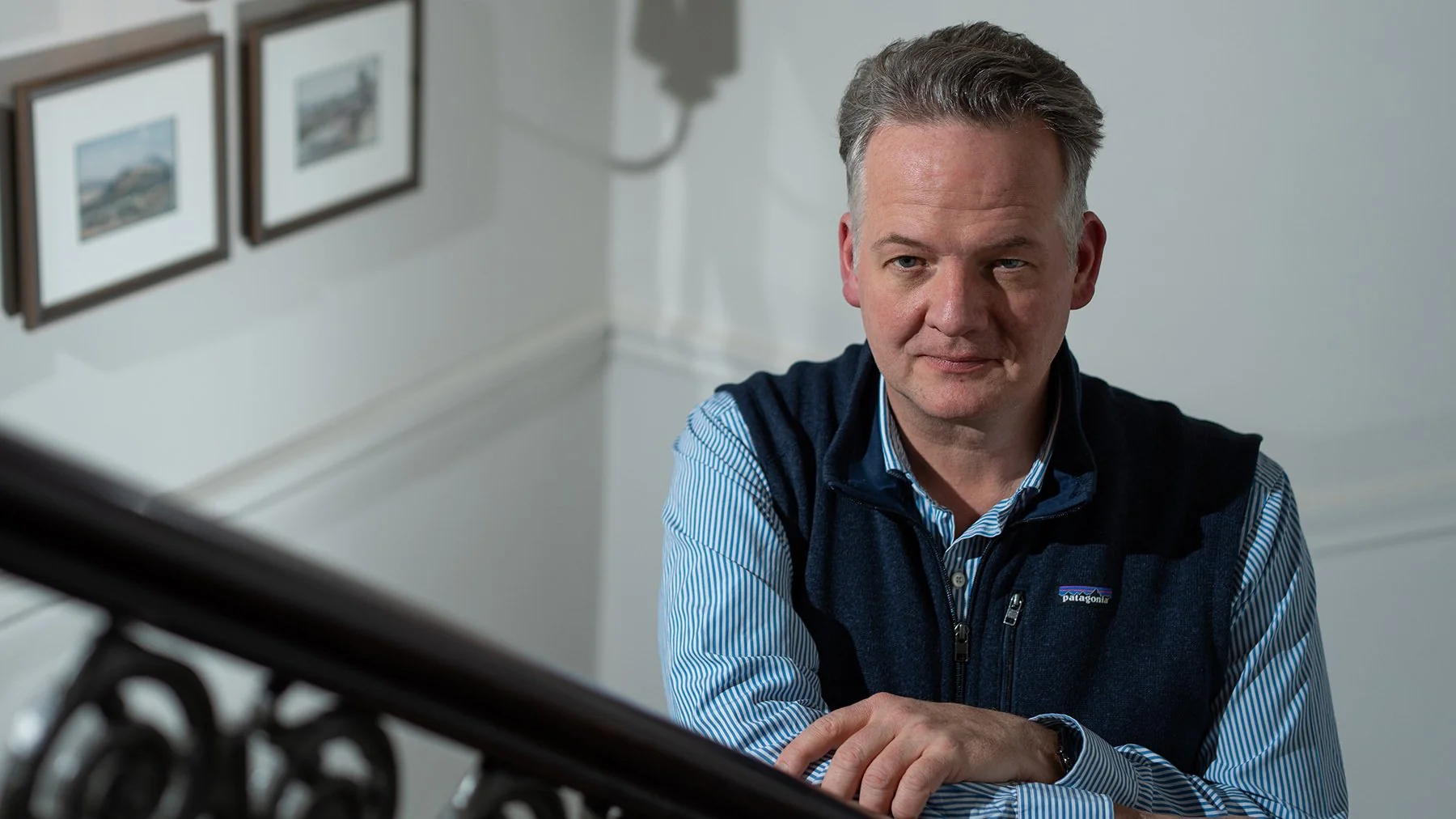
Since 2008 Sebastian has advised European entrepreneurs on their move into the USA. With his team he has formed more than 250 corporations and partnerships in many states, each with a bank account opening, and supported around 50 clients and their families in moving to the USA. On top of that come around 40 completed transactions, mostly as lead advisor: IPOs, company sales, capital raises and holding structures.
He has taken the very step his clients are facing: Miami, the ranch in Bastrop County, Austin. So alongside entity type, taxes and visas, every consultation also covers the question no tax table answers: whether the place fits your life.
I don't sell tax savings. I help people prepare a decision like this so that it holds.
Your company, your taxes, your visa: sorted in one conversation. All consultations are paid.
Book a consultation →